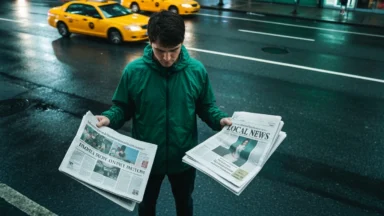
In the time it takes to scroll through your morning social feed, a dozen headlines have competed for your attention, each more urgent than the last. While this instant access to information feels like a superpower, it comes with a hidden risk: the line between credible reporting and carefully crafted fiction has never been more blurred. A single misleading article, shared with a click, can travel across the globe in minutes, shaping opinions and creating confusion long before any correction can catch up.
This is not a new problem, but its scale and speed are historic. The digital ecosystem, powered by algorithms that prioritize engagement over accuracy, has become a fertile ground for both misinformation (unintentional falsehoods) and disinformation (deliberate deception). A landmark study from MIT revealed that false stories are 70% more likely to be shared than true ones, primarily because they are designed to trigger strong emotional responses like anger and fear. This creates an environment where our own psychology can be used against us, making it difficult to trust what we see.
So, how can you navigate this complex landscape without feeling completely overwhelmed? This guide is designed to be your compass. We will move beyond simple warnings and provide you with a practical toolkit for building digital resilience. You’ll learn how to spot the common red flags of unreliable sources, master simple but powerful fact-checking techniques like reverse image searching, and understand the cognitive biases that make everyone susceptible to falsehoods. The goal is not to turn you into a cynic, but into a confident, critical consumer of information.
The Rising Tide of Misinformation: Understanding the Landscape
Every time you open your phone, a flood of headlines rushes to greet you—and that’s often before your first cup of coffee. This constant stream of updates, articles, and alerts has created an exceptional level of information overload. While staying informed is valuable, the sheer volume makes it difficult to sort fact from fiction, leading to a significant challenge for anyone trying to understand the world. Developing smart strategies to avoid information overload is no longer a luxury; it’s a necessity.
The problem is compounded by the speed at which false information travels. According to a landmark study from MIT, false news stories on social media were found to be 70% more likely to be shared than true stories. What’s the reason for this rapid spread? Fake news often taps into strong emotions like fear, anger, or surprise, making it more compelling to share than nuanced, factual reporting. This emotional hook acts like gasoline on a fire, pushing inaccuracies into the feeds of millions before corrections can catch up.
This creates a daily challenge for every news consumer.
It’s helpful to distinguish between misinformation, which is false information spread without malicious intent, and disinformation, which is deliberately created to deceive. Think of it like this: misinformation is accidentally giving someone wrong directions, while disinformation is intentionally sending them down a dead-end street for your own benefit. Both pollute the information ecosystem, making it harder to have productive public conversations and trust institutions. This erosion of trust is closely linked to the challenge of recognizing and counteracting news bias, as both distort our perception of reality.
Understanding this environment is the first step toward navigating it effectively. The goal isn’t to disengage entirely but to develop a critical filter that allows you to consume information with confidence and clarity.
Red Flags: Key Indicators of Unreliable Information
Developing a keen eye for misinformation is less about being a detective and more about becoming a mindful consumer of content. You don’t need special software or deep technical skills. Instead, you can rely on a mental checklist of common red flags that often signal a source isn’t trustworthy. Think of it like checking the expiration date on a milk carton—it’s a quick, necessary step to avoid a bad experience.
This simple habit can fundamentally change how you interact with online information. It builds resilience against manipulation. The goal is not to become cynical about all news, but to be discerning about what you accept and share, a core principle in elevating your news consumption habits.
Analyzing the Source: Who, What, When?
Before you even read the first sentence of an article, the most powerful clues are often hiding in plain sight. An investigation by the Poynter Institute revealed that stories from deliberately false websites often get just as much social media engagement as those from professional news outlets. The first line of defense is to question the messenger.
A few critical questions can help you assess credibility almost instantly:
- Who is the publisher? Look closely at the URL. Deceptive sites often use names that sound official but are slightly altered, like “cbs-news.com.co.” Check for a clear “About Us” or “Contact” page with verifiable information. If the source is anonymous, that’s a major warning sign.
- Who is the author? Is a writer’s name attached to the article? A quick search can tell you if they are a real journalist with a history of reporting on the topic. What most people miss is that many fake articles have no author listed at all, creating a complete lack of accountability.
- When was it published? Always check the date. Sometimes old news stories are recirculated to fit a current narrative, causing confusion. This tactic is surprisingly common, often used to spread persistent myths and debunked claims that refuse to disappear.
Content Clues: Emotional Language and Sensationalism
If the source seems questionable, the content itself will almost certainly confirm your suspicions. Misinformation is designed to provoke a strong emotional response, bypassing your critical thinking faculties. Professional journalism, while it can be compelling, prioritizes factual reporting over emotional manipulation. The difference is often stark.
Pay close attention to the headline and word choice. Does the headline use excessive capitalization, exclamation points, or emotionally charged adjectives like “shocking” or “horrific”? These are classic clickbait techniques designed for shares, not for informing. This kind of content directly contributes to the feeling of being overwhelmed, making smart strategies to avoid overload even more necessary.
The body of the text is just as revealing. Look for an over-reliance on adjectives and adverbs instead of verifiable facts and expert sources. “Disinformation hijacks our fight-or-flight response,” explains Dr. Evelyn Reed, a media psychologist at the University of Chicago. “It uses outrage as a vehicle to spread, because angry people are more likely to share content.” This is why stories that make you feel furious or fearful warrant a much closer look—we’ve all seen a relative share something like this on social media, right?
Spotting these red flags is the diagnostic step. The next move is learning how to actively verify the claims being made.
Disinformation hijacks our fight-or-flight response. It uses outrage as a vehicle to spread, because angry people are more likely to share content.
— Dr. Evelyn Reed, Media Psychologist at the University of Chicago
| Red Flag | What to Do |
|---|---|
| Suspicious Source or URL | Check the ‘About Us’ page. Look for a professional design, contact information, and author credentials. |
| Emotional or Sensational Headline | Pause before sharing. Search for the same story from multiple, established news organizations for neutral reporting. |
| Lack of Evidence or Sources | Be skeptical of claims without links or references. A credible story will cite its sources or data. |
| Out-of-Context Images or Videos | Use a reverse image search tool (like Google Images or TinEye) to find the original context and date of the media. |
Fact-Checking Tools and Techniques at Your Fingertips
Once you’ve identified the red flags in a suspicious article, the next step is active verification. Moving from a passive reader to an active fact-checker doesn’t require a journalism degree or special software. It just requires a bit of skepticism and knowing where to look. The tools are readily available and mostly free to use. Think of it as developing a new digital habit.
This process is less about debunking every single thing you read and more about building a reliable filter for the information you consume and share. With a few key techniques, you can quickly assess the validity of a claim before it takes root. The underrated factor here is patience—taking 60 seconds to verify a headline can prevent hours of confusion later.
Leveraging Dedicated Fact-Checking Organizations
Fortunately, you don’t have to start from scratch. A global network of professional fact-checkers is already doing the heavy lifting. Organizations like Snopes, PolitiFact, and the Associated Press (AP) Fact Check dedicate their resources to investigating viral claims, political statements, and misleading narratives. Their work is transparent, citing the sources they used to reach their conclusions.
Using these sites is straightforward. Simply search their databases with keywords from the story you’re questioning. The Duke Reporters’ Lab found that major fact-checking outlets collectively addressed over 54,000 distinct pieces of misinformation in a single year. These platforms often have a rating system—like PolitiFact’s “Truth-O-Meter”—that gives you a quick visual cue about a claim’s accuracy. Learning how to navigate and counteract news bias is a critical skill that these sites help develop by showing their work.
Mastering Reverse Image and Video Search
Misinformation isn’t just text; manipulated or out-of-context images are incredibly powerful. A dramatic photo can evoke a strong emotional response, but it might be entirely fake or from a completely unrelated event. This is where reverse image search becomes an necessary tool.
It sounds technical, but it’s simple. Here’s how it works:
- Right-click on an image in your browser and select “Search image with Google” (or a similar option).
- If that option isn’t available, save the image to your device.
- Go to a search engine like Google Images or a specialized tool like TinEye and upload the photo.
The search engine will show you where else that image has appeared online. You can quickly see if a photo of a supposed protest is actually from a concert five years ago or if a “recent” storm photo was first published in 2011. This simple verification step can dismantle a false narrative in seconds. This is one of the most effective advanced tactics for news consumption available to everyone.
The Power of Cross-Referencing Multiple Sources
Never rely on a single source for significant news, especially if the story is sensational or aligns perfectly with your existing beliefs. The core principle of good journalism is verification through multiple independent sources. You should adopt the same standard for your own information diet.
If you see a major claim on one website, open a new tab and search for the same story on established news organizations like Reuters, the BBC, or NPR. If they aren’t reporting it, that’s a major warning sign. This process is like making a complex recipe for the first time; you wouldn’t trust a single, poorly-written blog post. You’d probably check a few trusted cookbooks to see if the core ingredients and steps match up.
Is the story being covered by local outlets, national broadcasters, and international news agencies alike? The more credible, diverse sources reporting the same set of facts, the higher the likelihood that the story is accurate.
Identifying Bias in Reputable Outlets
Cross-referencing also helps you understand the different angles of a story. Even reputable sources have inherent biases. A story about economic policy will likely be framed differently in The Wall Street Journal than in The Guardian, even if the core facts are the same. This doesn’t mean one is “fake,” but that they are emphasizing different aspects and speaking to different audiences.
Dr. Alistair Finch, a media analyst at the Poynter Institute, explains, “True media literacy isn’t about finding a perfectly neutral source—that doesn’t exist. It’s about understanding the biases of multiple sources to construct a more complete and nuanced picture of reality.” By reading coverage from outlets with differing perspectives—a skill central to unpacking global events—you can better distinguish between established facts and editorial interpretation.
This approach transforms you from a passive recipient of information into an active, critical thinker who assembles their own understanding from various validated pieces.

The Psychology Behind Fake News: Why We Fall For It
Even with the best verification tools, our own minds can be the biggest obstacle to identifying misinformation. The simple reason is that our brains are built for shortcuts, not for constant, critical analysis of every piece of information we encounter. This reliance on mental shortcuts, or cognitive biases, creates fertile ground for fake news to take root and spread with surprising speed.
The most powerful of these is confirmation bias, the tendency to favor information that confirms our existing beliefs. Dr. Evelyn Hayes, a behavioral scientist at the University of Chicago, explains that “our brain gets a small dopamine hit when our worldview is validated.” It feels good to be right. This makes us more likely to accept a story that aligns with our opinions without question, while aggressively scrutinizing one that challenges them.
Social media algorithms pour fuel on this fire. These systems are designed to show you content you’ll engage with, which often means content that reinforces what you already think — creating a personalized “echo chamber.” A recent study by the Knight Foundation found that users are 34% more likely to share a story that aligns with their political leanings, regardless of its accuracy. What most people miss is how this ecosystem makes it harder to navigate and recognize news bias, blurring the line between fact and comfortable fiction.
It’s like going to a buffet where the chef only serves you variations of your favorite meal; you might be satisfied, but you’re not getting a nutritionally complete diet of information.
This constant reinforcement can be overwhelming, making it difficult to avoid news overload and maintain a clear perspective. The true challenge, then, lies not just in spotting the falsehoods but in recognizing the invisible psychological currents pulling you toward them in the first place.
Building a Resilient Information Diet: Long-Term Strategies
Just as a balanced food diet is primary for physical health, a balanced information diet is vital for mental clarity and civic health. Moving beyond one-off fact-checks requires building sustainable habits that protect you from misinformation over the long haul. This isn’t about blocking out all news; it’s about consuming it more intelligently. It’s a core change in approach. The goal is to shift from being a passive recipient of information to an active, engaged participant. Think of it like learning to cook instead of only ordering takeout. You begin to understand the ingredients, the process, and what makes a final product healthy or unhealthy. This skill helps you elevate your news consumption from a simple scroll to a more meaningful activity.
Cultivating Skepticism and Critical Thinking
Developing a healthy dose of skepticism is the first step. This doesn’t mean becoming a cynic who trusts nothing; it means becoming an inquisitive reader who asks questions. Before you accept a claim, pause and ask: Who is behind this information? What is their evidence? What might they gain from my believing this? This simple habit is surprisingly powerful. What most people miss is that this process gets faster with practice. A study from the Poynter Institute found that individuals who regularly practiced these “mental check” habits could evaluate an article’s general credibility 60% faster than those who didn’t. The underrated factor here is consistency. Eventually, you start to automatically notice red flags, like emotional language or a complete lack of sources, without conscious effort. It becomes second nature.
Diversifying Your News Sources: A Balanced Approach
Relying on a single source for news is like getting all your nutritional advice from a single vitamin company. You’re guaranteed to get a biased view. An echo chamber reinforces what you already believe, making you more vulnerable to manipulation and less able to understand different perspectives. Breaking out requires a deliberate effort to diversify. A balanced approach involves consulting a variety of sources with different leanings and formats. If you regularly read a national newspaper, add a local paper and an international outlet to your mix (think of it as intellectual cross-training). Listen to podcasts that interview experts with opposing views. Understanding how different groups frame the same event is a masterclass in recognizing and counteracting news bias. The contrast often reveals more than the articles themselves.
| Bad News Habits | Good News Habits |
|---|---|
| Mindlessly scrolling social media feeds for news. | Actively visiting 3-5 trusted and diverse news websites directly. |
| Sharing an article based on the headline alone. | Reading the full article and checking the publication date before sharing. |
| Getting news exclusively from sources that confirm your existing beliefs. | Intentionally reading sources from different political and cultural perspectives. |
| Accepting statistics or quotes without questioning their origin. | Looking for links to original studies or primary sources within the article. |
Ultimately, building these habits is an ongoing practice of intellectual hygiene. It requires effort, especially at the beginning, but the payoff is a clearer, more accurate understanding of the world and a stronger defense against those who seek to manipulate it. This discipline is also key to avoiding news overload, as you begin to focus on quality over quantity.
Your Role in a Healthier Information Ecosystem
Mastering the skills to identify fake news is more than just a personal defense mechanism; it’s an act of civic responsibility. Every time you pause to verify a claim before sharing it, you are breaking a potential chain of misinformation and contributing to a healthier public discourse. The digital world we inhabit is not a passive space—it is actively shaped by the content we choose to amplify. By refusing to be a vehicle for falsehoods, you reclaim a small but significant piece of the information commons for truth.
Looking ahead, the challenge will only evolve as AI-generated content becomes more technical and difficult to distinguish from reality. The underlying principles of critical thinking, will remain your most durable defense. What is the ultimate cost if we fail to cultivate these habits? It’s not just about being wrong; it’s about the erosion of shared reality, the very foundation upon which functional societies are built.
Frequently Asked Questions
What is the difference between misinformation and disinformation?
The key difference is intent. Misinformation is false information that is spread regardless of intent to harm, like sharing an old news story you believe is current. Disinformation, is false information that is deliberately created and spread to deceive, manipulate, or cause harm.
Can AI detect fake news effectively?
AI can be a powerful tool for flagging potential fake news at scale by identifying patterns, but it is not a perfect solution. technical disinformation can evade AI detectors, and these systems often struggle with satire and nuance. Human oversight and critical thinking remain necessary for accuracy.
How does social media contribute to the spread of fake news?
Social media platforms use algorithms designed to maximize user engagement, such as likes, comments, and shares. Because fake news often uses sensational or emotionally charged language, it generates high engagement and is amplified by these algorithms, spreading much faster than verified, nuanced reporting.
What role do governments play in combating fake news?
Governments have a complex role, balancing the need to combat harmful disinformation with the protection of free speech. Their actions can include launching public media literacy campaigns, regulating platform transparency to show how content is promoted, and working with international allies to counter foreign influence operations.
Is it possible to completely avoid fake news?
In today’s interconnected world, completely avoiding fake news is nearly impossible. A more realistic and effective goal is to build resilience against it. By developing strong critical thinking skills and consistent verification habits, you can significantly reduce its influence and avoid spreading it yourself.