
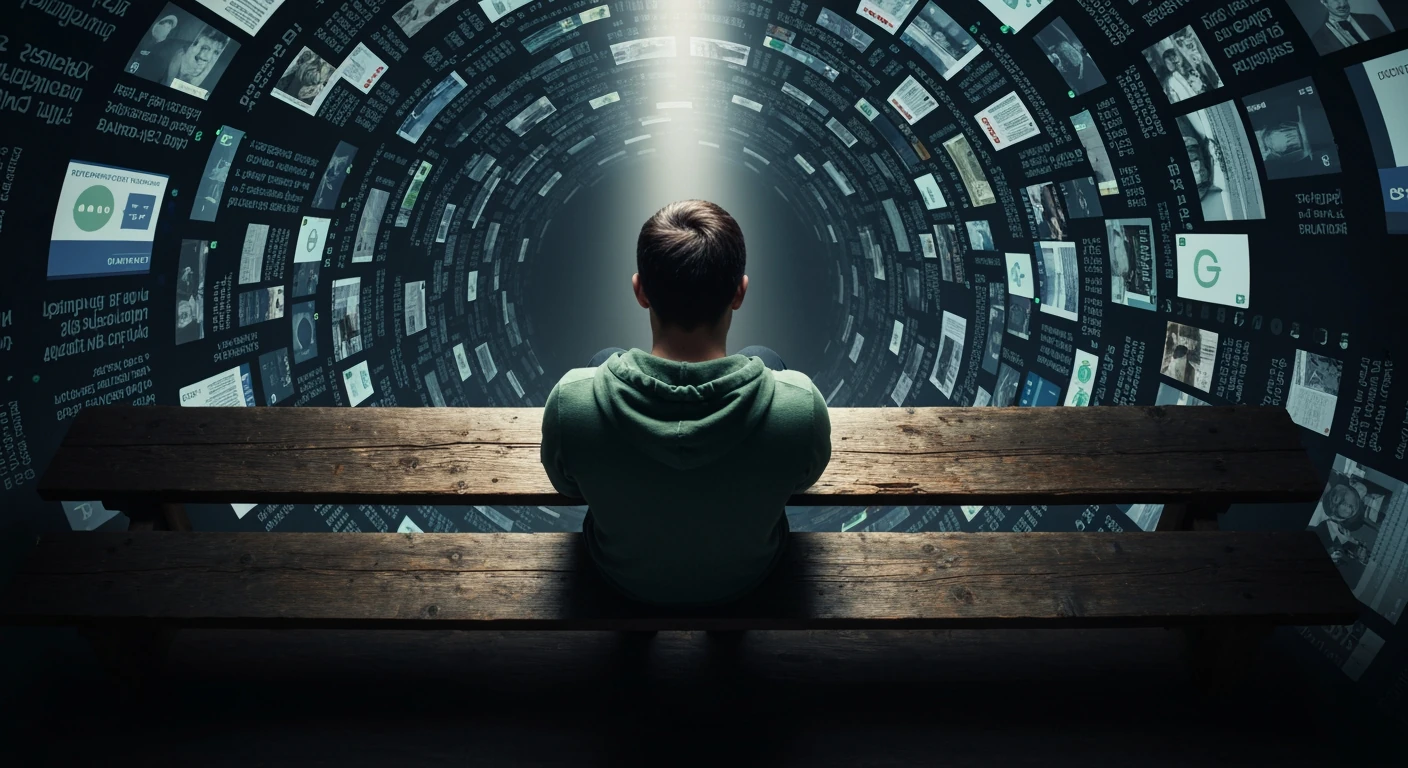
Your phone buzzes before your first coffee, and another breaking news alert demands your attention. By lunch, you’ve scrolled through a dozen developing stories, a constant stream of information that feels less like staying informed and more like standing under a firehose. This relentless exposure, often framed as a civic duty, has become a defining feature of modern life, but it carries a significant, often invisible, cost to our mental and emotional resources.
This phenomenon, widely known as information fatigue or “news overload,” is a direct consequence of the 24/7 media cycle. Our brains, wired to react to immediate threats, are not equipped to process a constant global feed of crises, controversies, and calamities. Research from institutions like the Reuters Institute highlights a growing trend of news avoidance, not out of apathy, but as a necessary defense mechanism. This constant state of high alert can lead to chronic anxiety, a sense of helplessness, and the compulsive habit of “doomscrolling”—endlessly consuming negative news even when it makes us feel worse.
But what if you could stay engaged without feeling overwhelmed? This guide moves beyond simply telling you to unplug. Instead, it offers a practical toolkit for mastering the modern news flow. We will explore how to leverage digital tools and AI to create a curated, personalized feed that serves your interests. You’ll learn how to set mindful boundaries and establish a healthy ‘news diet’ to protect your time and attention. Finally, we’ll cover the key skills of identifying quality information and seeking diverse perspectives, empowering you to become a informed citizen, not just a passive consumer of headlines.
The Modern Dilemma: Why News Overload is a Real Threat
Your phone buzzes with another breaking news alert before you’ve had your first coffee. By mid-morning, you’ve scrolled through updates on global politics, market fluctuations, and a dozen other developing stories. This constant flow feels like a civic duty, a way to stay informed and engaged. It is a modern expectation.
But this relentless stream of information comes with a hidden cost. The state of being perpetually “plugged in” leads to a condition known as information fatigue. A report from the Reuters Institute for the Study of Journalism found that 38% of people worldwide now say they actively avoid the news, citing reasons like repetitive topics and the negative impact on their mood. This isn’t apathy; it’s a defense mechanism against a digital deluge that feels impossible to manage.
The Psychological Toll of Constant Updates
Constantly absorbing information, particularly when it’s negative or alarming, has a direct impact on our mental well-being. Our brains are wired to react to threats, but they weren’t designed for the 24/7 global threat-monitoring system we carry in our pockets. This can trigger a low-grade, persistent state of anxiety or a sense of helplessness. What’s the real cost of being this connected? The data suggests it’s a significant drain on our cognitive and emotional resources.
This phenomenon is often called “doomscrolling” — the act of compulsively scrolling through bad news, even when it’s making you feel worse. Your brain’s ability to process information is a bit like a kitchen sponge. It can only absorb so much before it’s completely saturated and can’t take in anything else. When saturated with distressing news, it becomes harder to think clearly or feel optimistic, and it becomes nearly impossible to distinguish between biased reporting and objective facts.
The feeling of being overwhelmed yet under-informed is surprisingly common. You might know the headlines of twenty different stories but lack the deeper context that comes from more focused consumption. Many people turn to in-depth analysis to help make sense of complex current affairs without the noise. Ultimately, recognizing the symptoms of news overload is the first step toward reclaiming your mental space.
Curating Your Feed: Tools and Techniques for Smart Consumption
After acknowledging the mental toll of information overload, the next logical step is to seize control of the intake valve. This isn’t about building a wall against the world, but rather installing a smart filter. Taking control of your news diet is much like organizing a cluttered garage; you don’t burn everything down, you consciously decide which tools to keep on the workbench and which to store away. It requires intention and the right set of tools.
This process transforms your consumption from a passive reaction to a proactive engagement. You decide what matters, not the algorithm with the loudest voice.
Leveraging AI for Smarter News Delivery
Artificial intelligence has become a powerful ally in the fight against information fatigue. Modern news platforms use technical algorithms to learn your preferences—what topics you read, which sources you trust, and even what time of day you prefer to catch up. The system then delivers a feed specifically tailored to your interests, pushing urgent updates to the top and saving longer reads for later. This is the core principle behind crafting a personalized daily news digest that works for you, not against you.
What most people miss is that these AI tools require active training. By indicating which articles you like or dislike, you are constantly refining the algorithm to better serve your needs. A report from the Pew Research Center found that 53% of U.S. adults get news from social media, where these recommendation engines are dominant. Taking an active role in shaping that input is no longer optional for a healthy news diet.
News Aggregators: A Comparative Look
News aggregators are dedicated platforms designed to pull content from thousands of sources into one manageable interface. Instead of hopping between a dozen different websites and apps, you can follow specific publications, keywords, or topics in a single, streamlined feed. Three major players in this space are Feedly, Flipboard, and Google News, each offering a distinct approach to curation and discovery. Choosing the right one depends entirely on your personal consumption style and goals.
Feedly vs. Flipboard: A Feature Breakdown
For the user who wants granular control, Feedly is the clear frontrunner. Built on the foundation of RSS, it allows you to subscribe to nearly any website, blog, or journal. Its AI assistant, “Leo,” can be trained to prioritize articles based on keywords, mute irrelevant topics, and identify critical security threats. This level of customization comes at a price, with its Pro plan currently costing around $8.25 per month, making it one of the more advanced tactics for news consumption.
Flipboard, prioritizes the user experience with its beautiful, magazine-style layout. It excels at surfacing content you might not have found otherwise, making it a powerful tool for discovery. While it offers less precise control than Feedly, its visual appeal is undeniable—it’s dangerously easy to get lost in a well-curated “Smart Magazine.” With a reported user base of over 145 million, its approach clearly resonates with a broad audience seeking a more casual, aesthetically pleasing way to stay informed.
Social Media: Friend or Foe?
It’s impossible to discuss news curation without addressing social media. For many, platforms like X (formerly Twitter) and Facebook are the primary gateways to daily headlines. These platforms offer unparalleled speed and a diversity of voices, from official government sources to on-the-ground citizen journalists providing perspectives on current affairs. This immediacy, is a double-edged sword.
The algorithms are designed for engagement, not accuracy. Dr. Anya Sharma, a media psychologist at the University of Michigan, explains that “content that elicits a strong emotional response—often outrage—is more likely to be promoted, regardless of its factual basis.” This can create distorted echo chambers and fuel misinformation. But can you trust a system designed to keep your attention for advertisers to also deliver balanced news? To use these platforms wisely, you must become your own editor. This means creating private lists of trusted journalists, aggressively using the mute and block features, and developing a keen eye for recognizing and counteracting news bias.
Ultimately, managing your social media news feed is an ongoing negotiation between convenience and critical thinking.
Content that elicits a strong emotional response—often outrage—is more likely to be promoted, regardless of its factual basis.
— Dr. Anya Sharma, Media Psychologist, University of Michigan
| Strategy | Key Action | Expected Benefit |
|---|---|---|
| Digital Curation | Use news aggregators (like Feedly or Flipboard) and actively train their algorithms to filter out noise. | A streamlined, relevant news feed that reduces exposure to clickbait and repetitive content. |
| Mindful Habits | Schedule specific, time-limited news check-ins (e.g., 15 minutes twice a day) and enforce a digital curfew before bed. | Prevents constant distraction, reduces anxiety, and improves sleep quality and focus. |
| Quality Focus | Prioritize in-depth articles from reputable sources over superficial headlines and cross-reference stories with diverse perspectives. | Deeper understanding of complex issues and improved ability to identify bias and misinformation. |
Mindful Consumption: Setting Boundaries and Habits
Filtering your feed with digital tools is a great first step, but it’s only half the equation. True relief from news overload comes from changing your own behavior. It requires a shift from passive, reactive scrolling to active, mindful consumption. This is less about ignorance and more about intentionality—choosing what, when, and how much information you let into your day.
The constant barrage of updates can have a measurable impact. A report from the American Psychological Association found that for many adults, media consumption is a significant source of stress. The key is to treat information like your diet; you need balanced nutrition, not just a constant stream of empty calories. What most people miss is that setting boundaries isn’t a sign of weakness, but a strategy for mental clarity and deeper understanding. It allows you to engage more meaningfully with the stories that matter without burning out.
Implementing a Daily ‘News Diet’
Creating a structured plan is the most effective way to regain control. Thinking you’ll just “check less” rarely works without a concrete schedule. But how do you actually turn off the firehose of information without feeling completely disconnected? The goal is to create a routine that informs you without overwhelming you. Here’s a simple, four-step process to get started.
- Schedule Specific Check-in Times: Designate two or three specific times per day for news consumption—for instance, 15 minutes in the morning and 15 minutes in the evening. Outside of these windows, all news apps and websites are off-limits. This prevents the constant “snacking” on breaking news alerts that fragments your attention.
- Set a Hard Time Limit: Use a timer. When the alarm goes off, you stop. This might feel difficult at first, but it trains your brain to focus on getting the most important information efficiently. Knowing your time is limited also forces you to prioritize high-quality sources and avoid clickbait rabbit holes.
- Choose Your ‘Main Course’ Wisely: Instead of grazing across dozens of sources, pick one or two trusted outlets for your daily briefing. You might supplement this with a specialized summary—many people find success by crafting a personalized daily news digest that pulls from specific topics. This reduces decision fatigue and helps you better evaluate information and navigate potential news bias.
- Implement a Digital Curfew: Stop all news consumption at least an hour or two before bed. The light from screens and the often-stressful nature of late-breaking news can interfere with sleep quality—a surprisingly overlooked factor in managing daily anxiety. This quiet period allows your mind to wind down properly.
Sticking to this routine consistently is like building muscle at the gym; it requires discipline but yields significant results over time. Once you’ve mastered this basic structure, you can begin elevating your consumption with advanced tactics. The real benefit isn’t just reduced stress, but the newfound mental space to think critically about what you’ve read.
Identifying and Prioritizing Quality Information
Treating every news source the same is like assuming every restaurant has a five-star kitchen. Some serve well-researched meals, while others offer digital junk food. The first step to avoid news overload is developing the skill to tell them apart. But how do you spot the quality ingredients in a 24/7 news buffet?
Developing strong media literacy is primary. This means actively questioning what you read, checking for multiple sources, and looking for evidence rather than just opinion. A recent Gallup poll found that only 34% of Americans have a significant amount of trust in mass media, highlighting a widespread challenge. It pays to be skeptical.
Dr. Eleanor Vance, a media expert at the Poynter Institute, advises readers to look for outlets with clear correction policies and named authors. Anonymity can be a red flag. What most people miss is that even quality sources have leanings; the goal isn’t finding a perfectly neutral source but understanding how to navigate the inherent news bias in everything you consume.
Ultimately, fact-checking isn’t just for journalists anymore—it’s a basic survival skill for the modern citizen. Applying this filter consistently is one of the more advanced information tactics you can adopt to build a healthier news diet.
Beyond Headlines: Deep Dives and Diverse Perspectives
Once you’ve learned to separate credible information from noise, the next step is to move past the surface. Headlines and breaking news alerts—and let’s be honest, they’re often designed for maximum emotional impact—provide a snapshot, not the full picture. True understanding comes from engaging with in-depth analysis that explores the “why” and “how” behind an event, not just the “what.”
This is where you graduate from being a news consumer to a informed citizen. It’s about trading the sugar rush of constant updates for the sustained nourishment of real knowledge. This shift requires a more deliberate approach to what you read, watch, and listen to.
The Value of Long-Form Journalism
Long-form articles and investigative reports are the antidote to superficiality. While a 300-word news brief can tell you that a policy was passed, a 3,000-word feature can explain the decade of lobbying that led to it, the real-world impact on different communities, and the potential unintended consequences. Think of it like this: a headline is the appetizer, but long-form journalism is the entire multi-course meal, providing context, history, and substance.
But does it actually make a difference in comprehension? The data suggests it does. A study from the Annenberg Public Policy Center found that people who regularly read in-depth articles could recall 71% more contextual details about a topic compared to those who only scanned headlines and summaries. It’s the difference between knowing a name and knowing a person.
Seeking Out Diverse Voices
Consuming news from a single source, no matter how reputable, is like trying to understand a city by only walking down one street. You get a very narrow, and likely skewed, perspective. Actively seeking out a variety of sources is required for building a three-dimensional view of any issue. This means looking for outlets with different editorial stances, ownership structures, and target audiences.
The underrated factor here is stepping outside your own ideological bubble. It can be uncomfortable to read opinions that challenge your own, but it’s one of the best ways to spot weaknesses in your own arguments and understand the motivations of others. For anyone looking to get better at this, a solid guide to recognizing and counteracting news bias is an highly useful tool. It helps you read critically, not cynically.
International Perspectives on Global Events
This principle is especially important for international news. A major global event is never a single story; it’s a collection of many stories perceived through different cultural and national lenses. Consider a major international climate accord. A publication in the United States might focus on the economic costs to domestic industries. A newspaper in a low-lying island nation, will likely frame it as an existential matter of survival. Meanwhile, a state-run outlet in a major industrializing nation could emphasize the timeline for emissions reductions.
None of these perspectives is necessarily “wrong,” but each is incomplete on its own. By sampling reports from sources like the BBC (UK), Al Jazeera (Qatar), or The Times of India, you can assemble a much more nuanced and complete puzzle. Piecing together these expert perspectives on current affairs reveals the complex global dynamics at play.
Podcasts and Documentaries for Deeper Understanding
Written articles aren’t the only path to deeper knowledge. Audio and visual media can offer unique ways to connect with a story. Podcasts like NPR’s “Up First” or documentary series such as “Explained” on Netflix use narrative storytelling, sound design, and expert interviews to break down complicated subjects in an accessible and engaging format.
These formats can deliver an emotional and human connection that text sometimes struggles to convey. Hearing the tremor in a scientist’s voice as she discusses a discovery or seeing footage from a historical event can create a more lasting impact. Incorporating these into your media diet is one of several advanced tactics for elevating your news consumption.
Ultimately, going beyond the headlines isn’t about spending more time with the news—it’s about spending your time more wisely for a greater return on your understanding.
The Benefits of a Balanced News Diet
Stepping back from the constant flood of information isn’t about choosing ignorance; it’s about choosing clarity. The primary benefit of a curated news diet is a significant reduction in anxiety and mental fatigue. Constantly reacting to breaking alerts keeps our nervous systems on high alert. A study by the Reuters Institute found that 38% of people actively avoid the news, often citing its negative effect on their mood.
This is about reclaiming your focus.
When you consume information intentionally, you move from being a passive recipient to an active participant. Instead of just knowing what happened, you start to understand why it happened. This intentional approach allows you to engage with expert perspectives on current affairs without feeling overwhelmed. It’s like switching from a diet of sugary snacks to well-prepared meals—you get more actual nourishment and fewer energy crashes.
Ultimately, a balanced approach makes you a more effective and informed citizen. By filtering out the noise and focusing on quality analysis, you are better equipped to make sound decisions, whether in the voting booth, your community, or your own household. What most people miss is that understanding the full story requires more than just headlines; it involves learning how to recognize and counteract news bias effectively.
As media psychologist Dr. Evelyn Reed explains, “The goal isn’t to know less, but to understand more. A selective news consumer can often explain an issue with more depth than someone who scrolls headlines for hours.” This shift transforms your relationship with information from one of anxiety to one of empowerment, all by using smarter, more advanced consumption tactics.
From Information Overload to Intentional Insight
Mastering your news flow is ultimately not about consuming less, but about consuming better. The habits and tools outlined here are the first step in transforming your relationship with information from a reactive, stressful burden into a proactive, empowering asset. As algorithms become ever more technical at capturing our attention, the personal responsibility to curate, question, and occasionally disconnect becomes significant. The real question moving forward is this: How will you use your reclaimed time and mental clarity to engage more deeply with the issues that matter to you?
Frequently Asked Questions
What are the main signs of news overload?
The primary signs of news overload include feeling anxious, cynical, or helpless after consuming news. You might also find yourself actively avoiding updates, or conversely, compulsively checking for them. Another key indicator is knowing many headlines but lacking a deeper understanding of any single issue.
How can I effectively filter out biased news?
To filter biased news, make a habit of cross-referencing information across multiple sources with different editorial stances. Look for outlets that have clear correction policies and named authors. Utilizing non-partisan fact-checking websites can also help you verify claims and understand the context behind a story.
Is it okay to completely disconnect from the news sometimes?
Yes, it is not only okay but highly recommended. Taking periodic breaks, often called a ‘digital detox,’ allows your mind to reset and reduces stress. This intentional disconnection can improve your mental well-being and allow you to re-engage with the news later in a more focused and less reactive way.
What are some highly recommended news aggregation apps?
Several excellent news aggregators can help you manage information. Feedly offers granular control for users who want to follow specific sources and topics. Flipboard provides a more visual, magazine-style experience focused on discovery, while Google News excels at delivering personalized headlines from a vast range of outlets.
How does news overload impact productivity and mental health?
News overload significantly impacts mental health by contributing to increased anxiety, stress, and feelings of helplessness. On the productivity side, the constant stream of notifications and the urge to check for updates leads to fragmented attention, making it difficult to concentrate on deep work and complex tasks.