
The constant buzz of a notification, the endless scroll of a news feed—these are the rhythms of modern life. We are flooded with more information in a single day than our ancestors encountered in a lifetime, a reality that promises unparalleled awareness yet often delivers overwhelming anxiety. The challenge is no longer finding information; it’s navigating the relentless deluge without losing our sanity or our sense of what matters. How do you distinguish a credible report from a cleverly disguised opinion piece when both are presented with the same digital gloss?
This firehose of data represents a core shift from the media landscape of the past. Not long ago, information was curated by a handful of gatekeepers—editors and broadcasters who decided what was newsworthy. This created a shared public square of facts and discussion points. Today, that square has been replaced by a chaotic, algorithm-driven marketplace where every voice, from established institutions to anonymous trolls, competes for our attention. This decentralization has democratized information, but it has also placed the full burden of verification squarely on our shoulders.
Mastering this environment requires more than just passive consumption; it demands a proactive strategy. This guide offers a detailed framework for transforming your relationship with daily information. We will explore practical methods for identifying reliable sources and spotting the subtle signs of misinformation. You’ll learn how to consciously craft a personalized ‘information diet’ that nourishes your mind rather than exhausts it. Ultimately, the goal is to equip you with the skills to turn information from a source of stress into a tool for empowerment, enabling clearer thinking and more confident decision-making in every aspect of your life.
The Evolving Landscape of Daily Information
Not too long ago, the flow of daily information was predictable. It arrived with the morning paper or was broadcast in neatly scheduled blocks on the evening news. This structured delivery meant everyone shared a relatively common set of facts and starting points for discussion. The pace was manageable, allowing time for reflection before the next day’s headlines appeared. That world is gone. Today, information comes at us from all directions, 24/7. It’s a constant stream of notifications, updates, and breaking alerts. According to a recent report from the Reuters Institute, nearly 68% of people under 35 now use social media as their primary source for news, a platform designed for endless scrolling. Managing this influx is less like sipping from a glass of water and more like trying to drink from a firehose. The challenge has shifted from finding information to filtering it, leading to what many call information overload and highlighting the hidden costs of constant consumption. This digital shift presents a paradox. We have extraordinary access to diverse perspectives and real-time events from across the globe, which is a massive opportunity for a more informed public. Yet, this same environment creates echo chambers and makes it easier for misinformation to spread. With so many sources vying for our attention, how do we separate the signal from the noise? The underrated factor here is that the burden of verification has moved from the editor’s desk to the individual’s screen. It requires active participation, not passive reception. Ultimately, navigating this new reality means developing new skills. We must become curators of our own news diets, consciously choosing what to consume and what to ignore. Learning to look beyond the headlines is no longer just a good habit; it’s an primary skill for modern citizenship. The future of being well-informed depends on our ability to build a system that serves us, rather than overwhelms us.
Identifying Reliable Sources in a Noisy World
Trying to find trustworthy information online can feel like trying to get a drink from a firehose. You are bombarded with headlines, alerts, and opinions, making it difficult to separate fact from fiction. The sheer volume of content means that some questionable material will inevitably slip through. The challenge is not just consuming news, but actively vetting it.
But how do you build this vetting habit without spending hours on it? The underrated factor here is developing a mental checklist. It’s like checking the expiration date on milk before you buy it—a quick scan that saves you from a bad experience later. A recent study by the Reuters Institute for the Study of Journalism found that only 29% of people trust the news they see on social media, highlighting a widespread awareness of the problem.
A Checklist for Source Credibility
Before you accept a piece of information or share it, run it through a quick quality control process. These steps can help you develop better media literacy and move beyond the headlines to understand the real story. Not every source will pass every test, but a credible one will tick most of these boxes.
- Check the “About Us” Page: Reputable news organizations are transparent about their mission, funding, and who is on their team. If you can’t find this information easily, that’s a red flag.
- Look for an Author: Is the article attributed to a real person with a history of writing on the topic? A missing byline often indicates a lack of accountability.
- Verify the Sources: Does the article cite its sources? Credible journalism links to original studies, quotes experts by name, or references official documents. Be wary of vague phrases like “experts say” without clarification.
- Examine the Domain Name: Misinformation sites often use domain names that mimic legitimate news outlets, but with slight alterations like “.co” or an extra word (e.g., “realabcnews.com”). It’s a simple but surprisingly effective trick.
This process becomes second nature over time. It’s one of the core strategies for staying informed without getting overwhelmed.
Recognizing Misinformation and Disinformation
It’s also useful to distinguish between misinformation and disinformation. Misinformation is false information shared without the intent to harm, while disinformation is deliberately created and spread to deceive. The latter is far more dangerous. Recognizing its hallmarks is a critical skill for navigating today’s information environment.
One of the most powerful signals of disinformation is an appeal to strong emotion. Does the headline make you feel outraged, fearful, or vindicated? This is often a deliberate tactic to bypass your critical thinking faculties and encourage immediate sharing. According to data from a Stanford University study, articles with emotionally charged headlines were 23% more likely to be shared, regardless of their accuracy. Think about it. That’s a huge incentive to create manipulative content.
Other red flags include the use of old images in a new context, an absence of dates on the article, or claims that sound too perfect or too terrible to be true. The goal of this content isn’t to inform you about Brazil’s current events; it’s to manipulate your perception. The constant exposure to this can be draining, highlighting the hidden costs of news consumption.
Ultimately, building these verification habits isn’t about becoming a cynic. It’s about becoming a discerning consumer of information, capable of filtering out the noise to focus on what matters.
Media literacy is no longer a soft skill; it’s a core competency for modern life. In an environment saturated with information, the ability to discern, question, and contextualize is our primary defense against manipulation.
— Dr. Anya Sharma, Director of the Digital Futures Institute
| Platform | Best For | Key Features | Pricing (Approx.) |
|---|---|---|---|
| Feedly | Power users who want customization | AI-powered sorting (Leo), extensive integrations, multiple layout options, keyword alerts. | Free tier available; Pro starts around $8/month. |
| Inoreader | Researchers and archivists | Advanced search and filtering rules, content archiving, social media feed integration. | Free tier available; Pro starts around $7/month. |
| Apple News | Casual readers in the Apple ecosystem | Sleek interface, curated “Top Stories,” integration with paid publisher subscriptions. | Free with ads; News+ subscription for premium content is $12.99/month. |
| Google News | Algorithm-driven personalization | “For You” section adapts to reading habits, local news emphasis, “Full Coverage” feature shows multiple sources. | Free. |
Crafting Your Personalized Information Diet
Just as you wouldn’t eat every item in a grocery store, you shouldn’t consume every piece of information that flashes across your screens. Creating a personalized information diet is about making conscious choices to build a sustainable and nourishing news habit. This approach helps you stay informed without succumbing to the burnout that often accompanies the 24/7 news cycle. It’s a proactive strategy to manage the mental load and avoid the hidden costs of constant news consumption.
The goal isn’t to create an echo chamber, but to filter for quality, relevance, and mental well-being. Think of it like packing a lunchbox for your brain. Instead of grabbing whatever is available, you intentionally select items that will sustain you throughout the day. A report from the Reuters Institute for the Study of Journalism found that 38% of people now actively avoid the news, citing feelings of powerlessness and anxiety. This highlights the urgent need for a more deliberate approach to what we read.
Tools for Effective News Curation
Moving away from algorithm-driven social media feeds is the first major step. These platforms are designed for engagement, not necessarily for your enlightenment. Fortunately, a variety of tools can put you back in the driver’s seat of your daily information flow.
RSS (Really Simple Syndication) readers are a classic, powerful option. Tools like Feedly and Inoreader allow you to subscribe directly to the websites and blogs you trust, pulling all new articles into a single, clean interface free from distracting comments or ads. This method gives you complete control over your sources. But how do you build this custom news feed without spending hours every day? You start by curating a list of 10-15 high-quality sources across different viewpoints and topics.
Another excellent method is subscribing to curated email newsletters. Many journalists and publications distill the day’s most important events into a concise, readable format. These newsletters—some from major outlets, others from independent creators—often provide analysis and context that you won’t find in breaking news alerts. Finally, topic-specific apps for areas like technology, science, or finance can offer focused updates without the noise of a general news feed.
Balancing Depth and Breadth in News Consumption
A well-rounded information diet requires a mix of broad awareness and deep knowledge. It’s easy to get stuck in one mode: either skimming countless headlines without understanding the substance or getting lost in a single topic while ignoring the rest of the world. The key is to structure your consumption intentionally. For instance, you might dedicate 15 minutes in the morning to a broad overview from a reliable aggregator or a daily briefing podcast.
This gives you the general landscape. Later, you can set aside a dedicated block of time—perhaps 30 minutes in the evening—to explore a few key stories in greater detail. This is where you move from just knowing what happened to understanding why it happened. Following effective strategies for staying informed involves this conscious separation of scanning for breadth and reading for depth.
The Role of Niche Publications
While major news organizations are necessary for broad coverage, niche publications are where you find true expertise. These smaller outlets, blogs, and academic journals focus on specific industries or topics, from climate science to urban planning. Following a few high-quality niche sources in your areas of professional or personal interest adds incredible depth to your understanding.
The underrated factor here is that these publications often uncover stories before they hit the mainstream. Their writers are typically specialists who have been tracking subtle shifts for months or even years. Incorporating their work ensures you’re not just reacting to big headlines but are also aware of the underlying trends shaping them — an primary part of understanding Brazil’s current events and global developments.
This builds a more resilient knowledge base.
Comparison of News Aggregation Platforms
Choosing the right platform depends entirely on your personal needs, budget, and how much control you want over your feed. There is no single “best” option, only the one that fits your workflow. Here’s a quick comparison of some popular choices.
| Platform | Best For | Key Features | Pricing (Approx.) |
|---|---|---|---|
| Feedly | Power users who want customization | AI-powered sorting (Leo), extensive integrations, multiple layout options, keyword alerts. | Free tier available; Pro starts around $8/month. |
| Inoreader | Researchers and archivists | Advanced search and filtering rules, content archiving, social media feed integration. | Free tier available; Pro starts around $7/month. |
| Apple News | Casual readers in the Apple ecosystem | Sleek interface, curated “Top Stories,” integration with paid publisher subscriptions. | Free with ads; News+ subscription for premium content is $12.99/month. |
| Google News | Algorithm-driven personalization | “For You” section adapts to reading habits, local news emphasis, “Full Coverage” feature shows multiple sources. | Free. |
Your choice acts as the foundation for your diet. The real work begins as you consciously prune and add sources over time, refining a feed that informs you effectively without overwhelming your senses.
The Impact of Information on Decision-Making
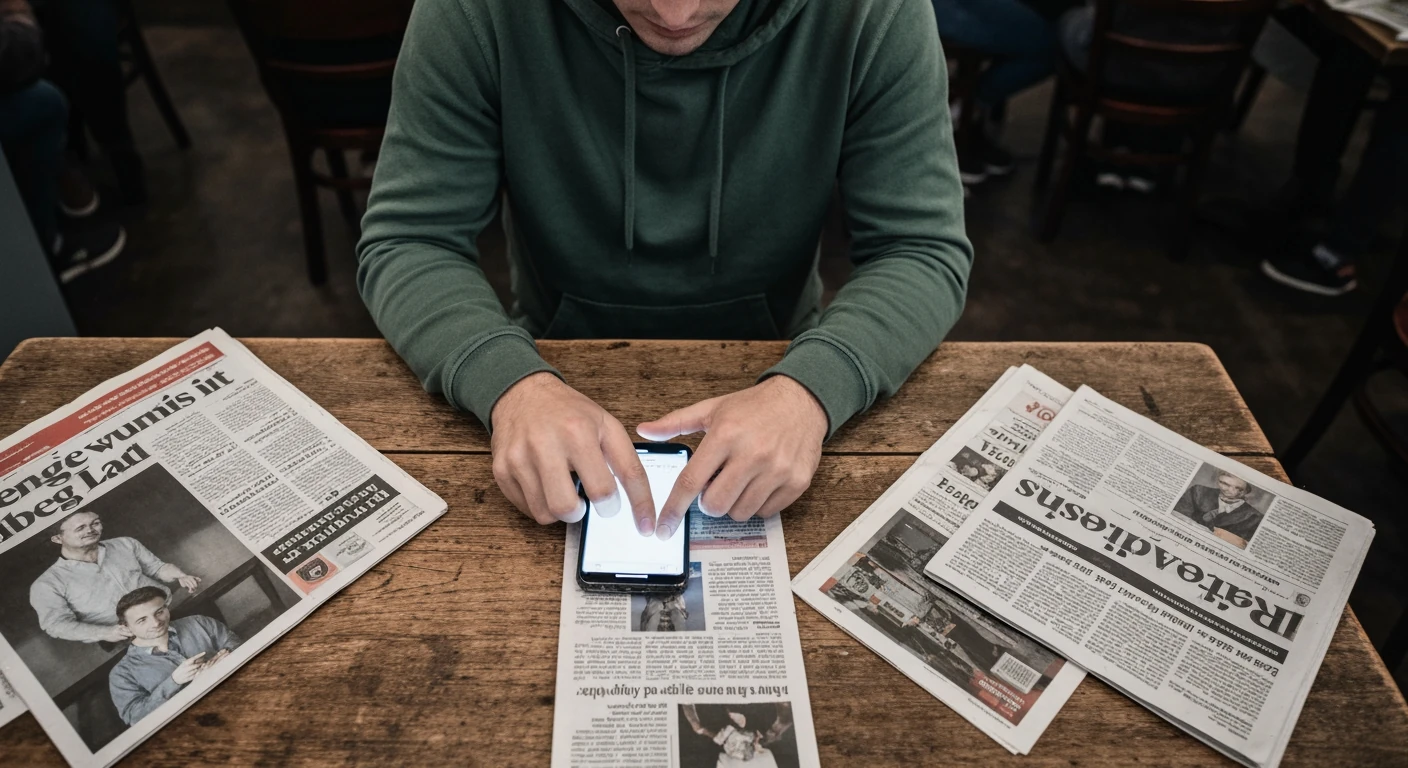
Once you’ve tailored your information sources, the real work begins. The quality of your daily information intake has a direct and measurable effect on the choices you make, from personal finances to civic duties. Think of it less as just “staying updated” and more as gathering the raw materials for better judgment. Making a big decision without good information is like trying to cook a new recipe with half the ingredients missing; you might get something edible, but it won’t be what you intended.
This isn’t just a gut feeling. Research from the Brazilian Institute of Public Opinion and Statistics (IBOPE) suggests that individuals with a consistent, high-quality news diet report a 37% higher confidence level in their long-term financial planning. But how does reading about Brazil’s most pressing national stories translate to better personal choices? It develops a muscle for critical thinking that applies everywhere.
You begin to spot patterns and understand context far beyond the surface-level noise.
This heightened awareness extends directly to civic engagement. An informed public is the bedrock of a functioning democracy, capable of holding leaders accountable and participating meaningfully in political discourse. When you understand the nuances behind policy debates, you’re better equipped to vote, advocate, and contribute to your community. This process transforms you from a passive spectator into an active participant, helping you decode the stories shaping your world.
Ultimately, a steady flow of reliable information doesn’t just make you smarter—it makes you more capable and empowered in nearly every aspect of your life.
Strategies for Sustainable Information Consumption
While staying informed is a cornerstone of engaged citizenship, the sheer volume of informação diária can quickly lead to burnout. The constant stream of updates, alerts, and breaking stories creates a state of digital overwhelm. Managing this flow isn’t about willful ignorance; it’s about intentional engagement. It’s about building a sustainable relationship with the news.
Setting Boundaries with News Consumption
The first step is to treat information like any other consumable: in moderation. Constant exposure to the news cycle, particularly negative events, can significantly impact mental health. A study from the American Psychological Association found that over half of Americans report high levels of stress from news consumption. To counter this, establish clear “no-news” zones and times.
This could mean no phones at the dinner table or avoiding news for the first hour after waking up and the last hour before bed. Consider dedicated “news windows”—perhaps 20 minutes in the morning and 20 in the evening—to catch up. This approach is like setting a budget for your attention. Instead of letting notifications spend it for you, you decide exactly where it goes. This deliberate practice is one of the core strategies for staying informed without the fatigue.
The goal is to shift from a reactive to a proactive consumer.
Practicing Mindful Engagement
Beyond just limiting time, the quality of your engagement matters. Mindless scrolling through headlines is the junk food of information consumption—it feels like you’re doing something, but it offers little real nourishment. Mindful consumption means actively choosing your sources and engaging with content critically. Instead of passively absorbing a push notification, you actively seek out thoughtful analysis.
Ask yourself: why am I reading this? Is it to understand a complex issue, or am I just looking for a quick emotional reaction? This self-awareness can help you filter out clickbait and outrage-driven content. The underrated factor here is recognizing your own emotional state before you even open a news app. If you’re already feeling anxious, diving into a doomscroll is like pouring gasoline on a fire.
The Benefits of a News Fast
For those feeling completely overwhelmed by information fatigue, a short-term “news fast” or digital detox can be remarkably effective. This involves completely disconnecting from all non-primary news sources for a set period, like a weekend or even a full week. It’s not about permanent disengagement, but about hitting a reset button.
Many people who try this report a significant reduction in anxiety and an improved ability to focus. After the break, they can re-introduce news with more intention and a clearer perspective on what matters. It helps break the compulsive cycle of checking for updates and reveals the hidden costs of our constant connection to global events.
Leveraging Technology for Digital Wellbeing
Ironically, you can use technology to protect yourself from technology. Most smartphones have built-in digital wellbeing or screen time features that allow you to set daily time limits for specific apps. Use them. Setting a 30-minute daily limit on your primary news app forces you to be more selective with your attention.
Aggressively manage your notifications. You likely don’t need breaking news alerts for every minor development. Turn them off for most apps, leaving them on for only one or two trusted, high-quality sources. You can also use tools like email newsletters or a curated daily digest to receive a single, consolidated summary of the day’s events. This puts you back in control of the information faucet—you turn it on when you’re ready, rather than letting it drip all day long. This curated approach provides a framework for unpacking headlines on your own terms.
By implementing these strategies, you can transform your relationship with daily information from a source of stress into a tool for empowerment and understanding.
From Information Consumer to Knowledge Builder
Moving forward, the ultimate goal isn’t just to build a better filter for the news, but to change our underlying role in the information ecosystem. The strategies for vetting sources and managing consumption are the foundation, but what do you build upon it? The next frontier is shifting from being a passive consumer, defending against a flood of data, to becoming an active architect of your own knowledge. This involves not just filtering what comes in, but synthesizing it, connecting disparate ideas, and forming a unique, resilient worldview. What happens when we stop asking, ‘What’s new?’ and start asking, ‘How does this connect to what I already know?’
Frequently Asked Questions
1. How can I tell if a news source is biased?
Look for signs like emotionally charged language, headlines that present opinions as facts, and a consistent pattern of highlighting facts that support only one viewpoint. Reputable sources often feature diverse perspectives and clearly label opinion pieces. Also, check the ‘About Us’ section for the organization’s stated mission and funding.
2. What are the best apps for news aggregation?
The best app depends on your needs. Feedly and Inoreader offer deep customization and control for users who want to curate their own source lists. For a more streamlined, algorithm-driven experience, Apple News and Google News are excellent choices that learn your interests over time.
3. How much news should I consume daily without feeling overwhelmed?
There’s no single right answer, but a healthy approach is to set specific, limited time slots for news. Try dedicating 15-20 minutes in the morning and again in the evening to catch up, rather than constantly checking throughout the day. This prevents burnout and allows you to engage more deeply with the content you choose.
4. Can consuming too much news be harmful?
Yes, excessive news consumption, especially of negative or sensationalized stories, can lead to increased anxiety, stress, and a sense of helplessness, often called ‘news fatigue.’ It is important to set boundaries, take regular breaks, and balance news intake with other activities to protect your mental well-being.
5. What is media literacy and why is it important?
Media literacy is the ability to access, analyze, evaluate, and create media in various forms. It’s a critical skill in the digital age because it empowers you to identify misinformation, understand how media messages are constructed, and make informed decisions as a citizen. It is the foundation for navigating a complex information landscape confidently.