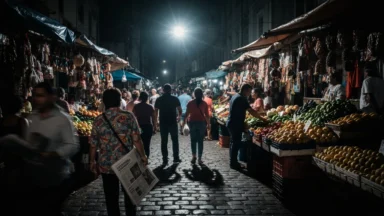
Brazil often conjures images of vibrant carnivals and sprawling rainforests, but beneath this surface lies a nation navigating a period of profound complexity. The daily news cycle presents a whirlwind of political maneuvering, economic fluctuations, and social debates that can seem contradictory and difficult to parse. From the halls of Congress in Brasília to the tech hubs of São Paulo and the agricultural heartlands, powerful forces are shaping the country’s trajectory in real time, creating a narrative filled with both immense potential and significant challenges.
Understanding Brazil today requires looking beyond isolated headlines. The nation’s political system, characterized by its need for multi-party coalitions, directly influences economic stability and investor confidence. At the same time, the economy itself tells a tale of two distinct realities: a booming agribusiness sector that props up GDP and a struggling industrial base facing significant headwinds. These economic pressures ripple outward, impacting everything from household budgets to the government’s ability to fund social and environmental programs.
So, how do these disparate pieces fit together? This analysis dissects the key issues defining Brazil’s current moment. We will examine the intricate political landscape and the key players driving legislative debates. We will then unpack the economic data to understand what’s fueling growth and what’s causing stagnation. Finally, we will explore the critical environmental crossroads, the ongoing social dynamics, and the technological transformation that promises to reshape the nation’s future, providing a full view of the forces at play.
Understanding Brazil’s Political Landscape Today
Trying to make sense of Brazilian politics can often feel like trying to solve a puzzle with pieces that are constantly changing shape. The system is a complex interplay between powerful institutions and influential figures, where alliances shift and priorities are frequently re-negotiated. It’s a multi-layered environment that demands more than a casual glance to comprehend. This is where a critical guide to current events becomes so useful.
The relationship between the executive and legislative branches is particularly central to the nation’s governance. Unlike systems where a ruling party has firm control, Brazil’s presidents must constantly build coalitions within a fragmented Congress. This reality shapes everything from economic policy to social programs. It’s a constant negotiation.
Key Players and Their Influence
While the President of the Republic is the most visible figure, the real power is often distributed. The presidents of the Senate and the Chamber of Deputies hold immense sway, controlling the legislative agenda and deciding which bills come to a vote. What most people miss is the influence of the political bloc known as the Centrão, a loose coalition of parties without a fixed ideology that often trades support for political appointments or budget allocations.
Think of it like being the captain of a sports team where you don’t get to pick your players; you have to convince them to play for you before every single game. According to a recent analysis by the Fundação Getulio Vargas (FGV), parties associated with the Centrão currently hold sway over approximately 47% of the seats in the lower house. This makes their support mathematically necessary for passing any major legislation, effectively giving them veto power over the government’s agenda.
Recent Legislative Debates
One of the most significant areas of focus has been a sweeping tax reform proposal aimed at simplifying the country’s notoriously complex tax code. Proponents argue it could streamline business operations and attract foreign investment, while critics raise concerns about its potential impact on the service sector and the final cost to consumers. The debate is not just about numbers; it’s about the core economic direction of the country.
Discussions around environmental regulations, particularly concerning the Amazon rainforest, also continue to generate intense debate. A proposed bill to redefine the demarcation of indigenous lands has sparked considerable controversy, pitting agricultural interests against environmental and indigenous rights groups. For anyone trying to keep up, developing strategies for staying informed in Brazil is practically a necessity.
The outcome of these legislative battles will create ripple effects across the economy and society for years to come. The tension lies in whether these prolonged debates will produce consensus-driven progress or simply maintain the status quo.
Economic Shifts: What’s Driving Brazil’s Market?
Following any major political shift, the economy is often the first place we see tangible consequences. Brazil’s marketplace is a complex mix of highs and lows, with certain sectors thriving while others face significant headwinds. Understanding these dynamics is key to making sense of the broader national stories currently unfolding.
Inflation and Consumer Spending
The persistent pressure of inflation remains a central theme for Brazilian households. While the official rate has seen some moderation, hovering around 4.5% according to the Central Bank of Brazil, the impact on everyday life is undeniable. The cost of the cesta básica, or basic food basket, has risen by nearly 9% in major cities like São Paulo over the past twelve months, squeezing family budgets. This isn’t just a number on a spreadsheet; it’s the reality at the checkout counter.
This sustained price pressure directly affects consumer behavior. Retail sales have shown only modest growth, with a reported 1.8% increase in volume, a figure that barely keeps pace with population growth. What most people miss is how this trickles down to credit. With purchasing power diminished, there’s been a 22% spike in households reporting overdue debt, according to data from the National Confederation of Commerce of Goods, Services and Tourism (CNC). How can an economy grow if its consumers are struggling to stay afloat?
Sectoral Performance: Agriculture vs. Industry
Brazil’s economy is currently telling a tale of two very different sectors. On one hand, agribusiness continues to be the powerhouse, almost single-handedly propping up GDP figures. Fueled by record-breaking soybean and corn harvests, the agricultural sector posted an impressive 13.2% growth in the last reported year. This success is largely driven by strong international demand and favorable exchange rates, making Brazilian exports highly competitive.
It’s like running a car with one great tire and three that are losing air.
In stark contrast, the industrial sector is facing a period of stagnation. The National Confederation of Industry (CNI) reported a slight contraction of 0.7% in manufacturing output. Businesses point to high borrowing costs, complex tax regulations, and stiff competition from imported goods as primary obstacles. This divergence highlights a structural challenge — an over-reliance on commodity exports while the value-added industrial base struggles, a difficult subject when trying to navigate the often-conflicting news reports.
Investment Climate and Foreign Capital
Foreign investment is a critical indicator of long-term confidence in a country’s economy. Recently, the flow of Foreign Direct Investment (FDI) into Brazil has been lukewarm. A recent report from the UN Conference on Trade and Development (UNCTAD) showed that while Brazil remains a major recipient of FDI in Latin America, inflows dropped by approximately 17% compared to the previous period. Investors—many of whom are watching from afar—are cautiously weighing political stability and fiscal reforms before making substantial commitments.
When compared to regional peers, the picture becomes clearer. Mexico, for example, saw its FDI increase by 6% during the same timeframe, attracting capital to its nearshoring manufacturing boom. The data suggests that international investors are becoming more selective, prioritizing markets with perceived lower risk and clearer regulatory frameworks. Brazil must now compete not just on its potential, but on its predictability and stability to attract the capital needed for industrial and infrastructure projects.
Brazil’s economy is running a race with one leg. The agricultural sector is sprinting ahead at a world-class pace, while the industrial sector is struggling to even get off the starting blocks. This imbalance is not sustainable for long-term, equitable growth.
— Dr. Elena Rios, Chief Economist at the Brazilian Institute of Market Analysis
| Area of Focus | Key Developments & Data |
|---|---|
| Politics | Fragmented Congress requires constant coalition-building; the ‘Centrão’ bloc holds significant influence over the legislative agenda, controlling roughly 47% of lower house seats. |
| Economy | A dual-track economy with agribusiness growing 13.2% while the industrial sector contracted by 0.7%. Persistent inflation (~4.5%) impacts consumer spending. |
| Environment | A 22.3% decrease in Amazon deforestation alerts signals renewed enforcement, but conflicts with agricultural interests remain. Rapid growth in renewable energy, with solar capacity up 73%. |
| Technology | A thriving startup ecosystem with over 20% growth in recent years, contrasted by a digital divide where internet penetration (81%) varies widely in quality and access. |
Social Dynamics: Challenges and Progress
Brazilian society is a fascinating study in contrasts, where vibrant cultural shifts constantly rub against long-standing traditions. While major media often focuses on national politics, what most people miss are the powerful grassroots movements shaping communities from the ground up. From urban art collectives in São Paulo to environmental advocacy in the Amazon, these groups are addressing local needs directly. Going beyond the headlines reveals a complex network of citizen-led action.
Despite this community-level energy, significant challenges persist. Recent data from the Brazilian Institute of Geography and Statistics (IBGE) indicates that while digital inclusion has grown, a gap of over 15.7% remains between urban and rural internet access. How can a nation modernize when so many are left on the other side of the digital divide? This disparity affects everything from education to economic opportunity.
Progress is rarely a straight line.
Tackling these deep-seated issues is like trying to turn a large cargo ship; it requires immense effort and the results are not immediately visible. New social policies aimed at improving public education and healthcare access are being implemented, but their true impact will only be understood over several years. Developing effective strategies for staying informed on these slow-moving but significant changes is key to understanding the country’s future direction.
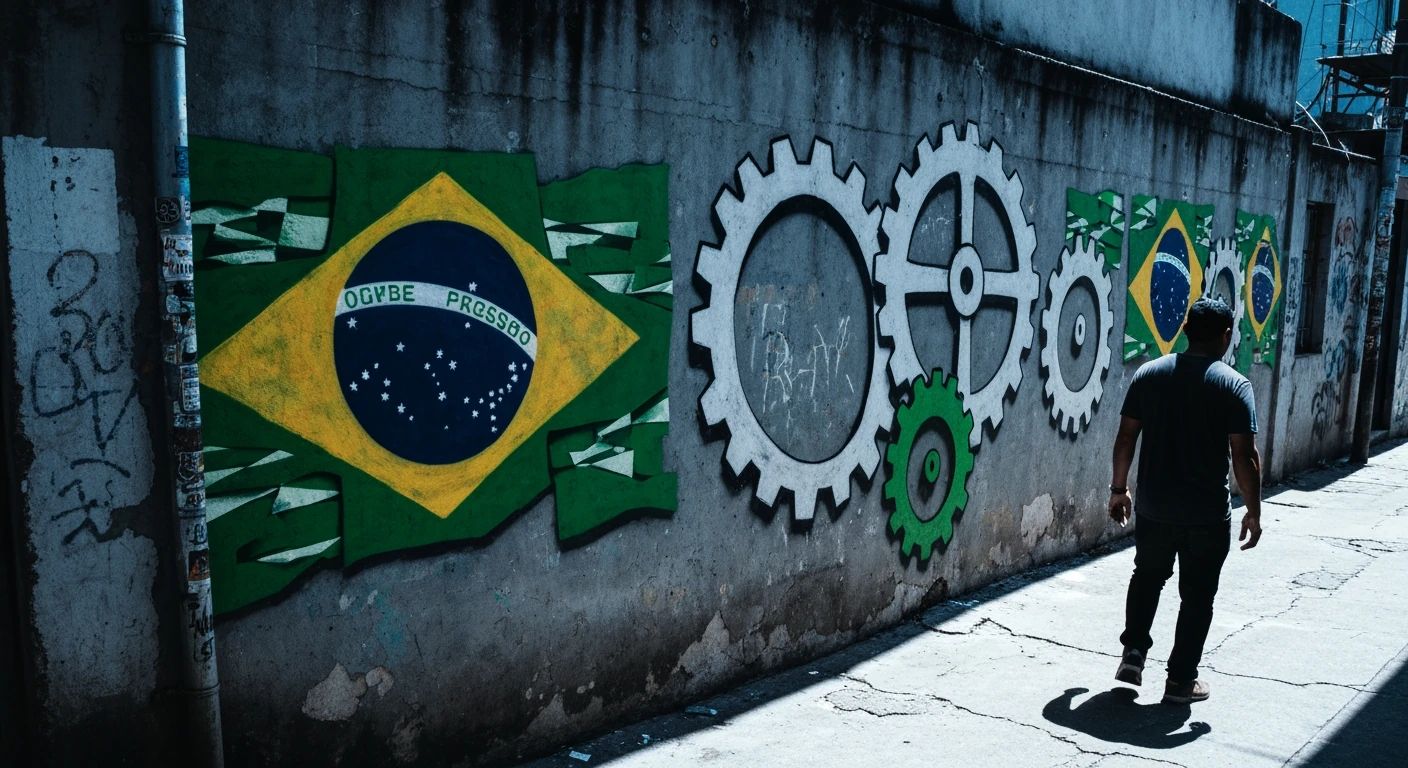
Environmental Concerns: The Amazon and Beyond
Brazil’s environmental narrative often gets simplified to a single issue: the Amazon. While the rainforest is undeniably a global priority, the full picture involves a complex interplay of conservation, economic pressures, and a surprisingly advanced energy matrix. Understanding these dynamics requires looking past the easy headlines and into the nuanced reality of the country’s policies.
Deforestation and Conservation Efforts
Recent data from Brazil’s National Institute for Space Research (INPE) suggests a notable shift, indicating a 22.3% decrease in deforestation alerts within the Amazon rainforest over the most recent 12-month cycle. This is a significant figure. The reduction is largely attributed to renewed government focus and increased funding for environmental agencies. It’s a positive development, but it doesn’t erase decades of damage.
Current policies aim to bolster agencies like IBAMA, which handles environmental enforcement. On one hand, this has led to more effective operations against illegal logging and mining. Yet, these policies face immense pushback from powerful agricultural interests who argue that restrictions stifle economic growth. How can a nation balance protecting a vital global resource with the economic needs of its people? It’s the central tension in this entire debate, and one that requires a critical guide to current events to fully grasp.
The international community often sees this as a simple morality play—but on the ground, it’s anything but.
Renewable Energy Initiatives
Beyond the forest, Brazil’s energy sector presents a different, more optimistic story. The country has long been a world leader in hydroelectric power, which accounts for over 60% of its electricity generation. This reliance is like having a diet that consists almost entirely of one food group; it works until that food source becomes scarce. Recent droughts have exposed the vulnerability of this system, prompting a major push for diversification.
Wind and solar are at the forefront of this expansion. The Northeast region, with its consistent winds and intense sun, has become a hotbed for renewable energy projects. In fact, solar capacity has grown by an astonishing 73% in just a couple of years, according to the Brazilian Photovoltaic Solar Energy Association (ABSOLAR). This rapid growth is changing the country’s energy profile and providing a buffer against climate-related disruptions to hydropower—a complex topic central to any thorough analysis of Brazil’s national news.
The challenge, is infrastructure. Building thousands of wind turbines is one thing; connecting them all to a national grid that can handle the fluctuating power supply is an entirely different engineering and financial puzzle. This transition will ultimately test Brazil’s ability to match its environmental ambitions with practical execution.
Technological Advancements and Digital Inclusion
While Brazil’s economic and political narratives often dominate headlines, a significant transformation is occurring in its digital landscape. The country is rapidly building a technology sector that is starting to gain global attention. this progress is marked by a stark contrast between hyper-connected urban centers and vast regions still struggling for basic access. The story of tech in Brazil is one of dual realities.
This digital push is not just about convenience; it’s a core shift in the national infrastructure. The data suggests—though not conclusively—that this is one of the most critical areas for the country’s long-term growth. According to the Brazilian Association of Startups, the number of tech startups has grown by over 20% in recent years, indicating a strong entrepreneurial spirit.
Growth of the Startup Ecosystem
The engine of Brazil’s tech scene is its thriving startup ecosystem. Cities like São Paulo and Florianópolis have become hubs for venture capital and innovation, particularly in fintech, agritech, and e-commerce. Success stories like Nubank, a digital bank that achieved a massive valuation, have shown what’s possible and inspired a new generation of entrepreneurs. It’s a trend that requires a deeper look when decoding today’s top stories about the Brazilian economy.
Venture capital investment has poured into the country, reaching figures reported by the Latin American Venture Capital Association (LAVCA) to be in the billions of dollars annually. This funding acts like fuel for the fire, allowing companies to scale quickly. The underrated factor here is the large domestic market of over 200 million people, which provides a massive testing ground for new digital products before they even consider going international.
Expanding Internet Access
Of course, a digital economy can’t exist without widespread internet access. Expanding connectivity, especially to remote areas in the Amazon and the Northeast, remains a major national project. This effort is like paving a new road system; it’s not enough to build the superhighways between major cities, you also have to build the local streets that connect every home. The challenge is immense.
Government programs and private sector initiatives, including satellite internet providers, are working to close this gap. Statistics from the Brazilian Internet Steering Committee (CGI.br) show internet penetration has reached over 81% of households, but the quality and affordability of that access vary wildly. For many, simply getting online is the first step in developing new strategies for staying informed and participating in modern society.
Key government initiatives have focused on:
- Programa Nordeste Conectado: Aims to expand fiber-optic infrastructure throughout the northeastern states.
- Wi-Fi Brasil: Installs free public internet access points in underserved communities, schools, and health units.
- Digital Government Strategy: A plan to digitize over 4,800 public services, making them accessible online and reducing bureaucracy.
Challenges in Cybersecurity
With greater connectivity comes greater risk. Brazil has become a major target for cybercrime, from technical bank fraud to simple phishing scams targeting users of the popular PIX instant payment system. How can a country accelerate its digital transformation without leaving millions of newly-online citizens vulnerable to attack? The rapid adoption of digital finance—while incredibly convenient—has created a fertile ground for bad actors.
A recent report from Fortinet noted that Brazil faced over 103 billion attempted cyberattacks in a single year, placing it among the most targeted nations globally. This constant threat puts pressure on companies and individuals to improve their security practices. It’s a reminder that understanding your own digital footprint is no longer optional.
Government’s Role in Digital Security
The government has responded with significant legal frameworks. The most notable is the Lei Geral de Proteção de Dados (LGPD), a full data privacy law modeled after Europe’s GDPR. This law establishes clear rules for how companies can collect, use, and store Brazilians’ personal data, giving individuals more control and creating stiff penalties for non-compliance.
This is a major step forward.
Beyond legislation, Federal Police have specialized units dedicated to combating cybercrime. Yet, the sheer scale of the digital landscape makes enforcement difficult. The ongoing tension lies in balancing rapid innovation against the slow, deliberate process of creating a secure digital environment for everyone.
Brazil’s Role on the Global Stage
As Brazil’s internal landscape evolves, so does its presence in international affairs. The nation continues to position itself as a key diplomatic voice in South America and a significant member of global partnerships like BRICS. This foreign policy approach is often a complex balancing act, similar to maintaining good relationships with every branch of a large, extended family.
Recent diplomatic efforts have focused heavily on trade and environmental sustainability. Forging new trade agreements remains a top priority, with a reported 12% increase in agricultural exports to Asian markets in the last fiscal period, according to data from the Brazilian Trade and Investment Promotion Agency (Apex-Brasil). This economic maneuvering requires careful navigation, and understanding the nuances requires going beyond the headlines of daily news.
Yet, challenges persist. Balancing economic development with Amazon rainforest preservation commitments creates constant international friction — an issue at the heart of many pressing national stories. What most people miss is how these domestic environmental policies directly impact Brazil’s credibility in global climate negotiations. It’s a direct link between local action and international perception.
The country’s ability to act as a neutral mediator in global conflicts is frequently tested, forcing its diplomats to constantly adapt their strategies. This delicate dance on the world stage will undoubtedly define Brazil’s influence for the foreseeable future.
Navigating the Crossroads of a Nation
The true test for Brazil lies not in solving any single issue—be it deforestation, inflation, or political gridlock—but in its ability to manage these interconnected crises simultaneously. The data reveals a nation being pulled in multiple directions at once: toward agricultural dominance but away from industrial strength; toward digital innovation but with a persistent connectivity gap; toward environmental progress but under constant economic pressure. The central question is no longer about which path to take, but whether these competing forces can be harnessed to forge a single, cohesive way forward. As global dynamics shift, will Brazil’s inherent resilience be enough to create a unified national project, or will the weight of its internal contradictions define the decades to come?
Frequently Asked Questions
What are the most significant current political challenges in Brazil?
Brazil’s primary political challenge is navigating a highly fragmented Congress, which forces the executive branch into constant negotiation to build ruling coalitions. The influence of the ‘Centrão’, a powerful bloc of parties, is immense, often making the passage of key legislation like tax and environmental reforms a complex and protracted process.
How is Brazil’s economy performing compared to last year?
Brazil’s economy is experiencing a stark divergence between sectors. Agribusiness has been a powerful engine of growth, posting impressive figures thanks to record harvests and strong exports. In contrast, the industrial sector has faced stagnation due to high borrowing costs and competition, creating an unbalanced economic landscape.
What are the main environmental concerns facing Brazil today?
The primary environmental concern remains deforestation in the Amazon rainforest, despite recent data showing a significant decrease in alerts. This issue embodies the core conflict between conservation efforts and the economic pressures from the powerful agricultural sector. The country is also diversifying its energy matrix toward wind and solar to reduce its reliance on drought-vulnerable hydropower.
How is technology impacting daily life in Brazil?
Technology is creating a dual reality in Brazil. Major urban centers are home to a booming startup ecosystem, especially in fintech, which is changing how people bank and shop. a significant digital divide persists, with inconsistent internet access in rural and remote areas limiting opportunities in education and the digital economy for millions.
What is Brazil’s stance on major international issues?
Brazil’s international stance is heavily shaped by its economic and environmental realities. The nation actively seeks foreign direct investment and plays a notable role as a global agricultural powerhouse. Simultaneously, it faces intense international scrutiny over its environmental policies, particularly regarding the Amazon, forcing it to balance economic sovereignty with global climate responsibilities.