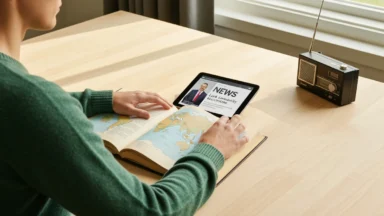
Trying to keep up with the constant stream of notícias atualizadas in Brazil can feel like an impossible task. Every refresh of the screen brings a new wave of political developments from Brasília, economic forecasts from São Paulo, and urgent local updates. This digital deluge, delivered through an endless scroll of social media feeds and push notifications, creates a paradox: we have more access to information than ever, yet feel less equipped to make sense of it all.
This isn’t just a feeling; it’s a documented shift in media consumption. Data from the Reuters Institute reveals that a staggering 85% of Brazilians now primarily access news online, with a significant portion relying on platforms like WhatsApp, where context is often stripped away and misinformation thrives. The result is a widespread sense of information overload, a mental fatigue that can lead to anxiety, confusion, or a complete disengagement from important civic conversations.
Navigating this complex environment requires more than just casual scrolling; it demands a deliberate strategy. This guide offers a clear path forward. We will explore practical methods for identifying credible journalistic sources, techniques for managing your daily news flow to prevent burnout, and a framework for building a personalized routine. The goal is to empower you to become a more informed, discerning, and less stressed consumer of news, transforming the daily flood of information from a source of anxiety into a tool for understanding.
The Modern News Landscape: A Brazilian Perspective
Trying to keep up with the news in Brazil can feel like trying to take a sip from a firehose. From political developments in Brasília to local updates and global events, a constant stream of information flows through our phones, televisions, and social media feeds. This isn’t just a feeling; data from the Reuters Institute shows that a significant majority of Brazilians, around 85%, now access news primarily through online and social media sources. This shift has completely changed how we interact with information.
The sheer volume is staggering. It creates a constant pressure to stay informed while simultaneously making it harder to do so effectively. The underrated factor here is the mental fatigue that sets in — what experts sometimes call information overload. The constant barrage makes it difficult to distinguish between major developments and minor updates, leading many to feel anxious or simply tune out altogether. What’s the real story behind the day’s biggest headlines?
This digital deluge presents a modern paradox.
While we have more access to information than any generation in history, this accessibility comes with its own set of challenges. Learning to navigate Brazil’s most pressing national stories without succumbing to the noise is a critical new skill. The problem is no longer a lack of news, but a lack of filters and strategies to process it all without facing the hidden costs of constant consumption.
Identifying Reliable Sources: A Critical Skill for Brazilians
With a constant stream of information flowing through social media feeds, discerning fact from fiction has become a daily challenge. A staggering 53% of Brazilians receive news via WhatsApp, according to the Reuters Institute for the Study of Journalism, an environment where context is often lost and misinformation can spread rapidly. Developing the ability to identify credible sources is no longer just for journalists; it’s an required skill for anyone trying to understand Brazil’s most pressing national stories.
This isn’t about becoming a cynic. It’s about becoming a savvy consumer of information.
Characteristics of Credible Journalism
Trustworthy news outlets operate with a certain code of conduct, even if it’s unwritten. Think of it as a quality checklist. Before you share that shocking headline, run it through a quick mental filter. A reliable source almost always exhibits these traits:
- Accountability and Transparency: Look for author bylines, a clear “About Us” section, and an easily accessible corrections policy. Anonymous articles from a website with no contact information are a major red flag. If an organization isn’t willing to stand behind its work and correct its mistakes, why should you trust it?
- Evidence and Corroboration: Professional journalism is built on evidence. Reports should cite multiple sources, link to original studies, and reference official documents. What most people miss is that a single anonymous source isn’t enough to confirm a story — it’s just a starting point.
- Separation of News and Opinion: A credible outlet clearly distinguishes between straight news reporting and opinion pieces or editorials. Mixing them without clear labels is a common tactic used to present biased views as objective fact, a core concept in any rapid guide to spotting misinformation.
- Professionalism Over Sensationalism: Reputable news sites have a professional design and a measured tone. They avoid using ALL CAPS, clickbait headlines, and emotionally manipulative language. A credible news source should feel like a well-organized library, not a chaotic street market shouting for your attention.
Necessary Brazilian Fact-Checking Resources
Fortunately, you don’t have to do all the detective work alone. Brazil has several independent organizations dedicated to verifying information. Bookmarking these sites can be an incredibly effective first line of defense against false narratives, especially those that circulate in private messaging apps (and yes, that includes your family’s WhatsApp group).
Key players in this field include Agência Lupa, Aos Fatos, and Projeto Comprova. These non-partisan groups specialize in analyzing claims made by public figures, politicians, and viral content. They meticulously track down the original sources, consult experts, and provide a clear verdict on whether a piece of information is true, false, or misleading. Using these tools is a underlying part of having a critical approach to current events.
Integrating these resources into your news routine builds a habit of verification. It shifts your consumption from passive acceptance to active engagement, ensuring the information you rely on is actually reliable.
The brain doesn’t easily distinguish between a threat on a screen and a threat outside your door, leading to a state of chronic, low-grade alert.
— Dr. Elena Torres, media psychologist at the University of São Paulo
| Strategy | Key Action | Why It Works |
|---|---|---|
| Source Verification | Use Brazilian fact-checkers like Agência Lupa and Aos Fatos before sharing. | Actively prevents the spread of misinformation and builds a habit of critical thinking. |
| Scheduled Consumption | Set two 20-30 minute ‘news blocks’ per day and turn off most notifications. | Reduces anxiety and cognitive overload by creating intentional boundaries with the news cycle. |
| Curate with Tools | Use a news aggregator (e.g., Feedly, Google News) to create a personalized feed. | Filters out irrelevant noise and pulls trusted information into one efficient place. |
| Diversify Your Diet | Regularly consult outlets with different editorial perspectives on the same topic. | Provides a more complete picture of events and helps identify potential media bias. |
| Take News Breaks | Implement ‘no news’ periods, such as on weekends, to mentally reset. | Combats emotional fatigue and allows you to return to the news more focused and less reactive. |
Effective Strategies for Managing Your News Flow
After learning to spot unreliable information, the next challenge is managing the sheer volume of legitimate news. The constant stream of notícias atualizadas (updated news) can lead to information overload, a state of anxiety and mental fatigue. The key isn’t to disconnect entirely but to consume information with intention and strategy. It’s about taking back control.
Think of your news consumption like your diet. You wouldn’t eat everything you see, so why would you consume every headline that flashes across your screen? A strategic approach ensures you get the necessary nutrients of information without the mental indigestion. This requires setting boundaries and using tools to filter the noise from the signal.
Setting Healthy Boundaries with News Consumption
The first step is to create intentional space between you and the news cycle. Constant exposure, especially through push notifications, keeps our brains in a state of high alert. A study from the Brazilian Association of Psychiatry found that 57% of respondents reported increased anxiety directly linked to their news consumption habits. Setting specific times to check the news — say, once in the morning and once in the evening — can dramatically reduce this feeling of being overwhelmed.
This means turning off most news app notifications. Do you really need to know about a minor political squabble the second it happens? Probably not. Schedule “news blocks” into your day for 20-30 minutes and stick to them. This simple change transforms you from a reactive consumer to a proactive one. What most people miss is that the hidden costs of constant news consumption aren’t just about time; they are about a constant drain on your cognitive resources.
Leveraging Technology for Curated Information
Instead of letting algorithms dictate your entire information diet, use technology to build a personalized and manageable news feed. News aggregators and selective subscriptions allow you to pull information from sources you trust, all in one place. This prevents the endless scrolling and accidental detours into low-quality content that often happens on social media platforms.
The goal is to create a single point of entry for your news. This puts you in the driver’s seat. It’s the digital equivalent of choosing which newspapers and magazines to have delivered to your home instead of having every publication in the country thrown at your door.
News Aggregators vs. Direct Sources
While visiting websites like Folha de S.Paulo or O Globo directly provides deep dives, aggregators offer breadth and efficiency. They pull headlines from hundreds of sources into one customizable feed. Here’s a look at a few options:
- Feedly: This is for the person who wants total control. You manually add the specific blogs, newspapers, and online magazines you want to follow.
- Pros: Highly customizable, clean interface, integrates with other apps.
- Cons: The best features are behind a paywall, and the initial setup can take time.
- Google News: This platform uses AI to learn your interests and suggest stories. It provides a mix of major headlines and topics tailored to you.
- Pros: Free, excellent personalization, includes local news coverage.
- Cons: Less manual control, can create an “echo chamber” if you’re not careful.
- Flipboard: This presents news in a visually appealing, magazine-style layout. You follow broad topics like “Technology” or “Brazilian Politics” rather than just specific sources.
- Pros: Beautiful interface, great for discovering new sources.
- Cons: Less granular control than Feedly, can feel more entertainment-focused.
Finding the right balance might involve using an aggregator for your daily briefing and visiting a few trusted direct sources for deeper analysis on topics you care about most, a core skill for anyone trying to get a critical guide to current events.
The Benefits of a ‘News Diet’
Occasionally taking a deliberate break from the news — a “news diet” or “digital detox” — can be restorative. This doesn’t mean being ignorant for a week. It could be as simple as a “no news weekend” or avoiding all political news for a day to focus on other interests. I suspect that many people fear they’ll miss something major, but significant events have a way of reaching you regardless.
The purpose is to reset your mental baseline and reduce background anxiety. After a short break, you can return to your curated news routine feeling more focused and less emotionally reactive. This intentional disengagement is a powerful tool in your information management toolkit, allowing you to master your daily news feed instead of letting it master you. The next step involves applying these filters not just to sources, but to the types of content you consume within them.
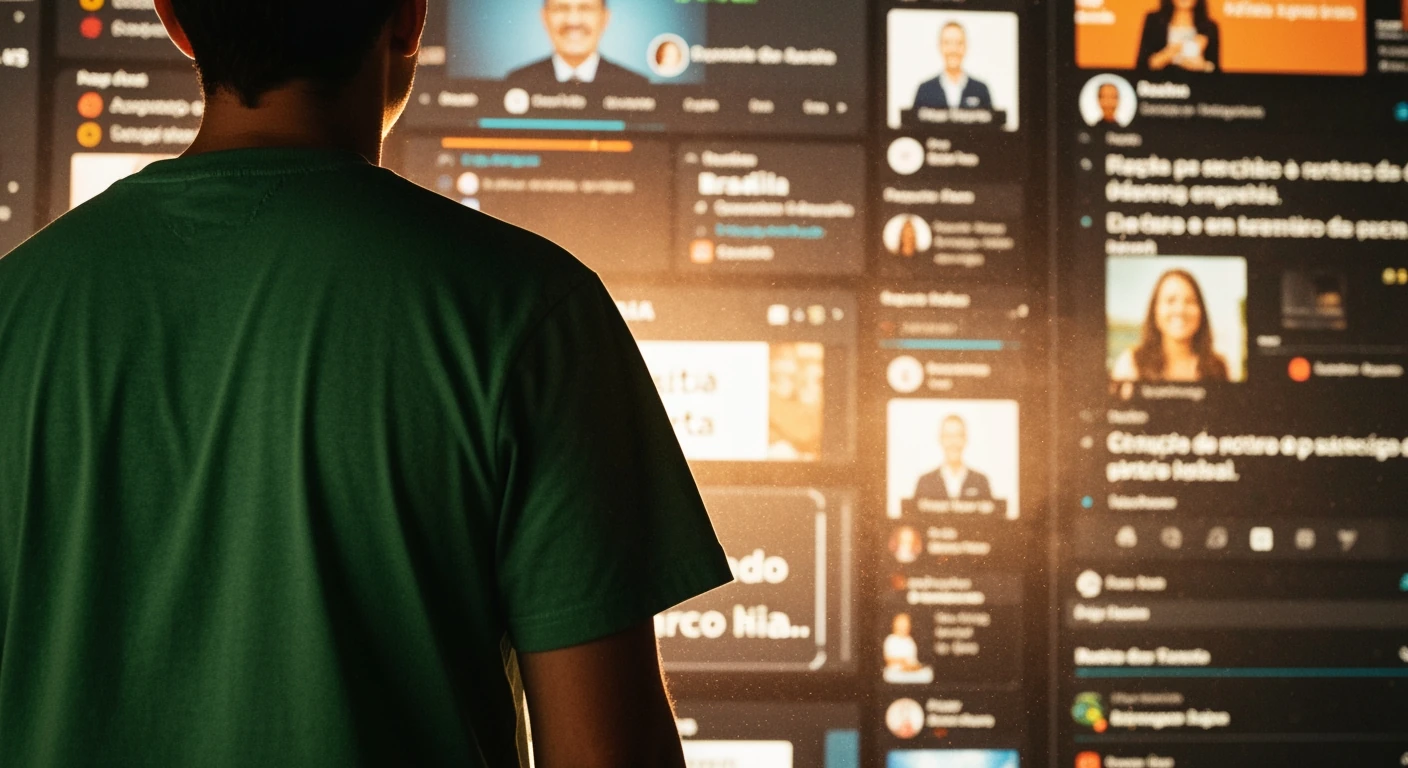
Beyond Headlines: Understanding the Impact of News
Reading the news is more than just collecting facts; it’s an act that actively shapes your mood, your beliefs, and even your decisions. The stream of notícias atualizadas doesn’t just pass through our minds—it leaves a mark. Understanding this effect is the first step toward building a healthier relationship with information and avoiding the hidden costs of constant consumption.
Psychological Effects of Information Overload
Constantly refreshing a news feed can feel like trying to drink from a fire hose. The sheer volume of information, particularly when it’s negative, has a measurable psychological toll. Research from the American Psychological Association suggests that for a majority of adults, news consumption is a significant source of stress. This phenomenon, often called “doomscrolling,” can amplify feelings of anxiety and helplessness by triggering the brain’s natural negativity bias.
It’s not just a feeling. What most people miss is how this steady diet of crisis reporting can distort our perception of risk and safety in our own communities. Dr. Elena Torres, a media psychologist at the University of São Paulo, explains that “the brain doesn’t easily distinguish between a threat on a screen and a threat outside your door, leading to a state of chronic, low-grade alert.” Are we becoming more informed, or just more anxious? The line can be surprisingly thin.
It rewires our perception of the world.
Recognizing and Counteracting Media Bias
Every news story is told from a perspective. Media bias isn’t necessarily a conspiracy; it’s often a natural result of how information is selected, framed, and presented. Think of it like two people describing the same football match. One might focus on the brilliant offensive plays of the winning team, while the other laments the poor defensive strategy of the losers. Both are telling a version of the truth, but their focus creates a different story.
Bias can appear in several ways: through the stories an outlet chooses to cover (or ignore), the experts it quotes, or the emotional language it uses. The key is not to find a mythical, perfectly unbiased source — and let’s be honest, that probably doesn’t exist — but to consume information from a variety of sources. By comparing how different outlets report on the same event, you can get a more complete picture and begin unpacking today’s headlines with a more critical eye.
Developing this skill allows you to move from being a passive consumer to an active analyst of information. It’s a important step in learning how to spot misinformation and understand the narrative being presented. This awareness changes how you engage with every headline and every report.
Building a Personalized News Routine for Brazil Highlights
Moving from a passive news consumer to an active, informed citizen requires a plan. Simply opening a social media feed and hoping for the best is like trying to drink from a firehose — you’ll get wet, but you won’t quench your thirst for real knowledge. A structured approach ensures you get the information you need without the burnout. It all starts with intention.
Creating a personalized news routine isn’t about consuming more; it’s about consuming smarter. The goal is to build a sustainable habit that keeps you updated on notícias atualizadas without overwhelming your schedule or mental health. This is your filter against the noise.
Defining Your Information Needs
Before you subscribe to a dozen newsletters, take a moment to ask yourself what you need to know. Are you following economic shifts for your business? Do you need to understand local politics to be a more engaged community member? Or are you simply curious about cultural trends across Brazil? Your “why” dictates your “what.”
Think of it like making a grocery list before heading to the supermarket. Without a list, you’re likely to wander the aisles, grabbing whatever looks appealing and probably forgetting the milk. A recent survey from the Brazilian Institute of Public Opinion and Statistics (IBOPE) found that 64% of respondents feel their news consumption is “unfocused,” leading to feelings of anxiety. By defining your key areas of interest—perhaps three to five topics—you create a framework for what to look for and, just as importantly, what to ignore. This is a foundational step in any beginner’s guide to tracking the latest news.
Integrating Diverse Perspectives
Once you know what you’re looking for, the next step is to ensure you aren’t stuck in an echo chamber. Actively seeking out a variety of sources, including those that may challenge your existing views, is primary for a complete picture. This means looking beyond your usual go-to newspaper or TV channel. If you typically read a publication from São Paulo, for example, consider adding a source from Bahia or Pernambuco to your mix.
This practice builds intellectual resilience. A study by researchers at the Getúlio Vargas Foundation (FGV) indicated that individuals who regularly consume news from at least three different sources with varying editorial stances report a 42% higher confidence in their understanding of complex national issues. How can you grasp an issue if you’ve only heard one side of the story? It’s about developing a more strong, three-dimensional view of current events, which is central to a critical approach to today’s headlines.
Balancing National and Regional News
While major federal policies and economic indicators from Brasília dominate headlines, the decisions made in your city hall or state legislature often have a more direct impact on your daily life. A new tax law passed by Congress is important, but so is the rezoning of your neighborhood or changes to local bus routes. Neglecting local sources means missing a huge piece of the puzzle.
A good rule of thumb is the 70/30 split. Dedicate roughly 70% of your news time to understanding Brazil’s most pressing national stories and the remaining 30% to what’s happening in your state and city. This balance ensures you are both a well-informed Brazilian citizen and an engaged local resident. Many national outlets have regional sections, and dedicated local blogs or newspapers are invaluable resources.
Tools and Habits for Consistency
A great plan is useless without consistent execution. The key is to integrate your news routine into your existing daily life, making it a habit rather than a chore. This often means using technology to your advantage—without letting it control you.
Here is a simple, four-step process to build a lasting routine:
- Schedule Your News Time: Block out specific, limited times for news. For instance, 15 minutes over your morning coffee and 20 minutes in the evening. This prevents endless scrolling and protects your focus for the rest of the day.
- Use an Aggregator: Instead of visiting ten different websites, use a tool like Feedly or Google News to pull headlines from your chosen sources into one place. You curate the feed, so you control the content. This is one of the most effective strategies for mastering your news feed.
- Curate Your Notifications: Turn off all news notifications except for one or two sources you trust for genuine breaking news alerts. Constant pings from every app create a state of perpetual distraction, not information.
- Practice a Weekly Review: At the end of the week, take five minutes to reflect. Did your routine work? Did you feel informed or overwhelmed? Adjust your sources and time slots as needed. Your information needs will change over time, and your routine should, too.
By implementing this structure, you shift from being a passive recipient of whatever the algorithm serves up to being the deliberate architect of your own information diet. The next challenge is maintaining this balance in a world of constant digital connection.
The Future of News: Trends and Innovations
The way we receive notícias atualizadas is changing faster than ever, driven largely by advancements in technology. Artificial intelligence is no longer a concept from science fiction; it’s actively reshaping the newsroom. AI algorithms are now used to personalize news feeds, sorting through thousands of articles to deliver what’s most relevant to you. This helps users master their daily news feed with greater precision.
This is a major shift.
Beyond simple personalization, AI assists journalists in analyzing massive datasets to uncover stories that would otherwise remain hidden. According to a study by the Poynter Institute, newsrooms using AI for data analysis reported a 34% increase in their capacity for investigative reporting. But does this mean robots are taking over? Not exactly. The goal is to augment human journalists—think less ‘robot reporter’ and more a super-smart research assistant—freeing them up for critical thinking and in-depth storytelling.
At the same time, new formats are emerging that promise more immersive experiences. Imagine using augmented reality to see a 3D model of a new public works project right on your coffee table or experiencing a report from the Amazon rainforest through a virtual reality headset. These technologies are still developing, but they point to a future where understanding the news is a more interactive process, demanding a new level of media literacy from all of us. The challenge ahead isn’t just about adapting to new tools, but about using them to foster a deeper, more critical understanding of the world’s complex events.
Beyond Consumption: The Informed Citizen’s Next Step
Mastering your news flow is a critical first step, but it’s not the final destination. The real challenge isn’t just filtering information, but deciding what to do with that well-curated knowledge. How does a clearer understanding of a new national policy translate into action within your local community? How can insights into economic trends empower your personal financial decisions or career choices?
The ultimate purpose of staying informed is to move from passive knowledge acquisition to active, meaningful participation. The strategies in this guide are the tools to build a solid foundation of understanding. The next, more personal step is to ask yourself a important question every time you close your news app: “Now that I know this, what does it empower me to do?”
Frequently Asked Questions
How can I quickly verify if a news story from Brazil is true?
To quickly verify a story, cross-reference it with major, established news organizations. use dedicated Brazilian fact-checking websites like Agência Lupa, Aos Fatos, or Projeto Comprova. Be especially skeptical of information shared on messaging apps that doesn’t link to a credible original source.
What are the best apps or websites for aggregated news about Brazil?
For a mix of personalization and major headlines, Google News is a strong, free option. If you prefer a more visual, magazine-style layout, Flipboard is excellent for discovering stories by topic. For maximum control, Feedly allows you to build a feed consisting only of the specific newspapers, magazines, and blogs you trust.
How much time should I dedicate to reading news daily without getting overwhelmed?
There’s no single answer, but a healthy approach involves setting firm limits. Many experts recommend two dedicated 20-30 minute sessions per day—one in the morning and one in the evening. This is usually enough to stay informed on major developments without succumbing to constant, anxiety-inducing updates.
Is it better to get news from social media or traditional outlets?
Traditional outlets are generally more reliable due to established editorial standards, fact-checking processes, and accountability. Social media can be a useful tool for discovering breaking stories, but it’s also a breeding ground for misinformation. The best strategy is to use social media for discovery but always click through to and verify with trusted journalistic sources.
What role does local journalism play in a full news diet for Brazil?
Local journalism is necessary. It covers issues that directly affect your daily life, such as local politics, public services, and community events, which are often overlooked by national media. Including local sources provides critical context and creates a much more complete and relevant understanding of the country as a whole.