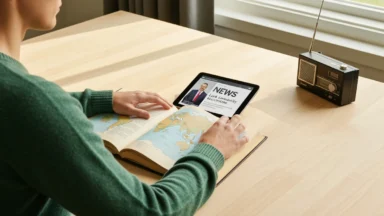
In a world of constant information flow, it’s easy to feel like you’re drowning in data yet starving for wisdom. Headlines flash across screens, notifications buzz with breaking news, and social media feeds offer a chaotic stream of events without context. This relentless cycle can lead to news fatigue, where the sheer volume of information becomes overwhelming, making it difficult to discern what matters from the surrounding noise. How can we move beyond simply knowing what happened to understanding why it happened and what it means for the future?
This is where the role of expert analysis becomes highly useful. True experts act as interpreters in a complex world, providing the important context, historical perspective, and nuanced understanding that raw headlines lack. They connect the dots between seemingly disparate events, identify underlying trends, and cut through misinformation to highlight the core issues. Engaging with their insights is the difference between being a passive recipient of information and becoming an active, informed participant in global conversations.
This article provides a framework for navigating the world of expert commentary. We will explore the methods analysts use to decipher complex geopolitical shifts, from the theories of realism to the undercurrents driving global flashpoints. we’ll examine how economists navigate market uncertainty by dissecting key indicators like GDP and CPI. Finally, we’ll look at the subtle but powerful social and cultural transformations shaping our society, offering you the tools to better evaluate the expert opinions that shape our understanding of the world.
The key Role of Expert Analysis in Modern News
Opening your phone or turning on the television can feel like stepping into a data storm. We are constantly bombarded with headlines, breaking news alerts, and endless social media feeds. This deluge of information, while providing instant access to global happenings, often leaves out the most important elements: context and meaning. It’s a lot.
This feeling of being overwhelmed is surprisingly common. A report from the Reuters Institute for the Study of Journalism found that 38% of people say they actively avoid the news, citing the sheer volume and its negative effect on their mood. When faced with so much raw data, how can anyone be expected to make sense of complex events? This is where genuine expert analysis becomes not just helpful, but required.
Think of it like trying to cook a complex dish with only a list of ingredients and no recipe. An expert analyst is the chef who shows you how to combine those ingredients, in what order, and why. They provide the necessary background, connect the dots between seemingly unrelated events, and help you understand the potential consequences of a situation—something a simple daily news briefing often can’t do alone.
Expert commentary is one of our best defenses against the rising tide of misinformation. In a landscape where distinguishing between reliable news portals and fabricated stories is a daily challenge, specialists can identify factual inaccuracies and expose flawed logic. They cut through the noise to highlight what matters, which is a key step for anyone trying to find unbiased news consistently.
Ultimately, engaging with expert analysis transforms you from a passive consumer of information into an active, informed citizen. It’s a skill that allows you to not just know what happened, but to understand why it matters.
Deciphering Geopolitical Shifts: Perspectives from the Front Lines
Understanding the global stage today feels a bit like trying to solve a Rubik’s Cube in the dark. Nations pivot their alliances, economic policies create ripple effects across continents, and long-standing agreements can unravel surprisingly quickly. The key isn’t just knowing what happened, but why. What most people miss is the intricate connection between a country’s internal politics and its foreign policy decisions. It’s a complex web.
These shifts aren’t abstract concepts happening in faraway places. They directly influence supply chains, energy prices, and even technological development. For instance, competition over strategic resources like lithium and cobalt has become a major source of international friction — these aren’t just chess moves on a map; they determine the future of green energy and personal electronics. Staying current requires more than just skimming headlines; it demands a deeper look into the forces at play, which is why having access to your daily briefing of global stories is so important.
Key Global Flashpoints and Their Undercurrents
Several regions currently serve as critical flashpoints for geopolitical tension. One major area involves disputes over maritime trade routes, where a staggering 60% of global seaborne trade passes through, according to the United Nations Conference on Trade and Development. Any disruption here doesn’t just slow down shipping; it can trigger inflation worldwide. Another significant undercurrent is the race for technological supremacy, particularly in artificial intelligence and semiconductor manufacturing.
Dr. Anya Sharma, a senior fellow at the Peterson Institute for International Economics, explains that “national security is no longer just about military might; it’s about controlling the digital infrastructure and the data that flows through it.” This reframes conflicts as battles for digital dominance. Understanding these deeper motivations is important, as is developing your own smart habits for becoming an informed citizen in a noisy world.
This is where expert analysis becomes highly useful.
Comparing Analytical Lenses: Realism vs. Liberalism
Analysts often use established theories of international relations to interpret and predict state behavior. Two of the most prominent frameworks are Realism and Liberalism. They offer fundamentally different explanations for why nations act the way they do. Think of them as different types of glasses; each one brings certain details into focus while blurring others.
Here’s a breakdown of their core ideas:
- Realism: This perspective views the world as an arena of competition.
- Core Assumption: States are the primary actors, and they are driven by self-interest and a perpetual quest for power and security.
- View on Conflict: Conflict is seen as an inevitable consequence of the struggle for dominance.
- Role of International Institutions: They are considered relatively weak, often serving as tools for the most powerful states to exert influence.
- Liberalism: This framework emphasizes the potential for cooperation.
- Core Assumption: While states are key actors, so are international organizations and non-governmental bodies. Cooperation is possible and beneficial.
- View on Conflict: War and conflict are not inevitable and can be prevented through diplomacy, economic interdependence, and international law.
- Role of International Institutions: They are vital for creating rules, fostering trust, and helping states achieve mutual gains.
Neither theory provides a perfect explanation for every event. A realist might interpret a new trade agreement as a strategic move to gain leverage over a rival, while a liberal theorist might see it as a positive step toward economic integration and shared prosperity. The truth, I suspect, often lies somewhere in between. Recognizing these theoretical underpinnings can dramatically change how you interpret the news and assess the reliability of different news portals and their editorial stances.
Ultimately, the challenge is not just to follow events as they unfold but to understand the competing philosophies that shape them from behind the scenes.
National security is no longer just about military might; it’s about controlling the digital infrastructure and the data that flows through it.
— Dr. Anya Sharma, Senior Fellow at the Peterson Institute for International Economics
| Framework | Core Assumption | View on Conflict | Role of Institutions |
|---|---|---|---|
| Realism | States are the primary actors, driven by a perpetual quest for power and security. | Conflict is an inevitable consequence of the international struggle for dominance. | Weak; often serve as tools for the most powerful states to exert influence. |
| Liberalism | States, international organizations, and NGOs are all key actors; cooperation is possible. | Conflict is not inevitable and can be mitigated through diplomacy and interdependence. | Vital for creating rules, fostering trust, and helping states achieve mutual gains. |
Economic Forecasts: Navigating Uncertainty with Expert Guidance
Trying to understand economic forecasts can feel a lot like predicting the weather. Experts armed with complex models offer their best guesses, but a sudden storm can change everything. Market volatility is the new normal, and understanding the core drivers of inflation and growth is required for anyone trying to plan ahead. The key is knowing which instruments to watch.
What most people miss is that economic analysis isn’t about finding a single, perfect crystal ball. It’s about building a dashboard of different viewpoints and data sets. Relying on just one expert or a single indicator is like trying to drive a car by only looking at the fuel gauge—you’ll miss the sharp turn right in front of you. A more holistic approach, drawing from various sources to find unbiased information, provides a much clearer picture of the road ahead.
Inflation, Interest Rates, and Global Trade Dynamics
The relationship between inflation, interest rates, and trade is a constant balancing act. When inflation rises, central banks often raise interest rates to cool down the economy. Think of it as gently tapping the brakes on a speeding car. According to Dr. Elena Petrova, a senior fellow at the Brookings Institution, “An interest rate hike of even 25 basis points can ripple through global markets, affecting everything from currency exchange rates to foreign investment in developing nations.” This creates a difficult choice. Higher rates can curb inflation but may also slow economic growth and strengthen the national currency, making exports more expensive and less competitive on the global market.
This creates a feedback loop. A country’s trade balance can, in turn, influence domestic inflation. A large trade deficit, for instance, might signal a dependency on foreign goods, making the economy vulnerable to price shocks from abroad. It’s a complex web of interconnected factors.
The Impact of Geopolitics on Supply Chains
Recent events have shown just how fragile global supply chains can be. Geopolitical tensions are no longer abstract concepts discussed in diplomatic circles; they have direct and immediate economic consequences. A dispute in a major shipping lane, for example, can cause significant delays and increase costs almost overnight. The International Chamber of Shipping reported that rerouting vessels around conflict zones can add up to 15% to total voyage costs.
These disruptions don’t just affect the final price of a product. They create uncertainty, forcing companies to rethink their “just-in-time” inventory strategies and consider more expensive, but politically stable, sourcing options. The underrated factor here is the “political risk premium” now being priced into countless goods, a hidden cost passed down to consumers. Staying on top of daily headlines and global stories is no longer just for policy wonks; it’s a practical necessity for understanding market behavior.
Pros and Cons of Key Economic Indicators
Economists rely on a host of indicators to gauge the health of an economy, but none of them are perfect. Each one offers a specific snapshot, and understanding their individual strengths and weaknesses is core for accurate analysis. Relying too heavily on one metric can lead to a skewed perception of reality.
GDP vs. CPI: What to Watch
Gross Domestic Product (GDP) is the big one—the total value of all goods and services produced by a country. A rising GDP suggests a growing economy, which is generally good news. GDP is a broad, high-level measure. It doesn’t tell you how that growth is distributed or if it’s keeping pace with the cost of living. It’s a bit like judging a restaurant’s success based only on its total revenue, without checking food quality or customer satisfaction.
This is where the Consumer Price Index (CPI) comes in. CPI measures the average change in prices paid by urban consumers for a basket of goods and services. It is a direct measure of inflation and how it affects household purchasing power. So, if GDP grows by 2.1% but CPI increases by 3.8%, are people actually better off? The data suggests—though not conclusively—that real wages may be falling, meaning the average person’s economic situation has worsened despite overall economic growth.
Unemployment Rates and Consumer Confidence
The unemployment rate is another critical indicator. A low number, such as the 3.7% figure reported by the Bureau of Labor Statistics last quarter, typically signals a strong job market. But this number doesn’t tell the whole story. It doesn’t account for the underemployed—people working part-time who want full-time work—or those who have dropped out of the labor force entirely. It also doesn’t reflect wage quality or job satisfaction.
That’s why economists pair it with metrics like the Consumer Confidence Index. This index measures how optimistic or pessimistic consumers are about their financial situation and the overall economy. Surprisingly, you can have low unemployment alongside plunging consumer confidence if people are worried about inflation or future job security. This creates a confusing signal—people have jobs, but they are hesitant to spend (which, of course, can then slow the very economy they are worried about). This psychological element is often the wildcard in economic forecasting.

Social & Cultural Currents: Understanding Societal Transformations
Beyond the stock market charts and inflation reports, societal values are constantly shifting, often in subtle ways. Economic pressures frequently act as a catalyst for these changes, altering how people think about work, community, and personal fulfillment. A society’s culture is not a fixed monument; it’s more like a river, with currents that change speed and direction based on the surrounding landscape.
Consider the recent phenomenon of “quiet quitting,” where employees do the bare minimum required by their job description. It’s not a new behavior, but its sudden entry into the popular lexicon speaks volumes. According to a recent Gallup poll, actively disengaged employees make up 18% of the workforce, costing the global economy trillions in lost productivity. But is this simply laziness, or does it signal a deeper recalibration of the employer-employee contract?
What most people miss is the underlying value judgment. Dr. Elena Vance, a sociologist at the University of Chicago, suggests that this trend reflects “a conscious decoupling of self-worth from professional achievement.” People aren’t necessarily stopping work; they are reallocating their energy toward life outside the office—a direct response to years of hustle culture. It’s like a slow-cooking stew; the ingredients have been simmering for a while, but only now are we smelling the final result.
This is far from an isolated event.
A similar current is the renewed focus on localism, where individuals are investing more in their immediate communities rather than fixating on national or global affairs. People are paying closer attention to what’s happening on their own streets, from school board meetings to new business openings. This shift creates a new challenge: sifting through information to find credible sources, making it primary to understand how to locate unbiased news.
These cultural undercurrents are notoriously difficult to predict, yet their impact eventually surfaces everywhere, from election results to the products we see on store shelves. The real question is which of these shifts will stick, permanently reshaping the social fabric for the next generation.
The Future of Information: How Experts Are Shaping Tomorrow’s Narratives
In a world saturated with content, the role of the expert has shifted dramatically. No longer confined to academic journals or niche publications, specialists in fields from epidemiology to economics are now shaping public discourse in real-time on social media and through direct-to-consumer platforms. This decentralization of authority presents both a massive opportunity and a significant challenge for the average person trying to stay informed. Information overload is real.
The sheer volume of data and opinion makes it difficult to separate signal from noise. What most people miss is that the most effective narratives are often built not just on facts, but on the trusted interpretation of those facts. An expert’s ability to contextualize a complex event provides a valuable layer of understanding that a simple headline cannot. They act as sense-makers in an often-chaotic information environment.
Combating Misinformation with Credible Voices
One of the most powerful applications of expert analysis is as a direct countermeasure to misinformation. As trust in traditional institutions wavers, audiences are actively seeking out credible, individual voices. A recent study from the Reuters Institute for the Study of Journalism found that 67% of news consumers reported higher trust in articles that featured direct quotes and analysis from named, credentialed experts. This suggests a clear pathway for improving public understanding.
When an expert breaks down a complex study or provides historical context for a current event, they are doing more than just sharing knowledge; they are building a framework for critical thinking. This is particularly vital in understanding the nuances of today’s top global and local stories. By anchoring news in verifiable expertise, content creators can help audiences develop a stronger defense against false or misleading claims that thrive in an information vacuum.
Checklist: Evaluating Expert Opinions Critically
Of course, not all “experts” are created equal. The rise of the online pundit means that credentials can sometimes be murky and motivations unclear. But how can you tell a genuine authority from a smooth-talking salesperson with a good marketing budget? Evaluating an expert’s opinion is a bit like reading the nutrition label on a food package; you have to look past the flashy claims on the front and examine the actual ingredients.
Before you accept an expert’s take as gospel, run it through this simple checklist. It’s a core component of developing the smart habits of an informed citizen.
- Check Credentials and Affiliations: Does the person have relevant, recognized qualifications in the field they are discussing? Be wary of an economist commenting on vaccine efficacy, for instance. A quick search can reveal their educational background and current professional affiliations.
- Look for Conflicts of Interest: Is the expert funded by an organization with a vested interest in the outcome of the debate? This information isn’t always obvious — a surprisingly common issue — but disclosures are often found in article footnotes, author bios, or on their personal websites.
- Examine the Evidence Provided: A true expert will base their arguments on data, research, and verifiable evidence, not just personal conviction. Do they cite their sources? Can you follow their logic back to its primary source? Improving your ability to check sources is primary for understanding news portal reliability.
- Consider the Broader Consensus: Is this expert’s view widely held within their field, or are they an outlier? While dissenting opinions can be valuable, it’s important to know whether a viewpoint represents a fringe theory or the established scientific or academic consensus.
- Differentiate Fact from Interpretation: Pay close attention to how the expert uses language. Are they presenting objective data (“The unemployment rate fell by 0.3%”), or are they offering a subjective interpretation (“The disastrous economic policy led to a minuscule drop in unemployment”)? Both can be useful, but they are not the same thing.
Mastering this skill isn’t about dismissing expert opinions but about engaging with them more intelligently. The ultimate goal is to assemble your own informed perspective, using expert insights as a critical tool rather than an intellectual crutch.
Navigating the Next Frontier of Expertise
As we’ve seen, expert analysis provides an necessary lens for understanding our complex world. But as artificial intelligence increasingly enters the field of data analysis and narrative creation, what will the role of the human expert become? Will AI serve as a powerful tool to augment human insight, identifying patterns we might miss, or could it become a source of technical, algorithmically-generated bias on a scale we’ve never seen before? The next great challenge for the informed citizen won’t just be distinguishing expert opinion from noise, but distinguishing authentic human expertise from the polished, persuasive, and potentially flawed output of a machine.
Frequently Asked Questions
- How do experts formulate their opinions on current events?
- Experts formulate opinions by combining deep domain knowledge with rigorous analysis of primary data, historical context, and theoretical frameworks. They synthesize information from multiple sources, identify underlying patterns, and stress-test their hypotheses against counterarguments to arrive at a nuanced conclusion.
- What are the common biases to look for in expert analysis?
- Common biases include confirmation bias, where experts favor information that confirms their existing beliefs, and political or ideological bias, which can color their interpretation of events. It’s also wise to be aware of funding sources, as institutional affiliations can sometimes influence an analyst’s perspective.
- Can expert opinions predict future events accurately?
- While expert analysis can identify likely outcomes and key trends, it is not a crystal ball for precise prediction. Unforeseen variables and human behavior make forecasting complex. The primary value of expert opinion lies in explaining possibilities and risks, not in guaranteeing future events.
- Where can I find reliable sources of expert analysis?
- Reliable sources often include non-partisan think tanks, academic institutions, and established news organizations with dedicated research departments. Look for publications that disclose their methodologies, cite their sources, and feature analysis from individuals with verifiable credentials in their field.
- How does social media affect the dissemination of expert opinions?
- Social media accelerates the spread of expert opinions, allowing for real-time commentary and wider reach. it also strips away context, encourages simplification, and can amplify polarizing viewpoints, making it harder for the public to distinguish between credible analysis and unqualified hot takes.