
Trying to keep up with the news can feel like a full-time job you never signed up for. Every notification, headline, and trending topic pulls you in a different direction, leaving you feeling more anxious than informed. The sheer volume is so intense that the temptation to simply unplug and ignore it all is stronger than ever. But in a world where global events and local policies directly shape our lives, is tuning out really an option?
When we disengage, we lose more than just conversation starters; we lose the context needed to make sound decisions for our families, finances, and communities. This is where the concept of news literacy becomes necessary. It’s not about memorizing every world leader or stock market fluctuation. Instead, it’s a practical skill set for navigating the information landscape, much like learning to read a map in a foreign city. It equips you to identify reliable sources, spot hidden biases, and distinguish between verified facts and persuasive opinions.
This guide is designed to be your map. We’ll move beyond a simple list of websites and provide you with a broad framework for tracking the latest news effectively. You’ll learn how to build a sustainable ‘news diet’ that fits your lifestyle, master simple fact-checking techniques to protect yourself from misinformation, and understand the deeper context behind the daily headlines. The goal is to transform your relationship with the news from one of chaotic consumption to one of confident, calm engagement.
Why Staying Informed Matters: More Than Just Headlines
Keeping up with the news can feel like trying to drink from a firehose. Notifications buzz constantly, headlines flash across screens, and every social media feed is a cascade of updates. According to a recent Pew Research Center study, about 66% of American adults experience some form of news fatigue. It’s a lot to handle.
But what happens when we tune out completely? We miss more than just election results or stock market shifts. Staying informed is about understanding the context of our own lives, from local community decisions affecting our daily commute to global events that influence the price of gas. It provides the foundation for better conversations and more confident decisions.
This is where news literacy comes into play. Think of it like learning to read the nutrition label on your food; you’re not just consuming it, you’re understanding what’s inside. It’s about learning how to spot bias, verify sources, and distinguish fact from opinion. Developing these skills is required for navigating the news maze without getting lost in misinformation.
Being informed empowers you to be an active participant rather than a passive observer. The goal isn’t knowing every single headline — an impossible task for anyone, really. It’s about developing smart strategies for informed living that give you a clearer picture of the world and your place within it.
Building Your News Toolkit: required Sources and Platforms
Once you understand the importance of staying informed, the next step is choosing your sources. Building your news toolkit is a bit like stocking a kitchen pantry; you need a mix of reliable staples, quick-to-access items, and specialized sources for deeper flavor. The goal is to create a balanced diet of information that keeps you knowledgeable without causing indigestion—or what we now call information overload. It’s a personal process.
The foundation of any good news habit starts with legacy sources. These are the established institutions like major newspapers (The New York Times, The Wall Street Journal), international news agencies (Associated Press, Reuters), and broadcast networks (BBC, PBS). They generally have large newsrooms, fact-checking departments, and publicly stated ethics policies. While no source is perfect, these organizations provide a baseline of professionally vetted information that is primary for navigating news beyond the obvious headlines.
Traditional vs. Digital: Weighing Your Options
The debate between print and digital often comes down to personal preference and lifestyle. Some people love the tactile experience of a physical newspaper, which provides a finite, curated edition of the day’s most important events. This format can be a welcome escape from the endless scroll of digital feeds. It’s a defined experience.
Digital platforms offer unparalleled speed and accessibility. News websites and apps provide real-time updates, multimedia content like videos and podcasts, and the ability to follow developing stories as they happen. Let’s break down some of the trade-offs:
- Print/Broadcast Media: Often seen as more authoritative due to a rigorous, multi-step editing process. The downside? It’s slower. By the time a newspaper hits your doorstep, the story may have already evolved online.
- Digital News Sites/Apps: Offer immediate access and a vast archive of related articles. The primary risk is the sheer volume, which can be overwhelming and sometimes leads to a focus on clicks over quality journalism.
- Podcasts/Newsletters: These formats provide deep analysis and personality-driven content. What’s the catch? They often reflect a specific viewpoint, making it important to balance them with straight-reporting sources.
Curating Your Digital News Feed
For most people, a digital-first approach is the most practical. News aggregators like Apple News and Google News are excellent starting points, as they pull stories from hundreds of different publications into a single, customizable feed. You can select topics you care about and even block sources you find unreliable. This gives you a high degree of control over your information intake.
Social media can also be a powerful tool for news discovery, but it requires extreme caution. A Pew Research Center study revealed that a significant portion—around 57%—of U.S. adults get news from social platforms. If you use social media for news, it’s vital to follow individual, verified journalists and official news outlets directly rather than relying on what friends share. This simple step helps you bypass the rage-fueled algorithms that often amplify misinformation.
Ultimately, a curated feed is your first line of defense against the chaos. Developing smart strategies for staying informed is less about finding the one “perfect” source and more about building a reliable system of cross-referencing. The real art is learning to distinguish the signal from the noise, which becomes easier as you become more familiar with your chosen platforms.
The first report of any major event is merely the first draft of history. The real narrative, with its nuances and consequences, only emerges as journalists continue to follow up, verify details, and document the ripple effects.
— Dr. Julian Crosse, geopolitical analyst at King’s College London
| Strategy | Key Action |
|---|---|
| Build a Balanced “News Diet” | Limit check-ins to specific, scheduled times and turn off non-essential push notifications. |
| Curate Your Sources | Combine established news agencies (e.g., AP, Reuters) with specialized newsletters or podcasts for depth. |
| Identify and Acknowledge Bias | Question loaded language and story placement; actively seek out different perspectives on the same topic. |
| Practice Basic Fact-Checking | Before sharing, cross-reference new stories with other reputable outlets and use a reverse image search for visuals. |
| Look for Context Beyond Headlines | Follow important stories over time to understand their full development, impact, and nuances. |
Mastering the Art of News Consumption: Strategies for Beginners
Jumping into the world of daily news can feel like trying to drink from a firehose. The endless stream of updates, opinions, and breaking alerts is enough to make anyone feel overwhelmed. The key isn’t to absorb everything, but to develop smart news consumption strategies that prioritize clarity over chaos. It’s about building a sustainable habit.
What most people miss is that being informed isn’t a passive activity; it requires a proactive approach. You need a game plan to filter the noise and focus on what matters. This means setting boundaries, learning to spot bias, and knowing how to quickly verify what you’re reading.
Setting Your News Diet: Quantity vs. Quality
Think of your news intake like a food diet. Consuming endless junk information will leave you feeling mentally sluggish and anxious. A study from the Reuters Institute found that approximately 38% of people now actively avoid the news, citing feelings of powerlessness and information fatigue. The goal is to be informed, not inundated.
To start, set specific, limited times for checking the news. Maybe it’s 15 minutes in the morning with your coffee and 15 minutes in the evening to catch up. Turn off non-necessary push notifications from news apps—those constant pings are designed to create a sense of urgency that rarely matches reality. By creating these boundaries, you can effectively manage the flow of information and avoid information overload.
This simple shift changes everything.
Identifying Bias: Reading Between the Lines
Every news source has some form of bias. That’s not necessarily a bad thing; it’s just a human reality. A reporter’s background, the editorial stance of a publication, and the commercial pressures they face all shape the final story. Your job isn’t to find a mythical, perfectly neutral source, but to recognize the lens through which you’re viewing the world.
Bias often appears in subtle ways: the use of loaded words (e.g., “stubborn refusal” vs. “firm stance”), the prominence given to a story, or even the topics that are consistently ignored. It’s like listening to two friends describe a fender bender; even if both are honest, their perspectives will naturally highlight different details. Are you only consuming stories that confirm your existing beliefs? This is critical thinking news in practice — questioning what you read and considering what might be missing from the narrative. Understanding these nuances is a big step in decoding common misinterpretations in media reports.
Basic Fact-Checking: Verifying Information
In an age where a single screenshot can go viral, learning basic fact-checking is no longer optional. It’s a core skill for responsible citizenship. Before you share, react, or even fully believe a piece of information—especially if it’s emotionally charged—take a few moments to verify it. This process doesn’t have to be complicated.
Here are five simple steps to get started:
- Check the Source: Is the information coming from a reputable news organization with clear editorial standards, or is it from an unfamiliar blog or anonymous account? Look for an “About Us” page and see if they list real journalists.
- Look for Evidence: A credible report will cite its sources. Does it mention official reports, quote named experts, or link to original data? Be wary of phrases like “sources say” without any further clarification.
- Read Beyond the Headline: Headlines are designed for clicks and often lack the full context of the story. A sensational headline might be misleading, and the article itself could tell a much more nuanced tale.
- Cross-Reference with Other Outlets: Is anyone else reporting this? If a major event is only being covered by one or two obscure websites, wait for confirmation from more established news agencies before accepting it as fact.
- Examine the Date: A common tactic in misinformation is to re-share an old article, making it seem like a current event. Always check the original publication date.
Tools for Quick Verification
You don’t have to do all this work alone. Several organizations are dedicated to fact-checking public claims, including the Associated Press (AP) Fact Check and PolitiFact. They can be great resources for verifying political statements or viral stories.
For images, a reverse image search is surprisingly powerful. Tools like Google Images or TinEye allow you to upload a picture to see where it first appeared online. According to media literacy experts at the Poynter Institute, this one technique can debunk a significant percentage of misleading memes and photos that circulate on social media. Building these small verification habits is the first step toward becoming a more confident and discerning news consumer.
Beyond the Headlines: Understanding Context and Impact
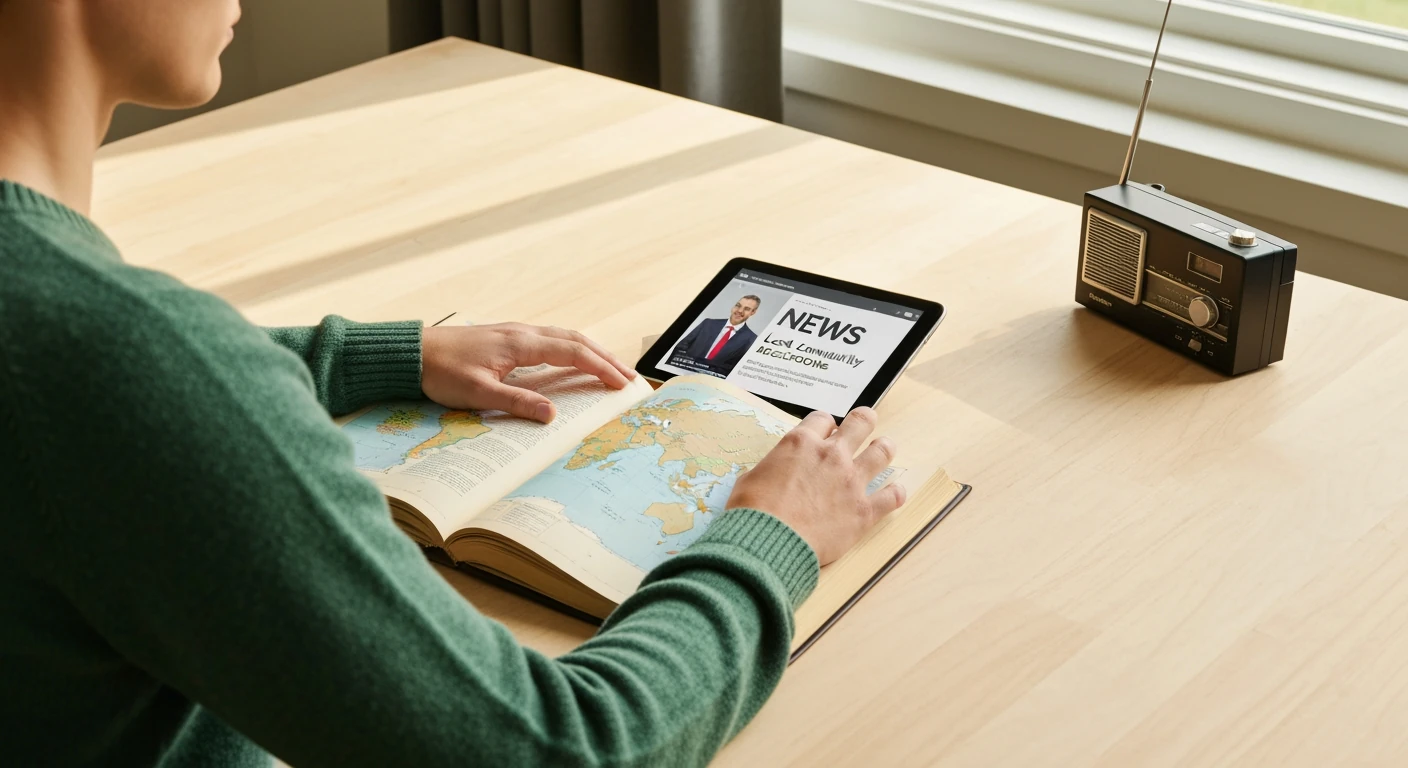
Reading the news can sometimes feel like walking into a movie halfway through. You see the action, but you have no idea who the characters are or why they’re fighting. To understand what’s happening, you have to look beyond the immediate headline and ask critical questions: Why is this happening now? Who is affected? What happened before this?
This is the practice of seeking context. It’s what separates passive news consumption from active, informed engagement. Without context, a story is just a collection of facts; with it, the story gains meaning and reveals its true significance. A shocking headline is designed to grab your attention, but the real substance is often found in the details that explain the bigger picture.
Connecting the Dots: From Local to Global
It’s easy to dismiss a story that seems distant, but global and local events are more intertwined than ever. A drought in a country thousands of miles away can directly influence the price you pay for coffee at your local cafe. A new tech regulation passed in Europe could change how your favorite social media app works tomorrow. Understanding these connections is key to navigating news beyond the obvious headlines.
What most people miss is how a seemingly small local issue can be a symptom of a much larger global trend. For instance, a report from the Peterson Institute for International Economics found that up to 68% of local manufacturing job shifts in North America could be linked to changes in international supply chain agreements. So, is that story about a local factory closing really just a local story? Or is it a piece of a much larger puzzle involving international trade and policy?
Thinking this way turns you into a news detective.
The Long-Term View: Tracking Story Developments
A single news report is a snapshot in time, not the complete story. Major events—from political scandals to scientific discoveries—unfold over days, months, or even years. Treating a news story like a single, isolated event is like trying to understand a complex recipe by only looking at one ingredient. You need to see how they all come together over time.
Following a story’s development helps you see past the initial, often sensationalized, reporting. Dr. Julian Crosse, a geopolitical analyst at King’s College London, explains, “The first report of any major event is merely the first draft of history. The real narrative, with its nuances and consequences, only emerges as journalists continue to follow up, verify details, and document the ripple effects.” By tracking a story, you’re better equipped to spot corrections, new perspectives, and the long-term impact, which helps you avoid common misinterpretations.
This doesn’t mean you need to read every single update (let’s be honest, that’s impossible). Instead, make a mental note of significant stories and check back on them periodically. This practice builds a deeper, more accurate understanding of the world and prevents you from being swayed by incomplete or premature conclusions.
Staying Updated Without Overwhelm: Tools and Habits
Knowing where to find reliable news is only half the battle. The other half is managing the constant flow of information without burning out. Creating a structured system is the key to staying informed while protecting your mental space. This isn’t about consuming more news; it’s about consuming it more intelligently.
A deliberate routine acts as a filter, allowing you to absorb required updates without getting pulled into the 24/7 news cycle’s vortex. The goal is to be intentional. Think of it like planning your meals for the week; instead of scrambling for whatever is available when you’re hungry, you have a prepared, balanced intake.
Crafting Your Daily News Routine
Establishing a consistent routine transforms news consumption from a reactive habit into a proactive, manageable task. By setting specific times for check-ins, you control the information flow, rather than letting it control you. What most people miss is that a routine provides boundaries, which are necessary for mental clarity. It creates a clear start and end point.
Consider implementing a simple checklist to guide your daily intake. This structure ensures you cover your bases without falling down rabbit holes. Having a plan is one of the most effective smart strategies for staying informed and avoiding fatigue.
- Morning Briefing (15-20 minutes): Scan headlines from 2-3 trusted sources. Read one national story and one local story in full. Check a curated email newsletter for a broad overview.
- Midday Check-In (5-10 minutes): Quickly check for major breaking news. This is a quick glance at alerts or a news aggregator, not a deep dive. Avoid this if your workday requires intense focus.
- Evening Wind-Down (15-20 minutes): Read a long-form article or a feature piece that provides deeper context on a topic that interested you in the morning. This is about understanding, not just updating. Avoid consuming hard news right before bed.
Leveraging Technology for Timely Updates
Technology can be a major source of information overload, but it can also be a powerful ally when used correctly. The key is to customize your tools to serve your needs, turning them from sources of distraction into efficient delivery systems for the news you care about. But how do you build a system that works without turning your phone into a constant source of stress? It starts with curation.
Email Newsletters and Digests
Email newsletters are an excellent tool for receiving a finite, curated package of news directly to your inbox. Many news organizations offer morning and evening briefings that summarize the day’s most important events. This format provides a natural stopping point — once you’ve finished the email, you’re done. The Reuters Institute’s Digital News Report found that email is a surprisingly resilient and popular way for people to connect with news on their own terms. When subscribing, it’s wise to spend time selecting the best sources for you, focusing on quality over quantity.
Customizing News Alerts
Push notifications are a primary driver of news anxiety. Instead of allowing apps to send alerts for every “breaking” story (many of which are minor updates), take control of your notification settings. Turn off generic breaking news alerts entirely. Then, set up custom alerts for specific keywords or topics that are important to you, such as your city’s name, a specific industry you follow, or a particular policy debate. This approach ensures you’re notified about what matters without constant interruption.
Mindful Consumption: Avoiding Burnout
The psychological toll of a constant negative news diet is well-documented. A report from the American Psychological Association noted that for many Americans, media exposure is a significant source of stress. Recognizing the signs of news fatigue—anxiety, irritability, or a desire to avoid the news altogether—is the first step toward building a healthier relationship with information.
This is your daily briefing, not a doomscrolling marathon. Remember that the goal is to be informed, not omniscient.
Set firm boundaries, such as a “no news after 9 PM” rule or news-free weekends. If a particular topic is causing you distress, it’s okay to disengage from it for a few days. Being selective and protecting your well-being doesn’t make you uninformed; it makes you a sustainable news consumer who can avoid both burnout and the risk of avoiding common news misinterpretations that come from emotional exhaustion. These habits aren’t just about managing time; they are about building a resilient and nuanced perspective over the long term.
From Consumer to Citizen: The Real Goal of Staying Informed
Ultimately, developing a healthy news habit is about more than just personal knowledge; it’s a foundational skill for active citizenship. The strategies for spotting bias, verifying facts, and seeking context are not merely defensive tools against misinformation. They are proactive instruments that empower you to engage more meaningfully in discussions about your community and your country. By moving from a passive consumer of headlines to an active, critical thinker, you change your role in the public square.
What might happen if more of us approached the news not as a source of anxiety or entertainment, but as a civic responsibility? Perhaps the quality of our collective conversation would improve, holding both media outlets and public figures to a higher standard. The next time you check the news, consider it not a chore, but an act of participation—a single, important step in building a more informed and connected society.
Frequently Asked Questions
What are the most reliable news sources for beginners?
For beginners, it’s best to start with established, non-partisan news agencies like The Associated Press (AP) and Reuters, which focus on straight reporting. Public broadcasters such as PBS and BBC are also excellent choices. The key is to consume information from multiple reliable sources rather than depending on just one.
How can I avoid feeling overwhelmed by constant news updates?
The most effective strategy is to set firm boundaries. Designate specific, limited times for checking the news, such as 15 minutes in the morning and evening. Turning off most push notifications on your phone is also notable, as it allows you to control the flow of information instead of letting it control you.
Is social media a good place to get news?
Social media can be a tool for discovering news, but it’s risky due to the prevalence of misinformation. If you use it, avoid relying on shared posts from friends. Instead, follow the official, verified accounts of reputable news organizations and individual journalists to get information from the source.
How do I distinguish between news and opinion?
News articles should focus on the facts of an event: who, what, where, when, and why. Opinion pieces, often labeled as “Op-Eds” or “Editorials,” interpret those facts to argue a specific viewpoint. Look for subjective language and persuasive arguments, which are hallmarks of opinion content.
What’s the best time of day to catch up on news?
This is highly personal, but a common approach is a brief check-in in the morning to see what’s developed overnight and another in the early evening to catch up on the day. The most important thing is to avoid consuming news right before bed, as it can interfere with sleep and increase anxiety.