
Trying to keep up with the news in Brazil can feel like navigating a maze in the middle of a thunderstorm. On one hand, legacy media giants like TV Globo and Folha de S.Paulo set the national agenda with established authority. On the other, a torrent of updates from digital portals, WhatsApp groups, and social media influencers creates a constant, often chaotic, stream of information that can be overwhelming to process.
This hybrid media environment reflects the country’s own complexity. Brazil is a nation of continental proportions, grappling with profound economic shifts, intense political debates, and vibrant cultural transformations all at once. The stories that matter—from a critical vote in Brasília to an emerging tech trend in São Paulo or an environmental crisis in the Amazon—are deeply interconnected. Understanding these connections is the key to moving beyond simply consuming headlines and starting to grasp the forces shaping the nation’s future.
This guide is designed to be your compass. We’ll cut through the noise to analyze the most significant political and economic developments driving today’s conversations. Then, we’ll look beyond the daily cycle to explore the deeper societal currents in technology, culture, and environmental policy. Finally, you’ll get practical, actionable strategies for identifying credible sources and building a smarter, healthier news diet, empowering you to stay informed without getting swept away.
Understanding Brazil’s News Landscape: A Quick Overview
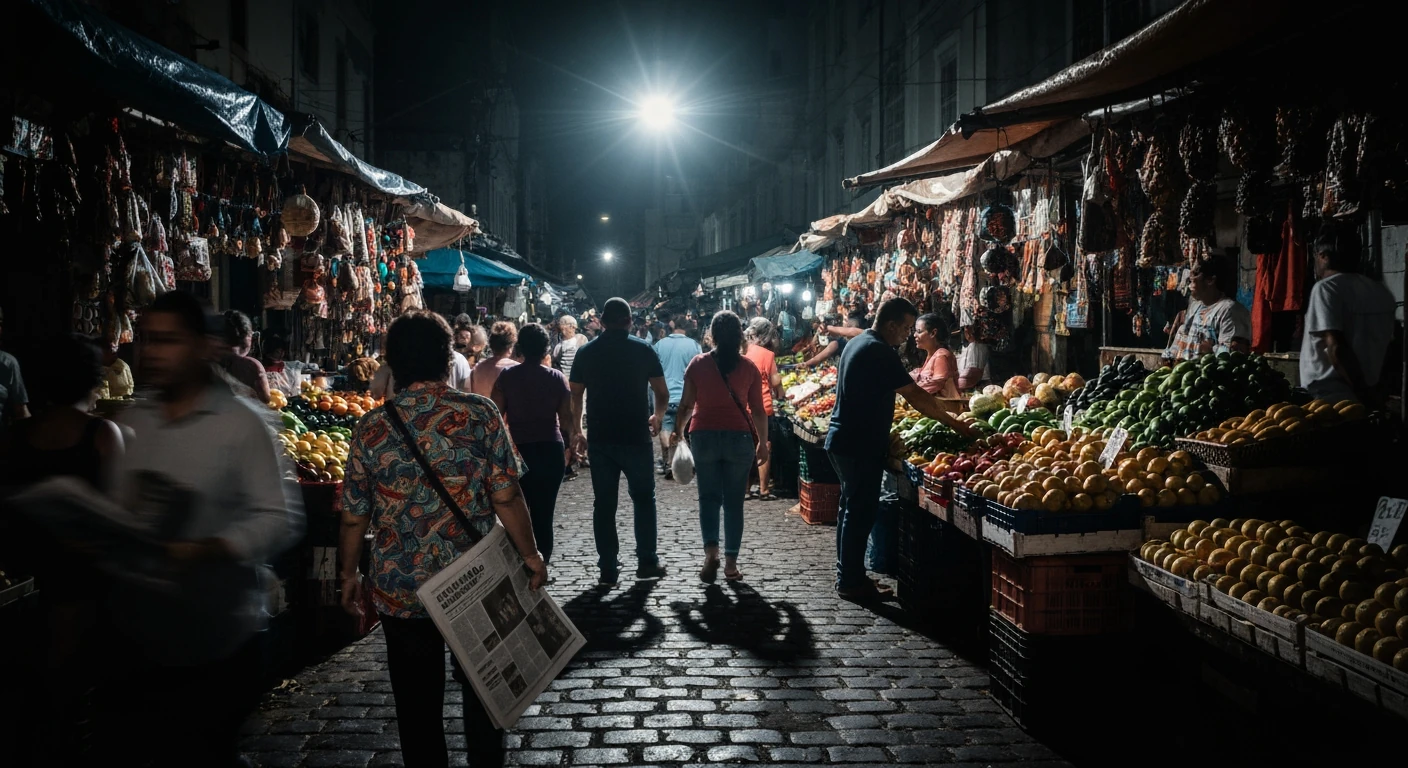
Navigating the world of Brazilian news can feel like walking through a bustling feira livre, a street market with countless vendors all shouting for your attention. On one side, you have the established media giants like TV Globo and Record TV, which have shaped public discourse for decades. Their nightly news programs remain a primary source of information for millions, setting the day’s agenda with a powerful and established voice.
The ground is shifting rapidly beneath our feet. The digital revolution has introduced a massive array of online portals, independent blogs, and social media influencers into the mix. A recent report from the Reuters Institute revealed that over 73% of Brazilians now use social media as a source for news each week. This creates a dynamic — and sometimes chaotic — environment where information spreads incredibly fast. Learning to manage this digital influx is a key skill for anyone trying to stay informed.
This creates a unique hybrid system. Many people still watch the 8 PM news broadcast on television while simultaneously scrolling through updates and commentary on their phones. So, where do most people actually find their trusted information?
The answer is complicated. The sheer volume can be overwhelming, and understanding the biases and strengths of each source is a challenge in itself. The underrated factor here is the sheer effort it takes to piece together a complete picture from so many different fragments. This constant exposure comes with its own set of challenges, highlighting the hidden costs of staying connected 24/7. Moving forward, the key is not just about finding news, but about developing a strategy to consume it intelligently.
Top Headlines Today: What’s Driving the Conversation?
Keeping up with Brazil’s major news stories can feel like trying to drink from a firehose. One moment, the focus is on a complex legislative vote in Brasília; the next, it shifts to a volatile swing in the Bovespa index. The sheer volume of information highlights the hidden costs of constant news consumption. What most people miss is how interconnected these events are, with political maneuvers directly influencing the economic reality for millions of Brazilians.
Understanding this dynamic is the first step. It requires filtering through the noise to see the underlying forces at play.
Political Developments: Key Decisions and Debates
A significant portion of today’s political discourse centers on a proposed fiscal reform package currently being debated in Congress. Proponents, including the Ministry of Finance and various industry federations, argue the changes will streamline a notoriously complex tax system, potentially attracting foreign investment. They point to a projected 0.5% GDP increase within two years of implementation, according to a study by the Getúlio Vargas Foundation (FGV).
The opposition is substantial. Critics, from consumer rights groups to public sector unions, raise concerns that the reform could increase the tax burden on necessary services and goods. A recent Datafolha poll shows that 62% of Brazilians earning up to two minimum wages believe their cost of living will rise if the bill passes as is. With such divided opinions, learning to spot misinformation in daily reports becomes a critical skill for any citizen trying to form an opinion. Is this reform a necessary modernization or a setback for social equality?
Beyond fiscal matters, environmental policy continues to generate headlines, particularly regarding enforcement actions against illegal deforestation in the Amazon. The data suggests—though not conclusively—that international pressure is leading to slightly more stringent oversight, but powerful agribusiness lobbies are pushing back hard. It’s a delicate balancing act with global implications.
Economic Outlook: Market Trends and Consumer Impact
On the economic front, the Central Bank’s stance on the Selic interest rate remains a top story. With annual inflation hovering at a stubborn 4.37%, according to the latest IPCA figures from IBGE, the bank faces a difficult choice between curbing price increases and stimulating economic growth. These high-level decisions have very real consequences for everyday people.
Think of it like the weather. You might not understand the atmospheric science, but you definitely know whether you need an umbrella for your commute. Similarly, a high Selic rate directly translates to more expensive loans for cars, homes, and credit card debt—a tangible impact on household budgets. For those just starting out, developing a system for tracking these latest news trends can make a significant financial difference.
Simultaneously, the technology sector is showing remarkable resilience. Fintech companies, in particular, reported a 28% increase in new user acquisition in the last quarter alone, a testament to the growing demand for digital banking solutions (and perhaps a general dissatisfaction with traditional banks). This growth offers a bright spot in an otherwise cautious market, but it also raises new questions about data privacy and regulation.
The unresolved tension lies in how these economic indicators will shape the political landscape. A prolonged period of high inflation could easily erode public support for the current administration, potentially altering the entire calculus for the next round of legislative priorities.
Social media in Brazil has become a double-edged sword; while it democratizes access to information for millions, it also accelerates the spread of partisan narratives and misinformation, placing an unprecedented burden on the consumer to verify what they see.
— Reuters Institute for the Study of Journalism
| Topic Area | Key Drivers & Current Focus |
|---|---|
| Political Scene | Focus on fiscal reforms in Congress, environmental policy enforcement in the Amazon, and the balance of power between legislative and executive branches. |
| Economic Pulse | Central Bank decisions on the Selic interest rate to control inflation, performance of the Bovespa index, and growth in the technology/fintech sector. |
| Social & Cultural Shifts | The impact of the Pix payment system on the informal economy, resurgence of traditional music genres among youth, and the growing influence of digital content creators. |
| Global Impact | Dependence on global commodity prices (soy, iron ore), effects of international geopolitical tensions on domestic policy, and foreign investment trends. |
Beyond the Headlines: Deeper Dives into Brazilian Society
The daily news cycle offers a snapshot, but rarely the full picture. To understand Brazil, you have to look at the slower, more profound currents of change shaping its society from the ground up. These are the shifts in behavior, the cultural movements, and the persistent challenges that define the national character far more than any single political event. It’s about seeing the forest, not just the most talked-about trees.
Analyzing these undercurrents requires a different lens. It’s less about who said what today and more about what millions are doing, thinking, and creating over months and years. This is where the real story often lies.
Environmental Challenges and Sustainable Solutions
The Amazon rainforest consistently makes headlines, often for distressing reasons. Deforestation remains a critical issue, with Brazil’s National Institute for Space Research (INPE) reporting thousands of square kilometers of forest lost annually. But focusing solely on the destruction misses the burgeoning movement towards sustainability within the country. This isn’t just about government policy; it’s a grassroots shift.
Across the country, communities and businesses are pioneering solutions. Think of the rise of agroforestry systems in states like Pará, where farmers integrate crops with native trees, restoring soil health and creating a viable economic alternative to clear-cutting. Similarly, the eco-tourism sector in places like the Pantanal is creating powerful incentives for conservation. It’s a slow, difficult process — much like turning a massive cargo ship — but the data suggests a growing domestic demand for sustainable products and practices. What most people miss is that the most effective solutions are often hyper-local, not grand national declarations.
Technology and Innovation: Shaping the Future
One of the most significant recent changes in Brazilian daily life has been the widespread adoption of Pix, the instant payment system created by Brazil’s Central Bank. In a surprisingly short time, it has been adopted by over 160 million individuals. This isn’t just a matter of convenience. It has fundamentally altered the country’s financial landscape.
Street vendors, small business owners, and millions of previously unbanked citizens now have access to immediate, free digital transactions. How has this reshaped informal economies and personal finance? The full effects are still unfolding. This rapid digitization has also made people more aware of their data, leading many to explore their surprising truths about daily data use. The success of Pix demonstrates a national appetite for technological solutions that solve real-world problems efficiently.
Cultural Expressions: Arts, Music, and Lifestyle Shifts
Brazilian culture is in a constant state of flux, blending global influences with its rich native traditions. Recently, there has been a noticeable resurgence of interest in classic Brazilian music genres like MPB (Música Popular Brasileira) and Bossa Nova among younger generations. Artists on platforms like TikTok and Instagram are reinterpreting these sounds for a new audience, creating a fascinating dialogue between past and present.
This isn’t just nostalgia. It’s an active process of cultural rediscovery. Young Brazilians are curating their identities by drawing from a deep well of local artistic heritage while participating fully in global trends. It shows that cultural identity is not a zero-sum game.
The Rise of Digital Content Creators
A key part of this cultural evolution is the explosion of the creator economy. Influencers and digital creators are no longer just peripheral figures in entertainment; they are central to how many Brazilians, particularly those under 30, get their information. They set trends in fashion, politics, and social behavior, wielding influence that sometimes rivals traditional media outlets.
This shift brings both opportunities and challenges. While it democratizes voice, it also places a greater burden on the audience to distinguish credible information from noise. Understanding how to filter your daily news feed for clarity has become an primary skill. The creator is now a powerful new player in shaping public opinion and national conversations.
To better analyze these long-term shifts for yourself, consider these points:
- Track Consumer Behavior: Look beyond official economic reports. Are people spending more on experiences than goods? Are sustainable brands gaining market share? These are leading indicators of value shifts.
- Monitor Youth Culture: Pay attention to the music, slang, and social media platforms popular with the younger generation. What they embrace today often becomes the mainstream tomorrow.
- Analyze Media Consumption: Who are the trusted voices? Is trust shifting from legacy institutions to independent creators or community leaders?
- Observe Urban-Rural Dynamics: Note the flow of people, ideas, and investment between major cities and the country’s interior. This tension often reveals emerging social and economic trends.
Global Echoes: How International Events Impact Brazil
A political shift in Europe or a supply chain disruption in Asia often feels distant, but these events have a direct and tangible impact on daily life in Brazil. Think of it like a finely tuned guitar; a string plucked on one side of the world can cause a vibration felt deeply within the country’s economy and society. The connection is often surprisingly immediate, affecting everything from the price of bread to the availability of new technology.
The economic ties are particularly strong. According to data from the Brazilian Institute of Economics at FGV (IBRE), fluctuations in global commodity prices can alter Brazil’s trade balance by as much as 18% in a single quarter. This isn’t just abstract economics. When a major trading partner faces a recession, demand for Brazilian exports like iron ore and soybeans can drop, leading to job insecurity in key sectors.
Beyond the markets, geopolitical tensions also send ripples across the nation. A conflict abroad can influence diplomatic strategies and even shift domestic political conversations. What many people don’t realize is how these constant updates can take a toll; understanding the hidden costs of consuming global news is necessary for maintaining a balanced perspective. It’s a complex web of cause and effect.
Effectively tracking these connections requires a sharp eye for detail. Learning how to master your daily news feed allows you to distinguish between minor international noise and major events with genuine local consequences. Ultimately, being globally aware is no longer optional—it’s a necessary skill for understanding the forces shaping Brazil’s present and future.
Staying Informed: Best Practices for Consuming Brazilian News
Navigating the Brazilian news landscape can feel like trying to drink from a firehose. Information comes at you from every direction, mixing verified reporting with viral rumors and partisan commentary. The key isn’t just to consume more news, but to consume it smarter. It requires a conscious effort to build a healthy information diet.
Developing this skill helps you understand the country’s complex issues without getting overwhelmed by the noise. It’s about building a framework for trust. After all, how can you form an opinion if the foundation is shaky? The goal is to become an active, critical reader rather than a passive recipient of headlines.
Identifying Credible News Outlets
The first step in building a reliable news habit is knowing where to look. In Brazil, this means recognizing the legacy media outlets that have long-established journalistic standards. Major newspapers like Folha de S.Paulo, O Estado de S. Paulo, and O Globo have large newsrooms and a public record of accountability, including corrections policies. Their reporting forms a baseline for national conversations.
But the media world is much bigger than just print. Digital-native outlets like Nexo Jornal and Poder360 focus on providing context and data-driven analysis, often avoiding the minute-by-minute breaking news cycle. A study from the Reuters Institute for the Study of Journalism found that while overall trust in news is moderate, outlets with a clear focus on in-depth, non-partisan reporting tend to score higher with audiences. The underrated factor here is recognizing the outlet’s mission—is it built for speed and clicks, or for depth and clarity?
Strategies for Combating Misinformation
Simply sticking to trusted sources isn’t always enough, especially when information is shared on social media. Misinformation often preys on emotions, using shocking headlines or images to bypass our critical thinking. One of the most effective strategies is to simply pause before sharing. This small moment of friction can be enough to question the information’s origin and intent.
Consider the source of every piece of content. Is it a professional news organization or an anonymous blog or social media account? According to media analyst Dr. Ricardo Mendes from the University of Brasília, “Emotional arousal significantly lowers our ability to detect falsehoods. Bad actors know this and design content to make you angry or fearful.” A quick guide to spotting misinformation can be an invaluable tool in your daily reading.
This is where a healthy dose of skepticism becomes your best defense.
Fact-Checking Tools and Resources
When you encounter a claim that seems suspicious, several independent organizations in Brazil specialize in verification. These fact-checkers serve as referees in the information game. Learning to use them is a core component of modern media literacy.
Here are a few key resources to bookmark:
- Agência Lupa: Brazil’s first dedicated fact-checking agency, Lupa partners with major outlets to verify statements from public figures and viral content.
- Aos Fatos: This organization monitors political discourse, social media, and messaging apps to debunk false narratives with detailed explanations and evidence.
- Projeto Comprova: A coalition of over 40 Brazilian media outlets, Comprova collaborates to investigate and expose technical disinformation campaigns, particularly during election periods.
Checking these platforms before you trust or share a dubious story helps stop the spread of falsehoods. It’s the digital equivalent of washing your hands—a simple act of hygiene that protects everyone.
Diversifying Your News Diet
Consuming news from a single source, no matter how credible, is like eating the same meal every day. You get sustenance, but you miss out on required nutrients. A balanced news diet involves exposing yourself to a variety of perspectives—even those you might disagree with. This doesn’t mean giving equal weight to conspiracy theories; it means reading how different reputable outlets cover the same event.
For example, see how a business-focused paper covers a new government policy versus how a publication centered on social issues reports on it. This practice reveals biases, highlights different impacts, and provides a more complete, three-dimensional view of the story. The process of mastering your daily news feed is less about finding the “perfect” source and more about understanding the strengths and blind spots of several.
Ultimately, staying well-informed is an ongoing practice, not a destination. By actively choosing your sources, questioning what you read, and embracing diverse viewpoints, you move from being a passive consumer to an empowered citizen. The real challenge is maintaining these habits amid the constant flood of information and avoiding the very real hidden costs of constant news consumption.
Beyond the News Cycle: Your Role as a Conscious Consumer
The challenge of staying informed about Brazil is not a lack of information, but an overabundance of it. Moving forward, the most critical skill won’t be finding the news, but building a personal framework to evaluate it. This means shifting from a passive consumer, swept along by trending topics and viral outrage, to an active, critical participant who questions sources, seeks context, and understands the biases inherent in every story.
This responsibility extends beyond personal knowledge. In a digital ecosystem where every share and like can amplify a narrative, each of us plays a role in the health of public discourse. The real question, then, is not just ‘What is happening in Brazil today?’ but rather, ‘How can my consumption and engagement with the news contribute to a more informed and constructive conversation?’ The answer to that will shape Brazil’s story just as much as any headline.
Frequently Asked Questions
What are the most influential news sources in Brazil?
The most influential sources include legacy media giants like TV Globo, and major newspapers such as Folha de S.Paulo and O Estado de S. Paulo. In the digital space, outlets like UOL, G1, and context-focused platforms like Nexo Jornal have a significant readership and impact on the national conversation.
How does the political climate affect daily news in Brazil?
The political climate profoundly affects daily news, as Brazil’s media landscape is often polarized. Government decisions, congressional debates, and statements from political leaders become the main drivers of headlines. Media outlets may frame stories to align with specific political viewpoints, making it key for readers to consult diverse sources.
Are there significant regional differences in Brazilian news coverage?
Yes, there are major regional differences. While national media tends to focus on federal politics in Brasília and business in São Paulo, local news outlets in other regions cover specific issues relevant to their communities. This can include agricultural news in the Center-West or environmental and indigenous issues in the North.
What role does social media play in disseminating news in Brazil?
Social media, particularly WhatsApp, Instagram, and X (formerly Twitter), plays a massive role in news dissemination. It is a primary source of information for a majority of Brazilians, allowing for rapid spread of breaking stories. it is also the main channel for the proliferation of misinformation and disinformation.
How can I verify the accuracy of news from Brazil?
To verify news accuracy, cross-reference information across multiple established and credible news organizations. Utilize independent fact-checking agencies like Agência Lupa or Aos Fatos. Be skeptical of emotionally charged headlines and unverified claims that spread rapidly on social media platforms.