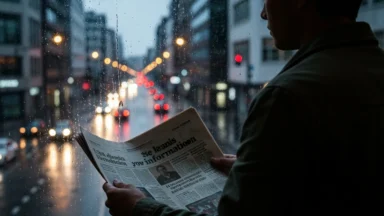
In a world saturated with information, the ability to distinguish credible news from carefully crafted falsehoods has become an primary life skill. Every time you scroll through a social media feed or browse headlines, you are navigating a complex ecosystem where facts, opinions, and fabrications collide. The constant stream of content is designed to capture your attention, but it isn’t always designed with accuracy in mind, leaving many feeling overwhelmed and uncertain about what to trust.
This challenge is compounded by the very nature of digital platforms. Algorithms, optimized for engagement rather than truth, often amplify sensational or emotionally charged content, allowing misinformation to spread like wildfire. This isn’t just a minor annoyance; the erosion of a shared set of facts has profound consequences, influencing everything from public health outcomes to the stability of democratic processes. The line between unintentional errors (misinformation) and deliberate deception (disinformation) is often blurry, making active verification more critical than ever.
But you don’t need to be a professional journalist to build a strong defense against false information. This guide will equip you with a multi-layered strategy for news verification. We’ll start with immediate, first-line checks you can perform in under a minute to weed out obvious fakes. From there, we will explore deeper techniques, including how to leverage professional fact-checkers, effectively cross-reference sources, and identify the subtle but powerful influence of media bias. By the end, you’ll have a practical toolkit to navigate the modern media maze with confidence.
The Urgent Need for News Verification Today
Scrolling through your daily feed feels like trying to sip from a firehose. A constant stream of headlines, updates, and breaking alerts floods our screens from countless sources, each competing for a sliver of our attention. The data suggests an overwhelming reality: according to the Pew Research Center, a majority of U.S. adults get news from social media, where information spreads at an historic speed. It’s a deluge of content. But how much of it is actually true?
This digital environment makes it incredibly easy for misinformation—incorrect information spread unintentionally—and its more malicious cousin, disinformation, to flourish. The lines between professionally vetted journalism, opinion pieces, and outright fabrications have become dangerously blurred. What many people miss is that the goal of disinformation isn’t just to make you believe a lie, but to make you distrust everything. This erosion of trust impacts our ability to make informed decisions about everything from our health to our democracy, which is why understanding the reliability of news portals is so required.
The stakes are simply too high to remain passive consumers.
Navigating this is like trying to cross a six-lane highway during rush hour without any traffic lights. Algorithms, not editors, often decide what you see, and they are optimized for one thing: engagement. Shocking, emotional, or divisive content tends to get more clicks and shares, regardless of its accuracy. This means that a well-crafted lie can race around the globe before the truth even has a chance to put its shoes on. The system itself isn’t built to prioritize accuracy, which complicates how we should approach even expert analysis on current events that appears in our feeds.
Developing strong news verification skills is no longer a niche activity for journalists or academics; it’s a underlying competency for every citizen. The good news is that you don’t need to be a detective to spot the red flags. By adopting a few smart habits for consuming information, you can build a more accurate picture of the world and reclaim confidence in your understanding of it.
First-Line Defenses: Quick Checks for Credibility
Before you invest your time and trust in an article, performing a few quick checks is like inspecting fruit at the grocery store. You wouldn’t buy a bruised apple, so why consume a questionable news story? These initial steps don’t require deep investigation but can filter out the most obvious forms of misinformation. They are your first line of defense.
What most people miss is that these checks often take less than a minute combined. Yet, they can prevent you from sharing something that is misleading or entirely false. It’s a small habit that pays huge dividends for your personal credibility and the health of our shared information space. These practices are cornerstones of developing smart habits for informed citizens.
Scrutinizing the Source: Who Published This?
Your first question should always be: who is telling me this? Look at the website’s name and URL carefully. Deceptive sites often use URLs that mimic legitimate news organizations, sometimes with slight misspellings or different domain extensions like “.co” instead of “.com”. For instance, a site called “cbbnews.com” might be trying to impersonate “cbsnews.com”. The devil is in the details.
Beyond the URL, investigate the publisher itself. A credible outlet will have a clear “About Us” page with information about its mission, funding, and leadership. If you can’t find this information, that’s a significant red flag. A study from the Reuters Institute for the Study of Journalism found that brand recognition is a major factor in trust; for obscure sources, trust from readers drops significantly. Understanding the reliability of different news portals is a critical skill in this environment.
No contact information is a dealbreaker.
Beyond the Headline: Does it Match the Content?
Headlines are designed to grab your attention, but they can often be sensationalized or misleading. Always read beyond the title and the first paragraph. Does the body of the article actually support the claims made in the headline? Outrageous headlines with tame or unsupported content are a classic sign of clickbait, designed for shares rather than information.
Another important element is the use of images. Photos can be presented out of context to evoke a strong emotional reaction. A quick reverse image search on Google or TinEye can show you where an image originated and if it has been used in other, unrelated stories. This is a surprisingly simple trick that takes less than ten seconds. It helps you understand how news portals prioritize and present stories visually, which isn’t always for accuracy’s sake. Also, check the publication date—old news is frequently recirculated to seem current.
Once you’ve confirmed the basics seem sound, the next step is to dig a little deeper into the article’s actual substance and the evidence it presents.
In an age of information overload, the last, best filter is your own brain. But it needs to be trained.
— Dan Gillmor, Director of News Co/Lab at Arizona State University
| Strategy | Key Action |
|---|---|
| Quick Source Check | Examine the URL for mimics and look for a transparent ‘About Us’ page with contact information. |
| Headline vs. Content | Read the full article to ensure the content supports the headline’s claims, avoiding clickbait. |
| Cross-Referencing | Verify significant claims by checking multiple, diverse, and reputable news sources. |
| Professional Fact-Checkers | Consult sites like Snopes, PolitiFact, or FactCheck.org for investigations on viral claims. |
| Bias Identification | Look for loaded language, emotional appeals, and consider what information might be omitted. |
| Image Verification | Use a reverse image search (e.g., Google Images, TinEye) to find the photo’s original context and source. |
Deep Dive Techniques: Unmasking Deception
Moving beyond a quick check of the URL and author is where the real work of media literacy begins. Some of the most convincing misinformation isn’t riddled with typos or hosted on a bizarre domain; it’s carefully crafted to look and feel like legitimate journalism. To verify news, you need to adopt the mindset of an investigator, armed with tools and techniques designed to expose a story’s foundations—or lack thereof.
This means going beyond the surface. These methods require more effort, but they provide a much higher degree of certainty about the information you consume and share.
Leveraging Professional Fact-Checkers
Before you spend hours tracking down sources yourself, see if professional fact-checkers have already done the work. Organizations dedicated to this task employ journalists and researchers who specialize in painstakingly verifying claims made by politicians, public figures, and media outlets. They provide detailed reports showing their work, citing the primary sources they used to reach their conclusions.
Not all fact-checkers are the same. They often have different areas of focus. Using the right tool for the job is required. A study from the Reuters Institute found that stories labeled as false by fact-checkers saw their reach on social platforms decrease by over 60%, showing the tangible impact of their work. Think of these sites as your first line of specialized defense. A deeper understanding of news portal reliability often begins with seeing how they fare under the scrutiny of these third-party groups.
| Fact-Checking Site | Primary Focus | Methodology & Rating System |
|---|---|---|
| Snopes | Urban legends, viral social media claims, rumors, and political statements. One of the oldest fact-checkers online. | Uses a range of ratings like “True,” “False,” “Mixture,” and “Unproven” to categorize claims. Provides extensive sourcing and historical context. |
| PolitiFact | Statements made by politicians and political pundits in the United States. Operated by the Poynter Institute. | Famous for its “Truth-O-Meter,” which rates claims on a scale from “True” to “Pants on Fire.” Each rating comes with a detailed article explaining the reasoning. |
| FactCheck.org | Political claims from U.S. politicians, focusing on accuracy in speeches, ads, and debates. A project of the Annenberg Public Policy Center. | Does not use a simple rating system. Instead, it provides long-form narrative articles that analyze claims and provide readers with evidence to draw their own conclusions. |
The Art of Cross-Referencing: Multiple Perspectives
Never rely on a single source for important information, especially if the topic is contentious. The practice of cross-referencing involves checking multiple, reputable news outlets to see how they are reporting on the same event. If a shocking story is only being reported by one outlet—and no one else has picked it up—that’s a major red flag.
The key is to consult a diverse range of sources. Look for the story on major national news sites, international news agencies (like Reuters or the Associated Press), and outlets with different editorial stances. If sources from across the political spectrum are reporting the same core facts, your confidence in those facts should increase. It’s like building a legal case; you need corroborating witnesses. A single witness can be mistaken, but five independent witnesses describing the same event lends it powerful credibility.
What most people miss is that this process also reveals the story’s texture. One source might have an exclusive quote, while another has a key data point. By combining them, you get a much fuller picture. Understanding how news portals prioritize and present stories helps you see why one outlet might lead with a different angle than another, even when reporting on the same set of facts.
Identifying Bias: Understanding Editorial Slant
Bias is not an on/off switch; it’s a spectrum. Virtually every source has some form of bias, whether it’s political, commercial, or simply a result of its target audience. The goal isn’t to find a mythical, perfectly neutral source. The goal is to recognize the bias so you can account for it in your interpretation.
Pay close attention to word choice. Are they using emotionally charged or loaded language? Words like “heroic,” “disastrous,” “radical,” or “common-sense” often signal an opinion rather than a neutral description. A biased report often tells you how to feel about the information instead of just presenting the information itself. Adopting smart habits for informed citizens means learning to separate the factual reporting from the editorial commentary woven into it.
Recognizing Omission and Framing
Perhaps the most subtle—and powerful—form of bias is what a story leaves out. Bias by omission occurs when a media outlet consistently leaves out one side of a story or facts that would challenge their preferred narrative. If a report on a new tax policy only interviews people who support it, it’s omitting a critical perspective.
This is directly tied to framing. The same set of facts can be used to construct completely different narratives. For instance, a report that
a company laid off 500 workers frames the story around job loss. Another report on the same event might frame it as a strategic restructuring that saved 4,500 other jobs — a totally different interpretation. Is one version “false”? Not exactly, but both are incomplete. The underrated factor here is questioning the frame itself and seeking out the information that might exist outside of it.

Understanding Different Forms of Misinformation
Not all false information is created with the same intent. Distinguishing between the types is like telling the difference between a person who accidentally gives you wrong directions and someone who intentionally sends you into a ditch. The first is misinformation—inaccurate content shared without a malicious motive. The second, far more dangerous, is disinformation: fabricated content deliberately created to deceive.
A common point of confusion is the line between satire and fake news. Satirical websites like The Onion publish absurd stories to offer social commentary or humor. The problem arises when people share these articles believing they are real. This is quite different from “fake news” sites designed purely to spread falsehoods for political gain or profit, a critical distinction for anyone trying to master the nuances of news portal reliability.
Then you have propaganda and clickbait. Propaganda uses biased or misleading information to promote a specific political cause or point of view, often by appealing to emotion rather than intellect. Clickbait, is the internet’s carnival barker. It uses sensationalist headlines to attract clicks and generate ad revenue, regardless of the content’s truth or quality. It’s a numbers game, plain and simple.
Perhaps the most challenging form to detect is the deepfake—AI-generated audio or video that can realistically depict people saying or doing things they never did. Researchers at University College London found that people could only spot deepfake videos with 73% accuracy, a number that is likely to decrease as the technology improves. What does this mean for our ability to trust what we see and hear? It means the skills for verifying information are no longer optional.
Recognizing these categories won’t make the false content disappear, but it does equip you to better assess what crosses your screen. It’s the first step toward building the smart habits for informed citizens that are necessary today.
Tools and Habits for the Informed Citizen
Recognizing the different flavors of misleading content is the first step. The next, and arguably more important one, is building a personal defense system to actively filter what you consume. Technology might feel like part of the problem, but it can also be a powerful ally in your quest for accuracy. It provides tools that work alongside your own judgment.
Recommended Browser Extensions and Apps
You can fortify your web browser with extensions designed to provide immediate context. Tools like NewsGuard or the Media Bias/Fact Check extension integrate directly into your search results and social media feeds, offering color-coded ratings on a site’s credibility and transparency. They act as a helpful nudge, encouraging a moment of pause before you click or share. Think of it as a nutrition label for news.
Beyond browsers, dedicated fact-checking resources are primary. Websites and apps from organizations like the Associated Press (AP Fact Check), PolitiFact, and Snopes maintain extensive databases of debunked claims. Before sharing that shocking headline, a quick search on these platforms can often reveal its true origin. The data suggests this approach works; a report from the Poynter Institute found that readers exposed to a fact-check were 2.6 times more likely to correctly identify a headline as false.
Deciding between dedicated apps and curated news feeds is often a matter of personal workflow. Many find that navigating the information highway with a mix of both offers the best protection against misinformation.
Developing a Critical Thinking Mindset
But software can only do so much. The most powerful filter is, and always will be, your own critical thinking. This isn’t a switch you can just flip on; it’s a set of habits you cultivate over time. Developing these habits is less like installing an app and more like building muscle — it requires consistent, conscious effort to become second nature.
Adopting a few key practices can fundamentally change how you interact with information online.
- Read Laterally, Not Just Vertically. When you land on an unfamiliar source, resist the urge to simply scroll down the page to evaluate it. Instead, open new browser tabs. Search for the name of the publication or the author. What do other, more established sources say about them? This simple habit is what professional fact-checkers do first.
- Interrogate the “About Us” Page. A legitimate news organization is proud of its mission and its people. Check the “About Us” section for a clear mission statement, a list of key staff with their credentials, and transparent funding information. If this page is vague or missing entirely, that’s a significant red flag.
- Pause When You Feel a Strong Emotion. If a headline makes your blood boil or fills you with validation, stop. This is a deliberate tactic. Disinformation is often engineered to provoke a strong emotional response, bypassing your rational brain to encourage an immediate share.
- Diversify Your News Diet. It’s comfortable to stay within an ideological echo chamber, but it provides a distorted view of reality. Make a conscious effort to read from a variety of sources, including those with different political perspectives. One of the best smart habits for informed citizens is to understand not just what is happening, but how different groups are interpreting the same events.
- Demand Evidence for Claims. Ask yourself, “How do they know that?” A credible report will show its work. It will link to original studies, provide direct quotes from named experts, or reference official documents. The underrated factor when you assess news portal reliability is this trail of evidence. Is it present and verifiable?
These practices won’t make you immune to every piece of false content. What they will do is dramatically decrease your odds of being misled and, more importantly, prevent you from becoming an unintentional amplifier in the chain of misinformation.
Beyond Verification: The Future of Trust
Mastering the techniques in this guide is a key step, but it’s not the final destination. The landscape of information is constantly evolving, with artificial intelligence now capable of generating convincing text, images, and video at an exceptional scale. The era of the deepfake is upon us, and what does that mean when our own eyes and ears can be so easily deceived? This technological arms race guarantees that the cat-and-mouse game between verification and deception will only accelerate.
Ultimately, the most powerful tool isn’t a browser extension or a specific fact-checking site, but a cultivated mindset of healthy skepticism and intellectual curiosity. The real challenge moving forward isn’t just about debunking individual falsehoods as they appear. It’s about building a resilient, adaptable approach to information consumption that can withstand new forms of manipulation we can’t yet predict. The last line of defense, as always, is a well-informed and critical mind. How will you prepare yours for what comes next?
Frequently Asked Questions
What is the difference between misinformation and disinformation?
The key difference is intent. Misinformation is false or inaccurate information that is spread unintentionally, often by people who believe it to be true. Disinformation, is false information that is deliberately created and spread with the specific intent to deceive, harm, or manipulate people.
Can social media be a reliable news source?
Social media is a platform, not a source. While it can be a fast way to get news from credible journalism outlets that have accounts, it is also a primary vector for falsehoods. The reliability depends entirely on the original source of the information, which you must verify independently, rather than trusting the person who shared it.
How can I check if an image or video is real?
For images, use a reverse image search tool like Google Images or TinEye. This will show you where else the image has appeared online, often revealing its original context and date. For videos, especially suspected deepfakes, check reputable fact-checking organizations, as they often have teams dedicated to analyzing manipulated media.
What should I do if I encounter fake news?
The most important thing is not to share it, which stops you from contributing to the problem. If you feel comfortable, you can privately and politely inform the person who shared it with you. You should also use the platform’s built-in tools to report the post as false information or spam.
Are all opinion pieces considered biased?
Yes, by their very nature, opinion pieces are biased because they are designed to present a specific viewpoint and persuade the reader. Reputable news organizations clearly label this content as ‘Opinion,’ ‘Editorial,’ or ‘Op-Ed’ to distinguish it from objective news reporting. Recognizing this label is key to understanding the author’s intent.