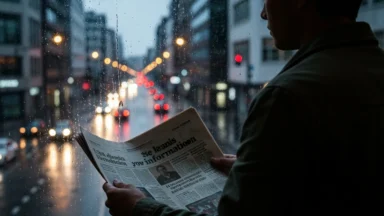
In an age of constant connection, the flow of information has transformed from a steady stream into a relentless firehose. Every minute, countless headlines, updates, and alerts compete for our attention, creating a paradox: we have more access to news than ever before, yet feel less informed. The challenge is no longer finding information, but filtering it. Drowning in this digital noise can lead to decision fatigue, anxiety, and a skewed perception of the world, making the need for a strategic approach to news consumption more critical than ever.
This shift demands a new kind of literacy—not just in understanding the news, but in managing its delivery. The days of waiting for the evening broadcast or morning paper are long gone. Today, financial markets can pivot on a single tweet and global events unfold live on our screens. A recent study by the Reuters Institute highlighted that over 55% of people now use their smartphones as a primary source for news, underscoring our reliance on immediate, portable information. How can we harness this power without becoming its victim?
This guide moves beyond the endless scroll, offering a clear roadmap to building a personalized and efficient real-time news system. We will explore the distinct advantages of curated feed aggregators, navigate the chaotic but powerful landscape of social media news, and evaluate the direct-to-device precision of dedicated news apps. By the end, you will have the knowledge to select and configure the right platforms to stay ahead of the curve, transforming information overload into informed action.
The Imperative of Instant Information in a Rapid World
In a society where a single tweet can influence global markets, the value of real-time news has never been more apparent. Information that is even a few hours old can be functionally obsolete, like trying to navigate a new city with a ten-year-old map. Speed matters. This immediate access allows us to react to opportunities and threats with an agility that was once unimaginable.
This isn’t just a phenomenon for traders and politicians. A recent report from the Reuters Institute for the Study of Journalism revealed that 56% of people check for news updates multiple times a day on their smartphones. What is the real impact of this constant stream on our personal lives? From deciding on a travel route to avoid a sudden traffic jam to making informed financial choices, the ability to stay informed directly shapes our daily outcomes.
The challenge, surprisingly, is not a lack of information but an overabundance of it. Navigating this constant flow is like trying to drink from a firehose — you get more water than you can possibly handle. The underrated factor here is separating the signal from the noise. Without effective tools, the sheer volume of data can lead to decision paralysis or, worse, falling for misinformation. Learning to distinguish credible sources from deceptive ones is a critical skill.
Effectively managing this influx is the key to harnessing its power without becoming overwhelmed.
Ultimately, the goal is to develop a system that delivers relevant, timely updates without demanding our constant attention. It’s about creating a personalized briefing that keeps you ahead of the curve. By understanding the tools available, you can spend less time searching for news and more time acting on it, a notable strategy to avoid news overload. The rest of this guide will explore the platforms that make this possible.
Curated Feeds and Aggregators: Your Personalized News Hub
Moving beyond the chaotic stream of social media for news is the first step toward becoming informed. News aggregators and RSS readers act as your personal editors, pulling content from sources you trust into a single, organized dashboard. Instead of algorithms deciding what you see, you are in complete control. This is a core shift in consumption.
Think of it like creating the ultimate music playlist. You wouldn’t let a random DJ dictate every song you hear, so why let social media feeds do that with your news? Building a personalized feed ensures you get updates on topics you care about—from international politics to local tech startups—without the noise. The underrated factor here is the time saved; a report from the Pew Research Center noted that users of news aggregators spend 22% less time finding relevant stories compared to those who rely on social media.
Top Aggregators: Features and Comparison
Choosing the right aggregator depends entirely on your needs. Some users prefer a minimalist interface, while others want powerful filtering and automation tools. The market offers several strong contenders, each with a distinct approach to organizing the world’s information. What most people miss is that the best tool for them might not be the most popular one, but the one that best matches their reading habits.
Here’s a quick comparison of two popular options:
| Feature | Feedly | Inoreader |
|---|---|---|
| Customization | Strong topic and keyword tracking, but advanced rules require a paid plan. Offers AI-driven topic suggestions. | Extensive rule-based filtering (even on the free tier), allowing users to mute keywords or highlight specific authors. |
| Interface | Clean, magazine-style layout with multiple view options. Highly praised for mobile experience. | More utilitarian and data-dense, resembling an email client. It’s powerful but has a steeper learning curve. |
| Source Variety | Excellent for mainstream publications, blogs, and trade journals. Can also follow Reddit threads and newsletters. | Supports a wider range of sources, including social media feeds, and is known for its ability to find and subscribe to obscure RSS feeds. |
| Cost | Generous free tier for up to 100 sources. Pro plans start around $6/month. | Free tier with ads and some limits. Pro plans offer more features starting at a similar price point. |
Setting Up Your Ideal News Flow
Once you’ve picked a platform, the real work begins. Your goal is to build a feed that is both full and manageable. A disorganized feed is just as useless as a cluttered social media timeline, which is why having smart strategies to avoid overload is so important. Start by focusing on quality over quantity.
Follow these steps to get started:
- Start with Broad Strokes: Add 5-10 trusted, high-level sources like major national newspapers and international wire services. This builds a solid foundation and ensures you’re getting The Daily Pulse: primary Headlines Shaping Your World Today.
- Layer in Niche Sources: Add specialized blogs, trade publications, and independent journalists covering your specific interests. Are you tracking a particular industry or policy debate? Find the experts and add them directly.
- Use Folders and Tags: Don’t just dump all your sources into one big list. Create categories like “Technology,” “Finance,” or “Local News” to easily switch between topics depending on your focus for the day.
- Filter and Refine: This is where the magic happens. Use your aggregator’s tools to filter out noise. For example, you can create rules to automatically mark articles with certain keywords (like “giveaway” or “sale”) as read. This also helps you practice the skills needed for navigating the information maze by prioritizing trusted outlets.
Building your feed is an ongoing process, not a one-time setup. As your interests change or you discover new sources—and some old ones lose their relevance—you’ll need to adjust. The result is a living, breathing news hub that evolves with you.
Instead of digging deeper into a suspicious site or post, open new tabs. See what other credible sources are saying about the topic and the original source itself.
— Dr. Eleanor Vance, media literacy researcher at the Poynter Institute
| Platform Type | Best For | Key Advantage | Primary Risk |
|---|---|---|---|
| News Aggregators (e.g., Feedly) | Creating a personalized news hub from trusted sources. | Full user control over content and sources, reducing algorithmic bias. | Can be time-consuming to set up and maintain effectively. |
| Social Media (e.g., Twitter/X) | Raw, unfiltered speed and on-the-ground updates during breaking events. | Unmatched immediacy and access to eyewitness accounts. | High potential for misinformation, echo chambers, and emotional manipulation. |
| Dedicated News Apps (e.g., AP, Reuters) | Receiving verified, high-priority breaking news alerts directly. | Credibility and speed from a single, trusted journalistic source. | Can lead to a narrow perspective if relying on only one outlet’s viewpoint. |
Social Media as a News Conduit: Navigating the Noise
Social media has fundamentally rewired how information travels, collapsing the distance between an event and an audience. It’s instant. It’s unfiltered. A Pew Research Center study found that a staggering 53% of U.S. adults get news at least sometimes from social media platforms, highlighting a massive shift in consumption habits. This immediacy offers historic access to breaking stories as they unfold.
But that speed comes at a significant cost. The same channels that deliver eyewitness accounts from a protest can also amplify baseless rumors. Using these platforms effectively for news requires a completely different skillset than traditional media consumption. It’s less like reading a newspaper and more like being the editor of your own personal news wire, constantly curating and questioning every piece of information that flows through.
Leveraging Platforms for Timely Updates
Not all social platforms are created equal when it comes to news. Each has its own ecosystem, strengths, and weaknesses. The key is understanding which tool to use for a specific informational need, from getting raw, on-the-ground updates to finding in-depth community discussions. Your ability to get accurate information quickly often depends on choosing the right digital venue.
Twitter: The Micro-Blogging Newsroom
For raw speed, Twitter (now X) remains largely unmatched. Journalists, government agencies, and experts often use it as a first point of contact with the public during a crisis or major event. Creating curated lists of trusted reporters, subject-matter experts, and official sources is one of the most powerful ways to cut through the platform’s chaos. This allows you to build a personalized, real-time feed that sidesteps the main algorithm to a degree.
The underrated factor here is its search functionality. Following a developing story often involves searching relevant hashtags or keywords and filtering by “Latest” to see the most recent posts. This provides a chronological, albeit unvetted, stream of consciousness about an event. It’s the digital equivalent of listening to a police scanner—raw and immediate, but requiring careful interpretation.
Other Platforms: Reddit and Professional Networks
While Twitter excels at speed, platforms like Reddit offer a different kind of value: community-driven context and niche expertise. Subreddits (topic-specific forums) such as r/news or r/worldnews are heavily moderated spaces where users submit and discuss articles from various sources. The comment sections can be a goldmine for clarification, counterpoints, and expert insights you won’t find in a standard news report—provided you can spot the informed users among the crowd.
Professional networks like LinkedIn have also carved out a space in the news ecosystem, particularly for industry-specific developments. Following thought leaders and publications in a specific field can provide a highly relevant stream of news and analysis that is often buried on more generalized platforms.
Strategies for Fact-Checking and Source Verification
Simply consuming information on social media is a passive act. To stay informed, you must become an active verifier. The first step is to check the source. Is the account verified? Does the user have a history of credible reporting, or is it a brand-new account with a suspicious handle? These initial checks can filter out a huge percentage of low-quality information.
Dr. Eleanor Vance, a media literacy researcher at the Poynter Institute, advocates for a technique called “lateral reading.” She explains, “Instead of digging deeper into a suspicious site or post, open new tabs. See what other credible sources are saying about the topic and the original source itself.” This simple habit prevents you from getting trapped in a web of misinformation. It’s a underlying part of a larger guide to identifying fake news that prioritizes verification over speed.
A few practical steps can make a world of difference:
- Check the Profile: Look at the account’s creation date, profile picture, and past posts. An account created two days ago that is posting inflammatory content is a major red flag.
- Reverse Image Search: If you see a dramatic photo, use a tool like Google Images to search for it. Often, images from past events are recycled to fit a new, false narrative.
- Look for Corroboration: Are major news organizations reporting the same thing? If a story is only appearing on one obscure account, exercise extreme caution.
The Pitfalls: Echo Chambers and Misinformation
The greatest danger of relying on social media for news is the algorithm. It’s not designed to make you more informed; it’s designed to maximize your engagement. What most people miss is that this system inadvertently builds echo chambers by showing you content it knows you will agree with, reinforcing existing biases.
Think of your information diet like your nutritional diet. Consuming only one type of content—even if it feels satisfying—leads to an unhealthy, skewed perspective of the world. Consciously seeking out opposing viewpoints and different sources is the only way to counteract this algorithmic pull. Learning smart strategies to avoid overload can also help you manage the constant influx of biased content.
This environment is also the perfect breeding ground for misinformation, which spreads significantly faster than verified corrections. A viral tweet containing false information can reach millions before fact-checkers even have a chance to respond. The speed that makes social media so useful for breaking news is the very same quality that makes it so dangerous.
Ultimately, social media is a powerful but volatile tool. It provides a direct line to unfolding breaking news, but it demands constant vigilance from the user. The challenge moving forward isn’t just about finding information, but about building the digital resilience to process it responsibly.
Dedicated News Apps and Alert Systems: Direct to Your Device
While social media offers a chaotic, user-driven flow of information, dedicated news apps provide a more curated and direct channel. Think of it as switching from a crowded public square to a private briefing. These applications, offered by major outlets like the Associated Press, Reuters, and BBC News, are designed specifically for delivering verified reports straight to your phone’s lock screen.
The primary advantage is the speed and directness of breaking news alerts. When a major event happens, you receive a push notification instantly, bypassing algorithms or the need to actively scroll a feed. This immediacy is powerful. But how do you pick the right one from a sea of options?
Evaluating News App Features
Choosing a news app isn’t just about who sends alerts the fastest. The underrated factor here is the overall user experience and the trustworthiness of the content. A study from the Reuters Institute for the Study of Journalism found that while 31% of users rely on push notifications, a clunky interface or biased reporting can quickly lead them to uninstall an app. When selecting an app, consider a few key points.
- Reliability and Sourcing: Does the app clearly distinguish between original reporting, wire service stories, and opinion pieces? Strong apps prioritize transparency, which is vital for anyone trying to navigate the modern information maze.
- Coverage Scope: Look for an app that provides a good mix of local, national, and international news. Some apps excel at specific niches like technology or finance, so your choice may depend on your primary interests.
- User Interface (UI): A clean, intuitive design makes a huge difference. The app should be easy to navigate, with features like a “read later” function, offline access, and adjustable text size. A cluttered interface just adds to the noise.
Customizing Your Alert Preferences
Getting alerts is one thing; getting the right alerts is another. Most people download a news app, accept the default notification settings, and are then bombarded with updates that aren’t relevant to them. This is a quick recipe for burnout.
The solution is diving into the app’s settings. A quality news app allows you to fine-tune your push notifications with surprising granularity. You can often choose to receive alerts only for top headlines, specific topics you follow—like “space exploration” or “local politics”—or from particular authors. This turns your phone from a blaring alarm into a helpful assistant. It’s a critical step in building a sustainable news habit.
Think of your alert settings like a volume knob for the world’s events. Fine-tuning these preferences is the key to mastering the news flow without feeling overwhelmed. The goal is to receive information that helps you understand breaking news, not just react to it. Ultimately, a personalized alert system ensures you are informed on your own terms, transforming your device into a tool for awareness rather than a source of anxiety.
Emerging Technologies: AI and Beyond in News Delivery
The push notifications and curated feeds we currently rely on are just the first step. Artificial intelligence is rapidly evolving from a simple sorting tool into a refined news concierge, capable of understanding nuance and context to deliver highly personalized briefings. Dr. Evelyn Reed, a media theorist at Stanford, predicts that “your morning update will soon be a synthesized audio brief created by an AI just for you, based not just on topics you like but on the complexity you prefer—something a human editor rarely has time for.” It’s a profound shift.
Think of it less like a newspaper and more like a personal researcher who already knows what questions you have about today’s primary news. This technology aims to cut through the information clutter, a major benefit for anyone trying to master their news flow in a saturated digital environment. The goal is no longer just speed, but extreme relevance.
But what happens when a system knows you too well?
The critical challenge is building tools that inform without isolating, a task that puts more pressure on us to learn how to spot misleading headlines that might slip through algorithmic filters. A recent report from the Reuters Institute found that 68% of news executives see AI-driven fact-checking as a top development priority. This focus suggests the future isn’t just about faster information, but about building a more trustworthy foundation for how we consume news.
Beyond the Tools: Cultivating Digital Vigilance
Mastering the platforms for real-time news is only the first step. The true challenge ahead lies not in the technology we use, but in the habits we cultivate. As algorithms become more adept at predicting what will hold our attention, the responsibility to seek out diverse, challenging, and verified information falls squarely on our shoulders. The most advanced aggregator or alert system is rendered useless if we lose the critical thinking skills to question the content it delivers. What happens when our perfectly curated feeds become so comfortable they shield us from inconvenient truths? The ultimate goal isn’t just to be the first to know, but to be among the wisest in understanding. The next frontier isn’t finding a better tool, but building a more resilient, questioning mind.
Frequently Asked Questions
How can I ensure the news I receive in real-time is accurate?
To ensure accuracy, practice lateral reading. When you see a breaking story, open new tabs to see if other credible, independent news organizations are reporting it. Prioritize information from established journalistic outlets and be skeptical of accounts without a history of reliable reporting.
What are the best free tools for instant news updates?
Many powerful tools offer reliable free tiers. News aggregators like Feedly and Inoreader allow you to follow up to 100 sources for free. On social media, creating curated lists of journalists and experts on platforms like X (formerly Twitter) is a free and effective way to build a real-time feed.
How do personalized news feeds work and how can I optimize them?
Personalized feeds work in two ways: either you explicitly choose the sources (like in an RSS aggregator) or an algorithm chooses for you based on your behavior (like on social media). To optimize, actively curate your source list in aggregators and use filters to remove noise. On social platforms, consciously follow diverse viewpoints to counteract the algorithm’s tendency to create an echo chamber.
Can I get real-time news updates without being overwhelmed by notifications?
Absolutely. The key is selective alerting. Instead of enabling notifications for everything, use a dedicated news app (like AP or Reuters) and turn on alerts only for major breaking news. This ensures you receive critical updates instantly without a constant barrage of notifications for less urgent stories.
What’s the difference between a news aggregator and a dedicated news app?
A news aggregator pulls content from hundreds or thousands of different sources that you choose, putting you in control of creating a diverse feed. A dedicated news app delivers content from a single journalistic source, such as the Associated Press or the BBC, ensuring a consistent, professionally vetted stream of information.