
When you picture Brazil, what comes to mind? For most, it’s a vibrant montage of Carnival parades, sun-drenched beaches in Rio de Janeiro, and the legendary Amazon rainforest. While these images are iconic, they represent a highly curated and incomplete postcard of a nation that is more complex, diverse, and surprising than stereotypes suggest. This limited view often overshadows the country’s other realities, from its varied landscapes to its dynamic modern economy.
Brazil’s sheer scale—larger than the contiguous United States—naturally fosters immense diversity. This is a country of multiple worlds, where deep-rooted regional identities have given rise to distinct cultures, cuisines, and even dialects of Portuguese. The narrative of a monolithic Brazilian culture centered on samba and soccer crumbles when you explore the German-influenced festivals of the south, the African heritage of Bahia, or the Indigenous traditions that still resonate throughout the Amazon basin. This complexity extends to its economy, which is often typecast as a mere exporter of raw materials.
This article peels back the layers of common perception to reveal the Brazil you don’t see in the headlines. We will journey beyond the Amazon to discover other vital ecosystems like the Pantanal and the Cerrado. We’ll explore the rich tapestry of local festivals and culinary traditions that exist far from the tourist trail. Finally, we’ll uncover Brazil’s surprising emergence as a global player in technology and innovation, proving that its future is being built on much more than its natural resources. Prepare to have your assumptions challenged.
Brazil’s Hidden Wonders: Nature and Geography You Won’t Believe
When you think of Brazil’s geography, your mind probably jumps straight to the Amazon rainforest or the iconic beaches of Rio de Janeiro. While those are spectacular, they represent just a fraction of the country’s immense natural diversity. The truth is, Brazil’s landscape is far more complex and surprising than most travel brochures let on. It’s a continental-sized country with secrets hiding in plain sight.
What most people miss is that Brazil is home to a staggering 60% of the Amazon rainforest, but it also contains several other distinct and equally fascinating biomes. The way portals prioritize and present stories often reinforces this limited view, overshadowing other ecological treasures.
Beyond the Amazon: Uncharted Biomes and Their Secrets
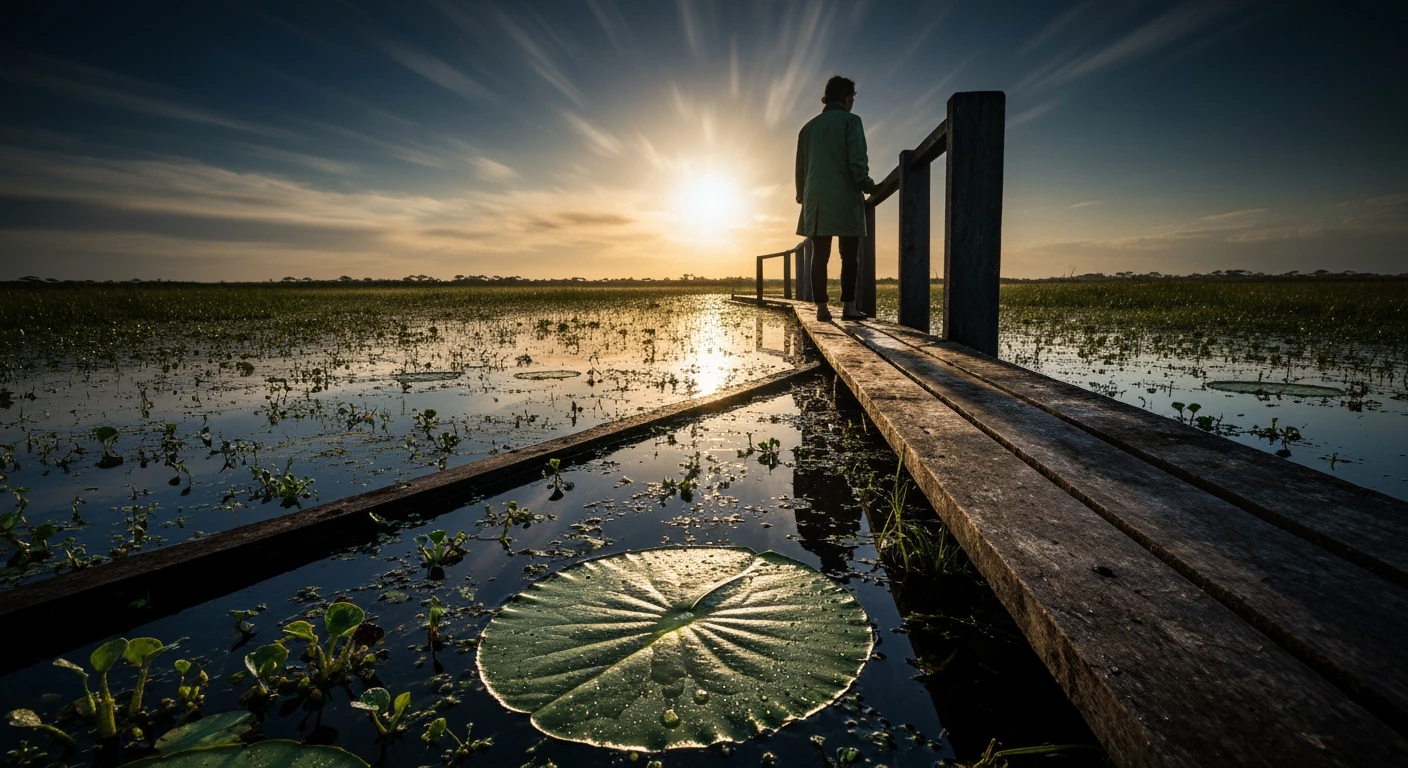
Look south of the Amazon, and you’ll find the Pantanal, the world’s largest tropical wetland. This immense alluvial plain isn’t a swamp; it’s a seasonal floodplain that acts like a massive sponge, creating one of the most biologically intense places on Earth. During the wet season, over 80% of the Pantanal is submerged, creating a haven for an incredible density of wildlife. It’s a world apart.
This biome is home to the highest concentration of jaguars on the planet and boasts around 4,700 documented species of plants and animals, according to Brazil’s Embrapa Pantanal research center. Then there’s the Cerrado, a vast tropical savanna that covers more than 20% of the country. This “upside-down forest” has deep-rooted trees that allow it to survive intense dry seasons, showcasing a completely different kind of resilience.
Geological Peculiarities: From Underground Rivers to Ancient Formations
Brazil’s wonders aren’t just on the surface. Running nearly 6,000 kilometers beneath the Amazon River is the recently discovered Rio Hamza, a subterranean river that flows slowly through porous rock formations towards the Atlantic. While its existence is still debated and studied by geologists, the data suggests it could be up to four times wider than the Amazon itself — basically the Amazon’s mysterious, slow-moving twin.
Far from the jungle, the country’s northern border features the tabletop mountains, or tepuis, of Mount Roraima. These sheer-sided plateaus are some of the oldest geological formations on Earth, with rocks dating back nearly two billion years. Getting clear expert insights on these remote locations is difficult, but they are known to host unique species found nowhere else. These incredible features show that even after centuries of exploration, Brazil’s geography still holds profound secrets waiting to be understood.
Cultural Kaleidoscope: Unpacking Brazil’s Social Fabric
When you think of Brazil, vibrant images of Carnival and soccer likely dominate the picture. While these are significant parts of the national identity, they represent only a thin slice of a much more complex and varied social landscape. What most people miss is the intricate blend of traditions, languages, and celebrations that make up the country’s true character. This reality often gets lost in translation, a bit like trying to understand a whole library by only reading the book covers.
The gap between perception and reality is surprisingly wide. Many popular ideas about Brazil are either oversimplified or based on the cultures of just one or two major cities. A more accurate view requires looking at the nation as a collection of distinct regional identities.
Let’s break down some common assumptions:
| Common Stereotype | The Surprising Reality |
|---|---|
| Every Brazilian lives for Carnival and samba. | Many Brazilians prefer other music genres like sertanejo or rock. Some even travel to escape the Carnival crowds entirely. |
| The country’s culture is uniform from north to south. | Brazil is a federation of distinct regional cultures, each with its own music, food, accent, and traditions shaped by different immigration histories. |
| Brazilian food is all about meat and feijoada. | Cuisine varies dramatically by region, with Amazonian fish dishes, African-influenced stews in Bahia, and European-style pastries in the south. |
Beyond Carnival: Festivals and Local Celebrations
While Rio’s Carnival is globally famous, it’s just one of thousands of festivals. The country’s calendar is packed with events that reveal a much deeper cultural story. These celebrations are often more important to local communities than the large, televised parades.
The Diversity of Brazilian Festivities
Take the Festas Juninas (June Festivals), for example. Celebrated nationwide, these festivities honor Catholic saints with rural-themed parties, bonfires, traditional square dancing called quadrilha, and a feast of corn-based treats. In the northeast, the city of Campina Grande hosts a month-long celebration that draws over 2.5 million people. Far in the south, the city of Blumenau hosts the second-largest Oktoberfest in the world, a nod to its strong German heritage that attracts roughly 700,000 visitors annually. Then there is the Bumba Meu Boi festival in Maranhão, a complex folkloric performance that blends African, Indigenous, and Portuguese traditions to tell the story of a resurrected ox. These events offer a more nuanced lens through which to appreciate the country’s diversity, and getting a deeper understanding of these social trends reveals a Brazil far beyond the beach.
Language Nuances: More Than Just ‘Portuguese’
The official language is Portuguese, but the idea of a single “Brazilian accent” is a myth. The country’s immense size and history of immigration have created a mosaic of dialects and expressions. The Portuguese spoken in Porto Alegre, with its distinct “tchê” interjection, sounds remarkably different from the musical, fast-paced accent of Salvador.
Regional Dialects and Expressions
These linguistic differences are not just about pronunciation; they include unique vocabularies that can even confuse Brazilians themselves. But does someone from the Amazon really use the same slang as a São Paulo native? not. The way a Carioca (a Rio resident) pronounces the “s” as a “sh” sound is an iconic marker of their origin. Vocabulary also shifts dramatically — the same root vegetable is known as mandioca, aipim, or macaxeira depending on the state you’re in. This linguistic variety is a direct reflection of the country’s settlement patterns and regional identities, a complexity often flattened by how media shapes these perceptions globally.
More than 170 indigenous languages are still spoken, though many are endangered.
Gastronomy: A World of Flavors Beyond Feijoada
Similarly, reducing Brazilian cuisine to feijoada and barbecue is like judging all American food by the hamburger. It’s a starting point, but it misses the entire story. Brazilian gastronomy is a continent-sized menu influenced by Indigenous, African, and European ingredients and techniques.
In the state of Bahia, the African influence is unmistakable in dishes like moqueca, a savory seafood stew cooked in palm oil and coconut milk. Travel to the Amazon, and you’ll find tacacá, a hot and sour soup made with jambu leaves that create a unique tingling sensation in the mouth. A report from Abrasel, the Brazilian Association of Bars and Restaurants, suggests that regional dishes account for over 63% of food sales in non-capital cities, highlighting their deep cultural and economic importance. This focus on local flavor profiles is a defining feature of the culinary scene, and one that continues to evolve as chefs rediscover native ingredients.
The narrative of a single tech hub is outdated. We’re seeing a ‘polynucleated’ innovation model emerge in Brazil, where cities like Recife and Florianópolis are not just supporting players but leaders in specific verticals, creating a more resilient national ecosystem.
— Dr. Ana Oliveira, Head of Digital Economy at FGV
| Common Perception | Surprising Reality |
|---|---|
| Brazil’s nature is all about the Amazon rainforest. | It also contains the Pantanal, the world’s largest wetland, and the Cerrado, a vast tropical savanna. |
| Brazilian culture is defined by Rio’s Carnival. | Regional festivals like the Festas Juninas and Blumenau’s Oktoberfest draw millions and reflect diverse heritages. |
| The economy relies solely on commodities like coffee. | Brazil is a major aerospace manufacturer (Embraer) and a leading global hub for financial technology (fintech). |
| Brazilian food means barbecue and feijoada. | Cuisine varies dramatically, from African-influenced moqueca in Bahia to unique fish dishes in the Amazon. |
Economic Powerhouse: Brazil’s Surprising Role in Global Markets
While many associate Brazil’s economy solely with commodities like coffee and iron ore, that picture is woefully incomplete. The country’s economic engine is far more diverse, operating like a well-stocked pantry rather than a single-crop farm. The underrated factor here is a booming domestic market and a technical industrial base that often flies under the radar of international headlines, a common issue you can learn to navigate with guides to unbiased news.
One of the most surprising growth areas is the technology sector. Brazil is now a global leader in financial technology, or fintech, with a startup scene that attracts significant international investment. According to a recent study by the Brazilian Development Bank (BNDES), investment in tech startups grew by over 35% in the last reporting period. But where is this growth most concentrated? Surprisingly, it’s not just in Rio or São Paulo but spreading to secondary cities.
This expansion is changing the country’s entire economic profile.
Beyond digital innovation, Brazil remains a manufacturing giant in less expected industries, such as aerospace—it’s home to Embraer, one of the world’s largest aircraft manufacturers. This industrial diversification is a key topic in many expert opinions on current events. These sectors provide stability and create high-skilled jobs, positioning the nation as a more complex player on the global stage than stereotypes suggest and making its economic trends worth following in your daily news briefings.
Technological Leap: Brazil’s Innovation and Digital Future
While Brazil is globally recognized for its natural resources, a quieter revolution is reshaping its economic identity from within. The country’s technology sector has been expanding rapidly, driven by a surge in venture capital and a growing class of skilled developers. Forget the old clichés. The data paints a picture of a nation becoming a significant player in the digital world, with venture capital investment in Brazilian startups reaching over $9.4 billion in a recent peak year, according to the Latin American Venture Capital Association (LAVCA).
This growth isn’t just a story about São Paulo anymore. It’s happening everywhere.
Startup Ecosystems: Beyond the Major Cities
For years, the Rio-São Paulo axis dominated Brazil’s tech scene, but the underrated factor here is the decentralization of innovation. New ecosystems are sprouting across the country, creating specialized hubs that draw talent and investment away from the traditional centers. Building a national tech industry is a lot like building a national highway system; you can’t just have one main road, you need interconnected routes supporting every region. This diversification makes the entire system more resilient.
Emerging Tech Hubs and Their Specialties
Several cities have carved out impressive niches. Florianópolis, often called “Silicon Island,” is a hotbed for SaaS (Software as a Service) companies. In the northeast, Recife’s Porto Digital is one of Latin America’s largest tech parks, housing over 350 companies focused on IT and the creative economy. Meanwhile, Belo Horizonte is making a name for itself in biotechnology and health tech—a field with massive local demand. What most people miss is that these regional centers often have a lower cost of operation and a higher quality of life, making them incredibly attractive for new ventures.
Digital Inclusion and Connectivity Challenges
Despite this impressive technological growth, a significant digital divide persists. While internet penetration in urban centers is high, reaching over 80% in some states, federal data from the Brazilian Internet Steering Committee (CGI.br) shows that nearly 28.2 million Brazilians, particularly in rural and remote Amazonian communities, still lack reliable internet access. This gap creates a tale of two Brazils: one that develops fintech and AI, and another that struggles with basic connectivity. How can a country become a digital powerhouse if a large portion of its population is left offline?
Government Initiatives and Private Sector Solutions
Addressing this connectivity gap is a monumental task. Government programs like “Norte Conectado” aim to expand fiber optic infrastructure through the Amazon’s rivers, a challenging but necessary undertaking. Simultaneously, private companies are stepping in. Satellite internet providers are beginning to offer services in remote areas, providing a lifeline for education, healthcare, and commerce. These combined efforts are slowly bridging the gap, but the sheer scale of the country—it’s larger than the contiguous United States, after all—means progress is often incremental. The public’s understanding of this complex issue often depends on expert insights on current events and analysis that break down the policy challenges.
Pioneering Green Tech and Sustainable Solutions
Brazil’s unique position as guardian of the world’s largest rainforest gives it a natural advantage in the growing field of green technology. A new wave of “agritech” and “greentech” startups is using technology to promote sustainability. For example, the startup Solinftec uses AI and a proprietary network of sensors to help farmers reduce chemical usage by up to 70%, improving crop yields while minimizing environmental impact. These success stories are gaining international attention, and it’s fascinating to see how news portals prioritize and present stories about this unique intersection of technology and ecology. This isn’t just about conservation; it’s about creating a profitable, sustainable economic model for the future.
The Brazil You Don’t See: Daily Life and Urban Realities
Beyond the vibrant images of Carnival and sprawling beaches lies a nation that is overwhelmingly urban. According to the World Bank, a surprising 87% of Brazilians live in cities, a figure higher than in many European countries. This reality shapes everything from social interactions to economic opportunities, creating a daily life in Brazil far more complex than any stereotype can capture.
Life in a megacity like São Paulo or Rio de Janeiro is a study in contrasts. You have access to world-class culture and cuisine right next to persistent social inequality. For many, navigating the bureaucracy can feel like assembling flat-pack furniture without instructions—frustrating but ultimately manageable. It’s a daily trade-off.
This is the true pulse of the country.
What most people miss is the sheer pace and digital integration of these Brazilian urban trends. The stereotype of a slower, relaxed lifestyle often crumbles in the face of hyper-connected citizens using refined digital payment systems. To grasp the Brazilian society, you have to look beyond the echo chamber of travel guides. Understanding these complex social dynamics requires more than a surface-level take; it often calls for deep analysis of current events and their impact on people. The future of Brazilian identity is being forged not on its famous sands, but within the dense, energetic grids of its ever-growing cities.
Looking Ahead: Brazil’s Future Global Impact and Trends
Beyond the vibrant snapshots of today lies a nation poised for significant global shifts. Brazil’s future trajectory is not merely an extension of its past but a complex interplay of emerging strengths and persistent challenges. The country’s next chapter will likely be written in arenas far beyond its famous beaches and festivals, impacting international policy and culture in surprising ways.
Environmental Stewardship: A Path to Global Leadership?
Brazil’s role as the guardian of the largest portion of the Amazon rainforest places it at the center of the global climate conversation. This is less a burden and more of a strategic asset. The data suggests an immense economic opportunity; a recent study from the Brazilian Climate Center indicates that a fully developed carbon credit market could inject over $100 billion into the country’s economy annually. The potential is massive.
Realizing this future depends on overcoming significant internal hurdles related to deforestation and policy enforcement. What most people miss is that the conversation inside Brazil is increasingly about bio-economy—using the forest’s resources sustainably. Think of it like a homeowner realizing their property’s value isn’t in selling the bricks, but in renting out the beautifully furnished rooms. This involves developing industries around açaí, sustainable pharmaceuticals, and eco-tourism, creating a model for other tropical nations. grasping the complexities requires keeping up with today’s top global and local stories.
Soft Power: The Spread of Brazilian Culture and Influence
For decades, Brazil’s cultural exports were often stereotyped as samba and football. That picture is rapidly changing. The country’s creative industries are experiencing a global moment, driven by digital platforms that bypass traditional gatekeepers. Brazilian funk music, for instance, has found a massive audience from Lisbon to Tokyo, with streaming numbers growing by over 50% year-over-year on major platforms, according to Pro-Música Brasil.
This cultural diffusion extends to technology and media. Brazilian fintech startups are becoming models for emerging markets, and its audiovisual productions are gaining critical acclaim and global distribution on streaming services. Dr. Sofia Almeida, a sociologist at the University of São Paulo, notes that “the world is consuming Brazilian narratives—from gritty urban dramas to animated features—at an extraordinary rate.” This growing influence in media raises interesting questions about how stories get prioritized on a global scale. This isn’t just about entertainment; it’s about shaping perspectives and building influence, one stream at a time.
The core question remains whether Brazil can translate this burgeoning cultural and environmental potential into consistent global leadership. The pieces are on the board, but arranging them effectively will define the nation’s international standing for decades to come.
What’s Next on the Horizon?
Understanding Brazil beyond its stereotypes isn’t just a matter of correcting misconceptions; it’s about recognizing the trajectory of a global power in transition. The nation’s future is being shaped not by the familiar images of the past, but by the dynamic interplay of its decentralized tech hubs, its pioneering efforts in sustainable agriculture, and the fierce pride of its diverse regional cultures. As digital connectivity slowly bridges the gap between its bustling cities and remote communities, what new innovations and cultural fusions will emerge from the country’s deepest corners? The biggest secret may not be what Brazil is, but what it is about to become.
Frequently Asked Questions
What are some common misconceptions about Brazil?
Many people believe Brazil has a uniform culture centered on Carnival and soccer. In reality, it’s a mosaic of distinct regional cultures with their own festivals, music like sertanejo, and local traditions. Similarly, its cuisine is far more diverse than just feijoada, featuring unique dishes influenced by Indigenous, African, and European heritage.
Is Brazil a safe country to visit or live in?
Like any large country, safety in Brazil varies significantly by region and city. While major urban centers face challenges with crime, many smaller towns and tourist areas are quite safe. Millions of tourists visit without incident each year by taking standard precautions, such as being aware of their surroundings and avoiding high-risk areas, especially at night.
What are the most surprising natural wonders in Brazil?
Beyond the Amazon, Brazil is home to the Pantanal, the world’s largest tropical wetland with an incredible density of wildlife, including the highest concentration of jaguars. Another wonder is Mount Roraima, a massive tabletop mountain with some of the oldest geological formations on Earth, creating a unique ecosystem on its plateau.
How is technology changing daily life in Brazil?
Technology is rapidly transforming Brazil, particularly through its booming fintech sector, which has made digital banking accessible to millions. innovation is decentralizing from major cities, with emerging tech hubs like Recife and Florianópolis driving growth in IT and SaaS. This digital revolution is creating new economic opportunities across the country.
What unique cultural traditions can only be found in Brazil?
Brazil hosts unique festivals like the Bumba Meu Boi in Maranhão, a vibrant folkloric performance blending different cultural influences to tell the story of a resurrected ox. Another is the Festas Juninas, nationwide June festivals celebrating rural life with traditional bonfires, specific foods, and a unique style of square dancing called the ‘quadrilha’.