
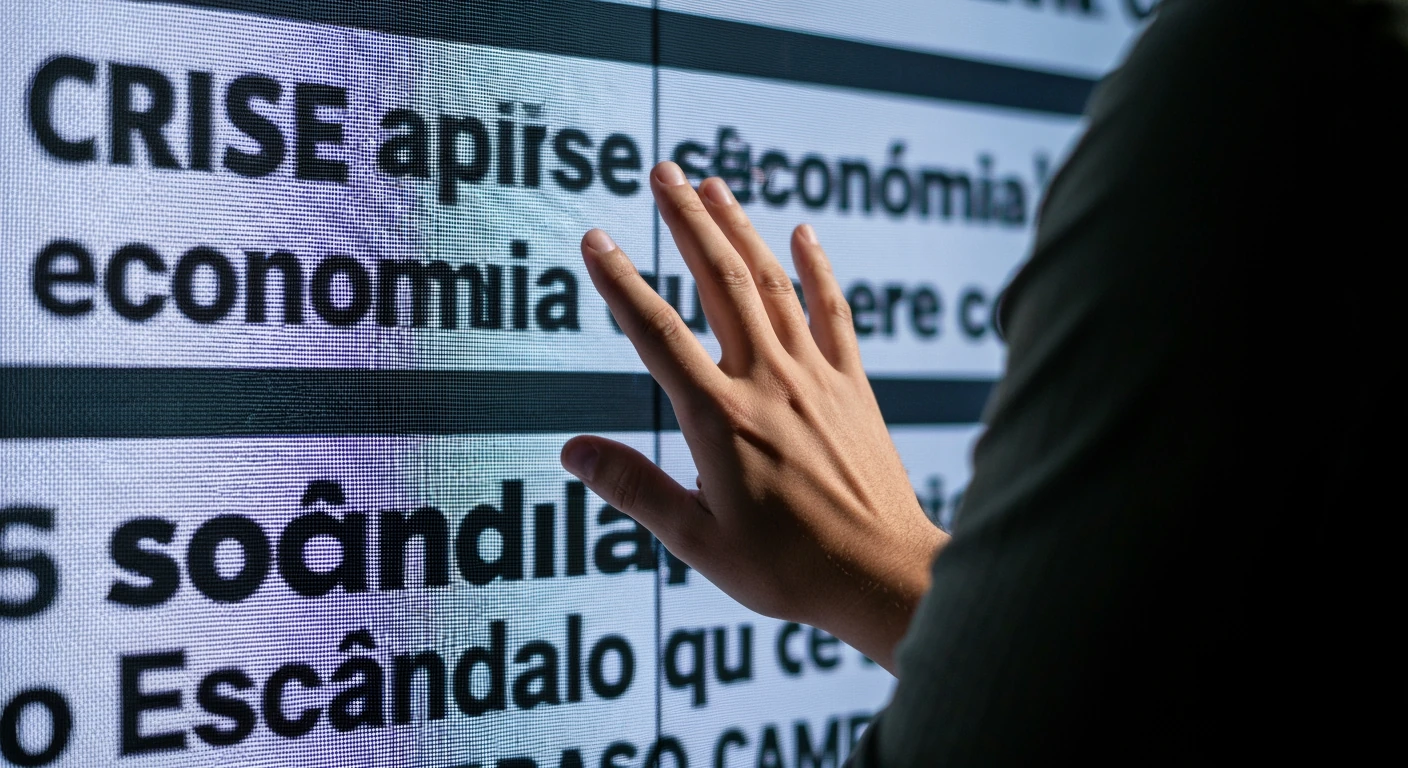
A single headline flashes across your screen: a political scandal, an economic surge, an environmental crisis in Brazil. It’s easy to absorb this information in a glance and move on, feeling informed. But how much of the real story are you actually getting? The digital news cycle demands speed and simplicity, often at the expense of accuracy, transforming the complex, vibrant reality of a nation of over 200 million people into a series of easily digestible, and frequently misleading, narratives.
Understanding Brazil through international media can feel like assembling a puzzle with half the pieces missing. The country’s intricate social dynamics, regional diversity, and layered political history provide a rich context that is often lost in translation or flattened by editorial bias. Without this context, news reports can create a distorted caricature, leading to significant misunderstandings about one of the world’s most globally significant nations. The gap between a quick scroll and genuine comprehension has never been wider.
This guide is designed to bridge that gap. We will move beyond the superficial pitfalls that trap so many readers, starting with the lure of sensational headlines and the subtle influence of editorial agendas. We’ll then explore the critical nuances lost in translation and provide a clear framework for distinguishing factual reporting from persuasive commentary. By the end, you’ll have a practical toolkit for navigating the Brazilian news landscape with confidence and clarity, ensuring you see the full picture, not just the convenient snapshot.
The Perils of Superficial Headlines: Why Context Matters
In the fast-paced scroll of a digital feed, headlines about Brazil can flash by, painting a picture in broad, often dramatic strokes. It’s tempting to absorb these titles as complete stories, but relying on them is like judging a complex novel by its cover art alone. Events in Brazil, from economic shifts to environmental policies, are rarely simple. They demand more than a ten-word summary.
Consider a recent headline that proclaimed, “Foreign Investment in Brazil Soars by 23%.” While technically true for a specific quarter, the full story revealed this was largely due to a single corporate acquisition and didn’t reflect broader economic health. A study from the Getúlio Vargas Foundation (FGV) suggests that nearly 58% of online readers form a lasting opinion based solely on the headline, never clicking to get the full picture. This creates a significant gap between perception and misinformation.
That gap is where misunderstandings are born.
The underlying reason for this is often economic, not necessarily malicious. News outlets are in a constant battle for attention, and a sensational headline generates more clicks. What most people miss is that the pressure to perform well on search engines can sometimes overshadow the need for nuance—after all, isn’t the primary goal to get you to click? It’s a bit like a restaurant putting its most photogenic dish in the window display, even if it isn’t the best meal on the menu. Learning how news portals prioritize and present stories explains a lot about this dynamic.
The key is to treat brazil news headlines as invitations, not conclusions. They are the starting point of a conversation. By taking the extra few seconds to read the first few paragraphs, you arm yourself with notable news context and avoid falling for easy narratives. This simple habit is the first step toward a more accurate understanding and helps you find more balanced sources for your information.
Bias Blind Spots: Identifying and Overcoming Editorial Slant
Moving beyond sensational headlines reveals a more subtle challenge: editorial bias. Every news story is told by someone, and no one is a blank slate. Recognizing that every source has a perspective isn’t a sign of cynicism; it’s the foundation of critical reading. The goal is not to find a mythical, perfectly objective outlet, but to understand the lens through which you’re seeing the world.
Bias isn’t always a deliberate attempt to deceive. It can stem from the publication’s ownership, the journalist’s background, or even regional priorities. A newspaper in São Paulo might naturally focus more on industrial policy, while one in the Amazon region might prioritize environmental issues. What most people miss is that these subtle priorities shape the entire news agenda, determining which stories are even told in the first place.
Recognizing Political and Economic Agendas
The most powerful biases are often tied to money and politics. Media conglomerates are businesses with financial interests that can influence their coverage. For instance, a news portal owned by a group with heavy investments in agribusiness might consistently frame environmental regulations as bureaucratic obstacles to progress. Have you ever noticed how the same government policy can be described as a “bold investment” by one outlet and “reckless spending” by another? That’s agenda-setting in action.
This isn’t just speculation. A report from the Reuters Institute for the Study of Journalism found that 68% of Brazilian news consumers express concern about undue political or business influence over reporting. This economic pressure is a key factor in how news portals prioritize and present stories. The funding model — whether it’s advertising, subscriptions, or government grants — creates incentives that can shape everything from a single headline to long-term editorial direction.
It’s all about following the money.
A Comparison of Brazilian News Outlets and Their Editorial Stances
To navigate this complex environment, it helps to categorize the major players. Think of it like a toolkit for understanding where your information is coming from. While not an exhaustive list, most Brazilian outlets fall into a few general categories.
- Legacy Media (e.g., Folha de S.Paulo, O Globo, Estadão): These are the large, established newspapers and broadcasters. They typically have vast resources for in-depth reporting and maintain a reputation for journalistic standards. their editorial lines often reflect a centrist or center-right, pro-business establishment viewpoint. Their bias is often one of omission—what they choose not to cover can be as telling as what they do.
- Politically Aligned Portals (e.g., Brasil 247, O Antagonista): These digital-native outlets often wear their political leanings on their sleeves, catering to audiences on the left or the right. They excel at rapid-fire commentary and can be valuable for understanding the arguments of a specific political base. The challenge is that they frequently blur the line between reporting and activism, making it a key part of your strategy for finding less biased news sources.
- Independent & Niche Journalism (e.g., Nexo Jornal, Agência Pública): These platforms often focus on data-driven analysis, investigative pieces on specific topics like human rights, or explanatory journalism. Their bias may be toward a certain social cause rather than a political party. They provide incredible depth but may not offer detailed coverage of all daily events—it’s like choosing a specialist over a general practitioner.
A practical strategy is triangulation. For any major story, try reading one article from each of these categories. This practice forces you to see the event from multiple angles and helps you form your own well-rounded expert insights on current events. It’s less about finding the single “truth” and more about constructing a more complete and nuanced picture from different, partial truths.
International audiences often receive a caricature of Brazil because the interpreters—the foreign correspondents and translation algorithms—lack the lifetime of cultural immersion needed to explain *why* something is happening, not just *what* is happening.
— Dr. Juliana Ribeiro, Federal University of Rio de Janeiro
| Common Pitfall | Effective Strategy |
|---|---|
| Relying on Headlines | Commit to reading at least the first three paragraphs to grasp the basic context and nuance of the story. |
| Ignoring Editorial Bias | Triangulate information by reading reports on the same event from legacy, politically aligned, and independent news sources. |
| Trusting Direct Translations | Compare English-language reports with auto-translated articles from major Brazilian outlets to check for factual discrepancies and emphasis. |
| Confusing Fact with Opinion | Look for neutral, verifiable language (data, figures, official titles) and be wary of emotionally charged or predictive wording. |
The Language Barrier: Nuances Lost in Translation and Interpretation
Reading news about Brazil through an English-language filter can feel like watching a movie with poorly synced dubbing. The basic plot points might be there, but the emotion, subtext, and critical details are often warped or completely lost. Automated translation tools have improved, yet they remain remarkably bad at capturing the soul of the Brazilian Portuguese language, leading to significant misunderstandings for international readers. This isn’t just about grammar; it’s about culture.
The gap between literal translation and true meaning is a vast chasm filled with cultural assumptions and historical context. A simple word-for-word conversion can strip a statement of its intended irony, downplay a serious political accusation, or inflate a minor comment into a major scandal. It’s a problem that goes far beyond simple vocabulary.
Beyond Literal Translation: Cultural Subtleties
Direct translation often fails because language is not a simple code. It’s a living system deeply intertwined with a nation’s history, social hierarchy, and even its sense of humor. For instance, a Brazilian politician might use a specific regional proverb in a speech. A literal translation might render this as nonsensical gibberish, while the intended audience understands it as a sharp critique of an opponent or a folksy appeal to a specific voter base. The real message evaporates. Trying to understand Brazil by just translating words is like trying to bake a pão de queijo using cheddar and all-purpose flour — the result might be edible, but it’s fundamentally wrong.
Research from the Brazilian Association of Translators and Interpreters (Abrates) suggests that over 60% of common translation errors in news contexts are related to cultural idioms rather than simple lexical mistakes. What most people miss is that the tone is often the most important part of the message. Is a statement being made with earnestness, sarcasm, or a sense of weary resignation? Your translation app has no clue.
This is where readers must become detectives, looking for the clues that hint at a deeper meaning. Understanding these subtleties is key to unveiling the layers of current events and forming an accurate picture of the situation on the ground.
Common Misunderstood Brazilian Terms
Certain words are so culturally loaded that they defy easy translation. Encountering them in a news report without proper context can lead you astray. Here are a few critical examples:
- Jeitinho: Often translated as “the little way” or “the workaround,” this term is far more complex. It refers to the Brazilian knack for finding a way to solve a problem, often by bending rules or using social connections. It can be viewed positively as resourcefulness or negatively as a form of low-level corruption, and its meaning depends entirely on the context.
- Saudade: This is famously one of the most difficult words to translate. While it broadly means a feeling of longing, melancholy, or nostalgia for something or someone absent, it carries a deep, almost poetic weight that “missing someone” simply doesn’t capture. In a news story, it could be used to describe national sentiment about a past era or a beloved public figure.
- Malandragem: This term describes a lifestyle of cunning, street smarts, and casual disregard for rules, embodied by the figure of the malandro. It’s a mix of roguish charm and shirking responsibility. Mistranslating it as simply “trickery” or “laziness” misses the ambivalent, and sometimes admiring, cultural attitude towards it.
Verifying Information Across Multiple Sources
Given the pitfalls of translation, relying on a single English-language report about Brazil is a flawed strategy. The first international reports on a breaking story are often based on quick, unverified translations of local news, leading to a chain of errors. A study by the Poynter Institute found that initial reporting on international events has a 28% higher error rate than follow-up reports, largely due to language and cultural barriers.
Smart readers triangulate their information. Start with your preferred international source, but then find at least two major Brazilian news outlets (like Folha de S.Paulo or O Globo) and run their articles through a tool like Google Translate. Yes, the translation will be imperfect, but you can compare the key facts, names, and quotes. Do the numbers match? Are the direct quotes rendered similarly, even if the grammar is clunky?
This process helps you build a more reliable picture. It allows you to check for omissions and see what local journalists are emphasizing—details that international outlets might deem irrelevant. This active approach to verification is primary for anyone wanting to move past surface-level headlines and dive into the deeper reliability of news portals.
Leveraging Native Speaker Insights
The ultimate shortcut to understanding is to listen to native speakers. This doesn’t mean you need to hire a personal translator. Following Brazilian journalists, academics, and cultural commentators on social media platforms provides a direct feed of context and interpretation. Many post in both Portuguese and English, specifically to bridge this gap for an international audience.
Dr. Juliana Ribeiro, a media studies professor at the Federal University of Rio de Janeiro, explains, “International audiences often receive a caricature of Brazil because the interpreters—the foreign correspondents and translation algorithms—lack the lifetime of cultural immersion needed to explain *why* something is happening, not just *what* is happening.” (A surprisingly common problem, even for major networks.) Their insights can help you understand the unspoken rules of a political debate or the historical weight behind a protest slogan.
By actively seeking out these voices, you can begin to build a more nuanced and accurate understanding, effectively finding unbiased news sources that exist beyond the typical media bubble. This effort separates the passive news consumer from the informed global citizen.
Fact vs. Opinion: Discerning Reporting from Commentary
One of the biggest traps in consuming Brazilian news is confusing straight reporting with pointed commentary. It’s like mistaking the umpire’s official strike call for the passionate, biased screaming from a fan in the third row. Both are part of the game, but only one is a statement of fact. Many major outlets, from O Globo to Folha de S.Paulo, clearly label opinion sections, yet the line often blurs on social media feeds where context is stripped away.
The underrated factor here is the subtle shift in language that signals the difference. What most people miss is how easily persuasive wording can masquerade as objective truth, making it a challenge for even seasoned readers to maintain a clear view of journalistic reliability.
Indicators of Objective Reporting
True news reporting is built on a foundation of verifiable information. Its primary goal is to inform, not to persuade. Look for articles that prioritize the “who, what, where, and when” and cite their sources directly. For example, a factual report states, “The Central Bank raised the Selic interest rate by 50 basis points, citing inflationary pressures.” An opinion piece might frame it as, “The Central Bank’s reckless rate hike threatens to cripple economic growth.” See the difference?
Objective language is neutral and avoids emotionally charged adjectives. A recent study from the University of São Paulo’s Communications and Arts School found that 67% of news consumers felt less certain about an event after reading two different opinion columns about it, compared to a single factual report. This highlights how analysis, while valuable, can create confusion if mistaken for pure fact.
These pieces stick to the evidence.
The Role of Columnists and Pundits
Columnists and commentators play a different, yet important, role in the media ecosystem. Their job is to provide analysis, offer a specific viewpoint, and provoke discussion. They connect the dots, explain potential consequences, and argue for a particular interpretation of events — providing the kind of expert insights and analysis that raw data alone cannot offer. They aren’t hiding their bias; their perspective is the entire point.
While their work can add valuable depth, relying solely on these opinion-makers for your news diet comes with its own set of risks and rewards. It’s a bit like only eating sauce without the pasta; you get a lot of flavor, but you might miss the primary substance.
- Pros of reading commentary: You gain access to specialized knowledge that can illuminate the “why” behind the news. It can also expose you to different arguments, strengthening your own understanding of complex topics like tax reform or environmental policy.
- Cons of reading commentary: There’s a high risk of falling into a confirmation bias trap, where you only seek out voices that echo your own beliefs. Persuasive rhetoric can also be emotionally manipulative and sometimes obscures a lack of hard evidence for the claims being made.
The key is not to avoid columnists, but to read them with awareness. Know that you are engaging with an argument, not just a summary of facts. A good practice is to always read the original news report before diving into what the pundits have to say, a strategy that helps you navigate beyond potential echo chambers.
Staying Informed: Best Practices for Reliable Brazil News Consumption
Think of your news consumption like your diet. Relying solely on one type of information — a single source or social media feed — is like eating only fast food; it’s convenient but lacks required nutrients for a full understanding. Building a balanced perspective requires a more conscious effort. This means actively seeking out a variety of sources to get a complete picture of events in Brazil.
The first step is to always cross-reference important stories. Before sharing or forming a strong opinion, see how two or three different outlets are covering the same event. A recent study from the Getúlio Vargas Foundation (FGV) suggests that individuals who consult at least three distinct news sources are 45% less likely to believe misinformation. What most people miss is how different outlets prioritize information within the same story. This simple habit acts as a natural fact-checker.
It’s all about building a healthy skepticism.
Developing strong news literacy also involves digging deeper than the headline, which is often designed for clicks rather than context. Take the time to understand if you are reading a straight news report or an opinion piece, as the two serve very different purposes. Learning to distinguish between objective reporting and persuasive commentary is a key skill for any informed citizen looking for insightful current events analysis. To help you build better habits, here is a quick checklist for your daily reading.
- Do: Check the publication date. Outdated articles are often shared as if they are current news, causing unnecessary confusion.
- Don’t: Ignore the author. A quick search can tell you about their expertise and potential biases.
- Do: Read from sources with different viewpoints. This is the most effective way to break out of an echo chamber and find a more balanced perspective on the news.
- Don’t: Trust anonymous sources without question. While sometimes necessary in journalism, they should be supported by verifiable facts.
- Do: Question emotionally charged language. Reporting should be factual, while strong emotional appeals often signal an opinion or propaganda. This is a core part of evaluating the reliability of any news portal.
Ultimately, becoming a smarter news consumer isn’t a one-time task but an ongoing practice. The information landscape is constantly shifting, and the skills you develop to navigate it today will serve you indefinitely.
Beyond Decoding: The Responsibility of Reading
Mastering the techniques to critically read news from Brazil is more than an academic exercise in media literacy; it’s an act of intellectual responsibility. The real challenge isn’t just spotting a biased headline or a clumsy translation. It’s resisting the powerful, ever-present temptation to simplify a complex nation into a single, convenient storyline that fits our pre-existing beliefs. As you move forward, the most important question to ask may not be “Is this story true?” but rather, “What larger, more complicated truth is this single story leaving out?”
Frequently Asked Questions
How can I tell if a Brazilian news source is biased?
Look for loaded or emotional language, the consistent framing of certain groups or policies in a negative or positive light, and what stories are consistently omitted. Check the publication’s ‘About Us’ section for its stated mission and ownership, as financial ties often reveal underlying agendas.
What are some common cultural misunderstandings when reading news about Brazil?
Key misunderstandings often arise from the mistranslation of culturally-loaded terms like ‘jeitinho’ (resourceful workaround) or ‘saudade’ (deep longing). Readers may also fail to grasp the vast regional differences between areas like the industrial Southeast and the Amazonian North, leading to inaccurate generalizations about the country.
Is it better to read Brazilian news in English or Portuguese?
Reading in English offers convenience, but you risk losing important nuance and context. For a deeper understanding, the best approach is to use both. Read English-language coverage first, then compare it with articles from Brazilian outlets using a translation tool to spot differences in detail and perspective.
How can I verify the accuracy of a news story about Brazil?
Verify a story by cross-referencing key details—such as names, dates, and statistics—with multiple, independent news sources. Look for official statements from government bodies or companies involved. Be skeptical of reports that rely heavily on a single anonymous source without corroborating evidence.
What are the most reliable Brazilian news outlets for international readers?
For traditional, broad-based reporting, legacy media like Folha de S.Paulo and O Globo are standards, though they carry an establishment viewpoint. For in-depth, data-driven analysis, independent outlets such as Nexo Jornal and the investigative agency Agência Pública are highly respected sources.