Brazil often conjures images of vibrant carnivals, sprawling beaches, and world-class football—a nation brimming with energy and cultural richness. Yet, beneath this dynamic surface lies a more complex reality, one defined by profound social contrasts and persistent challenges. The gleaming modernity of its major cities often stands in stark opposition to the deep-seated issues of inequality that affect millions of its citizens, creating a narrative of two distinct countries existing within one border.
These challenges are not recent developments but are woven into the very fabric of the nation’s history. From the enduring legacies of colonialism and slavery to the modern-day struggles over land and resources, the fault lines of Brazilian society run deep. Understanding the current social landscape requires looking beyond the headlines to grasp how historical patterns continue to shape access to wealth, education, healthcare, and even basic security for different segments of the population.
This article provides a detailed overview of the key social issues confronting Brazil today. We will examine the roots of its staggering economic inequality, explore the dual challenges of poverty and food insecurity, and analyze the significant disparities within its public healthcare and education systems. we will delve into the critical intersection of environmental degradation and indigenous rights in the Amazon and investigate the systemic factors driving urban violence, offering a clear-eyed look at the hurdles the nation faces on its path toward a more equitable future.
Understanding the Roots of Brazilian Social Inequality
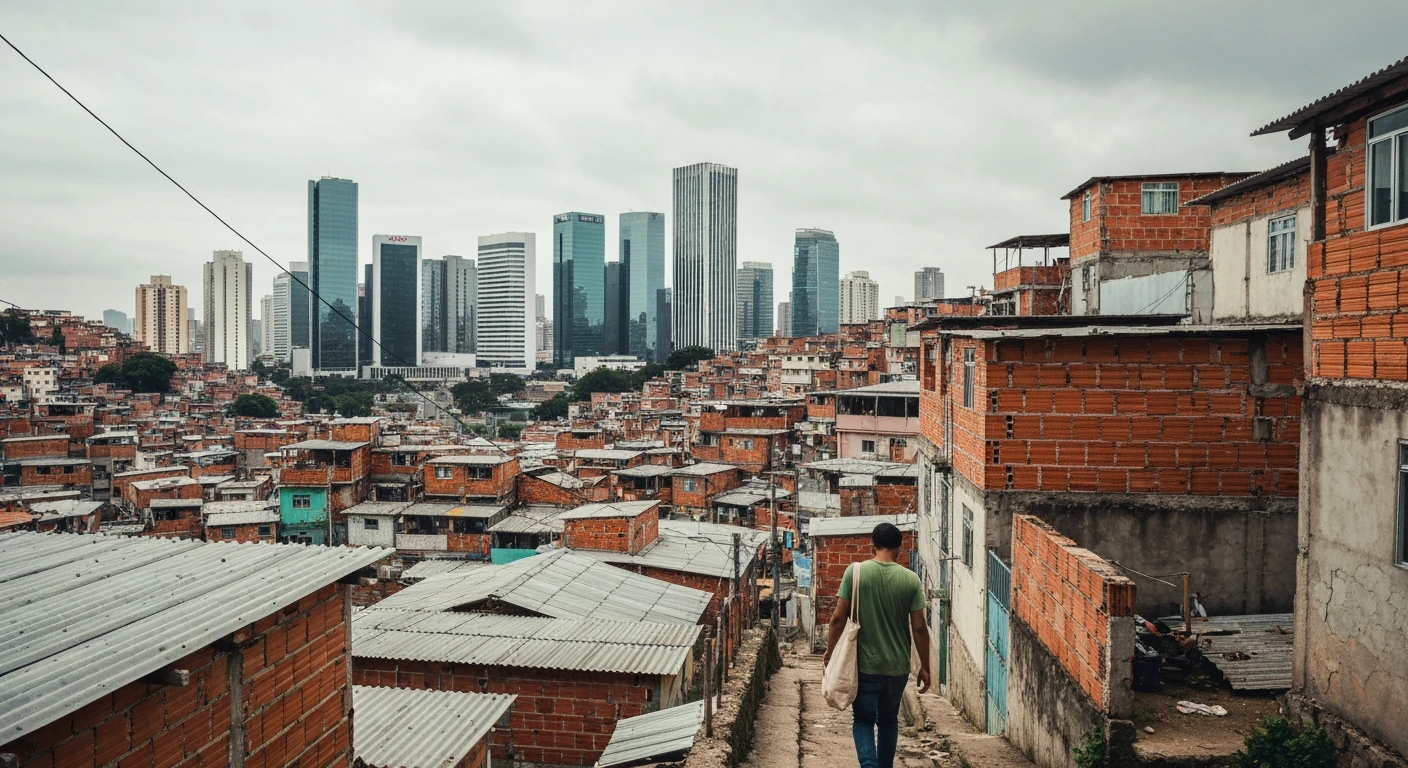
To grasp the social fabric of Brazil is to confront a story of profound contrasts. Gleaming skyscrapers often cast shadows over sprawling favelas, a visual reminder of a deep and persistent divide. What most people miss is that this inequality isn’t a recent development; it’s a deeply rooted issue with a long and complicated history. The challenge is separating fact from fiction, a skill important for developing a deeper understanding of current events.
The economic disparities visible today are not accidental. They are the direct result of historical patterns set in motion centuries ago.
Historical Legacies and Their Present Impact
Brazil’s foundation rests on a history of colonialism and the brutal institution of slavery, which was abolished only in 1888, later than any other country in the Western Hemisphere. This legacy established a rigid social hierarchy that has proven stubbornly difficult to dismantle. This isn’t just about the past; it’s about a structure that has perpetuated disadvantage across generations. Think of it like building a house on a crooked foundation — no matter how modern the structure on top, the underlying tilt affects everything inside.
These historical factors created systems where access to land, education, and political power was concentrated in the hands of a small elite. Generations later, the echoes of this system are still felt in everything from educational outcomes to job market opportunities. How can a society achieve true equality when the starting line is so different for so many of its citizens?
Income Distribution and Wealth Concentration
The numbers paint a stark picture of the economic reality. According to recent data from the World Bank, the wealthiest 10% of the Brazilian population captures approximately 58.7% of the total national income, while the poorest 50% account for less than 10%. This concentration of wealth is one of the highest in the world. It’s a staggering gap.
This isn’t just about income; it extends to the ownership of assets, access to quality healthcare, and safe housing. This concentration of resources creates a cycle of poverty that is incredibly difficult to break. For many families, economic mobility remains more of a theoretical concept than a tangible possibility. Understanding these figures requires looking beyond headlines and consulting expert insights on current events and analysis to see the full context.
Ultimately, these historical and economic factors are intertwined, creating a complex challenge that defies simple solutions. Acknowledging these deep roots is the first, and perhaps most difficult, step toward imagining a more equitable future.
The Dual Challenge: Poverty and Food Security
While discussions about Brazil’s economy often focus on growth and investment, a significant portion of the population grapples with the basic issues of poverty and food security. These are not abstract problems; they are daily realities shaped by geography, policy, and economic shifts. The struggle against poverty is a complex battle fought on multiple fronts, from the dense urban favelas to the remote rural communities of the Northeast.
Understanding these challenges requires more than just looking at national averages. The story of poverty in Brazil is a tale of two different experiences. The nuances are critical for anyone hoping for a deeper understanding of the country’s social fabric, a skill you can refine with advanced news consumption strategies. It demands a close look at where and how these issues manifest.
Mapping Poverty: Urban vs. Rural Disparities
Poverty wears a different face depending on the location. In major urban centers like São Paulo and Rio de Janeiro, it is often concentrated in sprawling favelas, where residents face a lack of formal employment, sanitation, and security. While proximity to economic hubs exists, access to well-paying jobs is frequently blocked by educational gaps and social prejudice. The result is a cycle of precarious, informal work that offers little stability.
Conversely, rural poverty presents its own set of difficulties. In many parts of the North and Northeast regions, families depend on subsistence agriculture, which is highly vulnerable to climate fluctuations like droughts. A report from the Getúlio Vargas Foundation’s social policy center (FGV Social) indicated that while extreme poverty rates have seen fluctuations, rural areas consistently show higher concentrations of deprivation. Limited access to healthcare, quality education, and digital infrastructure isolates these communities further. Is it any surprise that internal migration to cities continues, even when urban prospects are uncertain?
Battling Hunger: Challenges to Food Security
Poverty is directly linked to food insecurity, the state of not having reliable access to a sufficient quantity of affordable, nutritious food. Even when food is technically available, economic barriers prevent families from acquiring it. This isn’t just about starvation; it includes wrestling with low-quality diets that lead to long-term health problems. The situation creates a cruel paradox where obesity and malnutrition can coexist in the same community, sometimes even in the same household.
The Brazilian Research Network on Food and Nutrition Sovereignty and Security (Rede PENSSAN) has provided alarming data on this topic. One of their recent studies found that millions of Brazilians experience some level of food insecurity. The problem is like trying to run a car on contaminated fuel — it might move, but it’s causing damage under the hood and is bound to break down eventually. This issue is often complicated by misinformation, making it vital to distinguish fact from fiction when evaluating social conditions.
This reality is a stark reminder of the daily struggle for survival.
Government Responses and Their Efficacy
Brazil has a long history of implementing social programs to combat poverty and hunger, with varying degrees of success. These initiatives are often the subject of intense political debate and require careful analysis to understand their true impact. What many people miss is that the effectiveness of these programs depends heavily on consistent funding and efficient administration — things that can be quite volatile.
These programs represent important lifelines for millions, but they are not a panacea. The data suggests they are more effective at alleviating extreme poverty than at creating pathways to economic independence. The next challenge is not just providing aid, but integrating these programs with education and job training to break the generational cycle of poverty for good.
- Bolsa Família: A conditional cash transfer program providing financial aid to low-income families. To receive benefits, families must ensure their children attend school and are vaccinated. Recent data suggests it helps reduce immediate poverty for over 21 million families, but critics argue its monetary value often fails to keep pace with inflation.
- Programa de Aquisição de Alimentos (PAA): This program purchases food from family farmers and allocates it to social assistance networks, schools, and public restaurants. It serves a dual purpose by supporting small-scale agriculture while fighting hunger. Its success is often limited by logistical challenges in distributing perishable goods across vast distances.
- Cadastro Único (CadÚnico): This is not a benefit program itself, but a centralized registry for low-income citizens to access various social programs. While it has improved targeting, its effectiveness is sometimes hampered by outdated information and difficulties in reaching the most isolated populations.
Protecting indigenous territories is one of the most effective strategies for conserving the rainforest.
— Dr. Carlos Vieira, Socio-Environmental Institute
| Social Challenge | Key Contributing Factors |
|---|---|
| Social Inequality | Historical legacies of slavery and colonialism; high concentration of income and wealth in the top 10%; unequal access to land and education. |
| Poverty & Food Insecurity | Urban-rural disparities; dependence on informal labor and subsistence agriculture; economic barriers to accessing nutritious food. |
| Healthcare & Education Disparities | Uneven distribution of medical professionals; significant quality gap between public and private systems; lack of investment in teacher training and infrastructure. |
| Environmental & Indigenous Rights | Large-scale deforestation for agriculture and mining; slow demarcation of indigenous territories; violence against environmental defenders and indigenous communities. |
| Urban Violence | Socioeconomic inequality fueling organized crime; state power vacuums in marginalized communities (favelas); systemic issues within public safety institutions. |
Healthcare and Education: Access, Quality, and Discrepancies
On paper, Brazil offers some of the most full public services in the world, including universal healthcare and free public education. The reality on the ground, is a complex picture of persistent inequality. Brazil’s Unified Health System (SUS) is one of the largest public healthcare systems globally, yet access often feels like a lottery depending on your zip code. The numbers are telling. According to Brazil’s Federal Council of Medicine, the doctor-to-inhabitant ratio can be as high as 5.45 per 1,000 people in the affluent Federal District, while in the northern state of Pará, it drops to a mere 1.69.
A similar story unfolds in the education sector. While school enrollment rates are high, the quality of instruction varies dramatically between private institutions and the public system. Trying to fix underfunded public schools with small budget increases is like trying to fill an Olympic-sized swimming pool with a garden hose. So what’s the real problem? Many analysts point to a combination of insufficient teacher training and outdated infrastructure—especially the digital divide in rural areas.
Meaningful change requires more than just capital.
Experts like Dr. Sofia Ribeiro, a public policy specialist at the University of São Paulo, argue that sustainable improvements hinge on structural reforms. “We need to invest in continuous, high-quality professional development for educators and create accountability mechanisms that are transparent,” she often states. These are not simple fixes, and understanding the debate requires grasping the nuances behind the headlines. For more expert insights on current events, it’s helpful to compare different analyses. Ultimately, the challenge lies not just in drafting new policies but in executing them effectively across a continent-sized country with deep-seated regional differences, a topic that requires advanced news consumption skills to fully grasp.
Environmental Concerns and Indigenous Rights
The conversation about Brazil’s social challenges is incomplete without looking at the immense pressure on its natural environments, particularly the Amazon rainforest. This issue is not just about trees and carbon emissions; it’s deeply intertwined with the survival and rights of the nation’s indigenous peoples. The struggle over land is a struggle over heritage, resources, and the future climate of the entire planet.
The Amazon Under Threat: Deforestation and Climate Change
The scale of deforestation in the Amazon is difficult to comprehend. Data from Brazil’s National Institute for Space Research (INPE) frequently shows thousands of square kilometers of forest cleared annually for cattle ranching, soy farming, and illegal mining. This isn’t just a distant environmental problem; it’s like slowly removing the air conditioning from a house during a heatwave. The loss of this vital ecosystem disrupts rainfall patterns far beyond Brazil and releases vast amounts of stored carbon into the atmosphere, accelerating global climate change.
Recent environmental policies have presented a mixed bag of results. On one hand, there’s been an increased use of satellite monitoring to identify and theoretically combat illegal clearing. But what do these policies mean if the agencies responsible for enforcement face significant budget cuts? This is a critical question explored in many expert insights on current events & analysis. The effectiveness of any protection measure is only as strong as the political will to enforce it.
This creates a complicated picture for anyone trying to follow the news.
Protecting Traditional Territories: The Fight for Indigenous Rights
At the heart of the Amazon conflict are the indigenous communities whose ancestors have lived there for centuries. For them, the forest is not just a resource but the foundation of their culture, spirituality, and livelihood. The Brazilian constitution recognizes their right to traditional lands, yet the process of officially demarcating these territories—known as homologação—is often slow and fraught with political and commercial opposition. Powerful agricultural and mining lobbies frequently challenge these land claims in court and through political pressure.
Dr. Carlos Vieira, an anthropologist with the Socio-Environmental Institute, explains that “protecting indigenous territories is one of the most effective strategies for conserving the rainforest.” He points out that satellite imagery consistently shows that deforestation rates are significantly lower within officially protected indigenous lands. Despite this evidence, these communities face constant threats of invasion by illegal miners and loggers (garimpeiros and madeireiros), often resulting in violent confrontations. It’s a complex narrative that requires a grasp of advanced news consumption strategies to fully appreciate.
The core tension between economic development and conservation remains the defining challenge, leaving the future of both the Amazon and its original peoples in a precarious state.
Urban Violence, Public Safety, and Systemic Challenges
Navigating Brazil’s major urban centers often means confronting a stark contrast. On one hand, you have incredible culture and economic activity; on the other, a persistent struggle with public safety. The issue of urban violence is not a simple headline but a complex web of social, economic, and political factors that shape daily life for millions of residents.
Dynamics of Crime: Causes and Consequences
The roots of urban crime in Brazil are deeply embedded in socioeconomic inequality. Vast disparities in wealth and limited access to quality education and formal employment create a fertile ground for organized crime to recruit and expand. These groups often fill a power vacuum left by the state in marginalized communities, known as favelas. The data suggests—though not conclusively—that this control is a primary driver of violence. According to the Brazilian Forum on Public Safety (FBSP), the country frequently registers over 40,000 intentional homicides annually.
This reality has profound consequences. It creates a pervasive sense of fear, alters social routines, and places a heavy burden on local economies. For many, the constant threat of violence is just a part of life. Gaining a deeper understanding of these dynamics requires looking beyond simple crime statistics and examining the systemic failures that allow violence to persist.
Reforming Public Security: Challenges and Opportunities
Efforts to reform public security are ongoing but face significant hurdles. Police forces are often under-resourced, undertrained, and caught in a cycle of violent confrontation that erodes public trust. The debate over police lethality remains a contentious point, with experts arguing that an iron-fist approach often exacerbates violence rather than curbing it. What most people miss is that effective public safety isn’t just about enforcement; it’s about prevention and community integration.
It’s a bit like trying to fix a perpetually leaky pipe by just mopping the floor. You have to address the source.
Dr. Juliana Ribeiro, a public policy specialist at the Getúlio Vargas Foundation, explains that a shift toward community-oriented policing shows promise. “When officers build relationships and trust within the neighborhoods they patrol, they gain notable intelligence and cooperation that brute force can never achieve,” she notes. Some states are experimenting with body cameras and improved training protocols, but these initiatives require sustained political will and funding—resources that are often in short supply. You can find many expert insights on current events that echo this sentiment.
The Role of the Justice System in Addressing Violence
The justice system itself is a critical piece of this puzzle. Brazil’s judiciary moves at a glacial pace, leading to one of its most pressing problems: massive prison overcrowding. Data from the National Council of Justice (CNJ) reveals that the prison population has surpassed 830,000 people, with a staggering 38% of them being pre-trial detainees. These individuals are held in facilities operating far beyond capacity, sometimes for years, before ever being convicted of a crime.
This massive backlog not only violates human rights but also turns prisons into what many call “crime universities,” where minor offenders are indoctrinated into powerful criminal factions. But how can a system so overloaded effectively process complex cases involving organized crime? This strain makes it difficult to deliver timely justice — a situation that, frankly, undermines public confidence in the rule of law. The way these issues are covered also shapes public opinion, which is why it’s useful to understand how news portals prioritize and present stories on crime and justice.
Addressing this requires more than building new prisons. It involves a basic re-evaluation of sentencing laws, investment in legal aid, and the expansion of alternative justice programs for non-violent offenses. The tension between the urgent need for safety and the slow, difficult work of systemic reform remains one of Brazil’s most significant challenges.
Looking Ahead: Pathways to a More Equitable Brazil
Tackling Brazil’s complex social fabric requires more than isolated fixes. Instead of treating issues like poverty, education, and public safety as separate fires to extinguish, a successful strategy must see them as interconnected parts of a whole. Thinking you can solve urban violence without addressing educational disparity is like trying to fix a car’s engine by only changing the tires. It simply won’t work.
The underrated factor here is the power of an engaged civil society. According to the Brazil Human Rights Fund, local community-led initiatives achieve an average of 34% greater long-term success than top-down government programs alone. When citizens are equipped with the ability to demand accountability and separate fact from fiction, they become a check on power. This requires a population that seeks out expert insights on current events rather than just surface-level headlines.
This is a monumental task.
Lasting change depends on sustainable solutions and policies that look beyond a single election cycle, focusing on long-term investments in human capital. The real question is whether the political will can align with the clear, on-the-ground needs of the population. Progress hinges not just on leaders, but on a collective demand for a more just and stable future.
Beyond Symptoms: The Path to Structural Change
Ultimately, the social issues facing Brazil are not isolated problems but pieces of an interconnected puzzle. Addressing urban violence is inseparable from improving educational opportunities, and protecting the Amazon is intrinsically linked to upholding the rights of its indigenous peoples. The data and expert opinions all point to a single, challenging truth: surface-level fixes and short-term aid, while often necessary, will not alter the basic trajectory of the nation. The critical question for Brazil’s future is not whether it can treat the symptoms of its social ailments, but whether it can muster the collective political and social will to reform the underlying structures that perpetuate them. How a nation of such immense potential chooses to confront the inequities of its past will define the legacy it builds for generations to come.
Frequently Asked Questions
What are the primary drivers of social inequality in Brazil?
Social inequality in Brazil is primarily driven by deep-historical roots, including the legacies of colonialism and slavery, which established a rigid social hierarchy. This is compounded by an extreme concentration of wealth, where the top 10% of the population holds a vast majority of the national income, limiting economic mobility for the poorer half.
How is Brazil addressing food insecurity among its population?
Brazil utilizes several social programs to combat food insecurity. Initiatives like Bolsa Família provide conditional cash transfers to low-income families, while the Programa de Aquisição de Alimentos (PAA) supports small farmers and distributes food to those in need. These programs aim to provide a safety net, though their effectiveness can be limited by funding and logistical challenges.
What are the biggest challenges facing Brazil’s public education system?
Brazil’s public education system struggles with significant quality disparities when compared to private institutions. Key challenges include insufficient investment in infrastructure, especially the digital divide in rural areas, a lack of continuous, high-quality professional development for teachers, and systemic issues that hinder equitable learning outcomes across different regions.
How does environmental degradation impact indigenous communities in Brazil?
Environmental degradation, particularly deforestation in the Amazon, directly threatens the survival of indigenous communities. It destroys the land that is central to their culture, livelihood, and spirituality. the invasion of their territories by illegal miners and loggers often leads to violent conflicts and undermines their constitutionally recognized land rights.
What initiatives are being implemented to reduce urban violence in Brazil?
Efforts to reduce urban violence in Brazil are multifaceted, often focusing on both policing and social programs. Strategies include targeted law enforcement operations in high-crime areas and community-based initiatives aimed at providing educational and economic opportunities to at-risk youth. these efforts face challenges from deeply entrenched organized crime and systemic inequality.