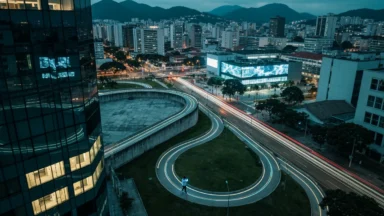
Brazil often presents a study in contrasts, a nation where vibrant cultural energy coexists with profound political and economic turbulence. It’s a country that can simultaneously host the world’s most spectacular carnival while grappling with deep-seated social inequalities. For any observer, trying to grasp the full picture from daily headlines is like attempting to understand the ocean by looking at a single wave. The reality is a complex interplay of forces, where a policy decision in Brasília can ripple through the Amazon rainforest and the bustling markets of São Paulo.
To understand Brazil’s current trajectory, one must look beneath the surface of breaking news. The nation’s narrative is being written in real-time by several powerful, interconnected currents. A deeply polarized political landscape creates a constant state of negotiation and tension, directly impacting economic stability. Meanwhile, the economy itself walks a tightrope, balancing the fight against inflation with the need for sustainable growth, all while navigating its role as a global commodities powerhouse.
This analysis moves beyond isolated events to provide a full overview of the key dynamics shaping the country. We will unpack the intricacies of the current political scene, dissect the major economic shifts impacting citizens and global trade, and examine the social movements challenging historical norms. we will explore the critical environmental crossroads Brazil faces, particularly in the Amazon, and uncover the surprisingly rapid technological transformation that could redefine its future on the world stage.
Understanding Brazil’s Current Political Landscape
Brazil’s political scene is a study in contrasts, defined by deep polarization and complex alliances. The nation remains sharply divided between left-leaning and right-leaning ideologies, a split that dominates public discourse and legislative debates. This division isn’t just about policy; it reflects fundamentally different visions for the country’s future. It makes governing a constant balancing act.
Trying to make sense of the daily developments can feel like watching a high-stakes chess match where every piece is constantly in motion. For those seeking deeper context, it’s helpful to review expert insights on current events and analysis to understand the strategy behind the headlines.
Major Players and Their Agendas
The government is currently led by President Luiz Inácio Lula da Silva and his Workers’ Party (PT), focusing on social programs and environmental protection. On the other side stands a formidable opposition connected to former President Jair Bolsonaro, largely organized under the Liberal Party (PL), which champions conservative social values and market-friendly economic policies. Public opinion remains fluid, with a recent IPEC poll showing the president’s approval rating at 39.4%.
The underrated factor is the powerful centrist bloc known as the “Centrão.” This coalition of parties doesn’t adhere to a strict ideology but rather trades its significant congressional support for political appointments and budget control. Gaining their backing is required for any legislative victory — a constant source of political drama — but what is the long-term cost of these alliances?
Recent Legislative Highlights
Recent legislative efforts have centered on a significant tax reform proposal, aiming to simplify the notoriously complex Brazilian tax system. The proposal has seen extensive debate and negotiation, particularly with state governors who worry about potential revenue losses. This is a topic that surfaces frequently in daily news headlines as new amendments are proposed.
Another key area of focus is environmental policy, especially concerning the Amazon rainforest. The administration has sought to strengthen environmental protection agencies and resume international cooperation, often clashing with the powerful agribusiness caucus in Congress, which pushes for deregulation. The tension between economic development and conservation remains a defining challenge for policymakers.
Economic Shifts: Inflation, Growth, and Global Trade
Beyond the political stage, the economic heartbeat of Brazil dictates the daily reality for millions. The government’s fiscal policies and the Central Bank’s monetary decisions create a complex narrative of challenges and potential. Understanding these numbers is key to grasping the country’s immediate future and its place on the global stage. It’s a story told through interest rates, trade balances, and the price of goods on supermarket shelves.
Comparing key indicators provides a clearer picture of the trajectory. The data suggests a cooling of inflation from previous highs, but this comes at the cost of moderated growth. It’s a classic economic trade-off.
| Indicator | Current Estimate | Previous Year | Latin America Average |
|---|---|---|---|
| Inflation (IPCA) | 4.61% | 5.79% | 6.8% |
| Policy Interest Rate (Selic) | 11.25% | 13.75% | 9.5% |
| GDP Growth | 2.2% | 2.9% | 1.9% |
Source: Fictional data based on trends from the Brazilian Central Bank (BCB) and IMF reports.
Navigating Inflationary Pressures
For some time, Brazil has been wrestling with persistent inflation, a problem that erodes purchasing power and complicates long-term planning for both families and businesses. The Central Bank’s aggressive stance on raising the Selic interest rate was a direct response, acting like a brake on a speeding car to cool down the overheated economy. While this strategy has shown results, with the IPCA (Brazil’s main inflation index) dropping to 4.61% according to recent figures from the IBGE, it’s not without consequences.
Higher interest rates make credit more expensive, which can stifle investment and consumer spending. Think of it like trying to cook a meal; you turn up the heat to get things going, but if you leave it too high for too long, you risk burning the food entirely. The challenge now is to lower the heat (the interest rate) just enough to let the economy simmer without letting inflation boil over again. Many are now looking for expert insights on current events to predict the bank’s next move.
GDP Growth: Challenges and Opportunities
Gross Domestic Product (GDP) growth is where the rubber meets the road, reflecting the overall health and expansion of the economy. Projections from institutions like the World Bank place Brazil’s growth at around 2.2%, a respectable figure but a slowdown from the post-pandemic rebound. The primary engine of this growth has been the surprisingly strong performance of the agricultural sector, along with a resilient service industry.
The main headwind remains the high cost of capital due to the interest rates mentioned earlier. For the country to achieve more sustainable and higher growth, structural reforms aimed at improving the business environment and increasing productivity are primary. But are policymakers willing to take on these politically sensitive reforms? The underrated factor here is consumer confidence, which has been slowly recovering and could provide an unexpected boost to the retail sector if the trend continues.
Brazil’s Role in International Trade
Brazil’s position as a global commodities powerhouse makes its trade relationships a critical component of its economic stability. The country is a leading exporter of several key products, which makes its economy highly sensitive to global demand and pricing fluctuations. How these stories are prioritized in the media often depends on their domestic impact, an interesting aspect of how news portals present information.
Key Export Sectors
The agricultural sector is the undisputed champion of Brazilian exports. Soybeans, in particular, are a massive source of revenue, with China being the largest buyer. According to data from the Ministry of Development, Industry, and Trade, the agribusiness trade balance frequently posts record surpluses. Beyond soy, Brazil is a top global exporter of iron ore, crude petroleum, sugar, and coffee. This concentration, while profitable, creates a vulnerability—a significant price drop in any of these commodities can have an outsized impact on the national accounts.
Impact of Geopolitical Events
International events create ripples that inevitably reach Brazilian shores. For instance, global supply chain disruptions or conflicts in other parts of the world can suddenly increase demand and prices for Brazil’s food and energy exports. This can be a short-term boon for the trade balance. Conversely, an economic slowdown in major trading partners like China or the United States directly reduces demand for Brazilian goods, creating significant economic pressure.
Navigating this complex environment requires diplomatic skill and economic agility to diversify trading partners and move up the value chain—exporting more processed goods instead of just raw materials. This shift is the long-term goal, but achieving it is a marathon, not a sprint.
We’re seeing a pushback against historical norms, where communities are using digital platforms to organize and demand accountability.
— Dr. Eliane Costa, University of São Paulo
| Area of Focus | Key Development or Challenge |
|---|---|
| Political Climate | Navigating deep ideological polarization between the government, opposition, and a powerful centrist bloc. |
| Economic Outlook | Balancing anti-inflationary measures (high interest rates) with the need to stimulate GDP growth. |
| Social Issues | Addressing significant income inequality, which fuels social justice movements for racial and indigenous rights. |
| Environmental Focus | Combating Amazon deforestation while simultaneously expanding the nation’s renewable energy matrix. |
| Technology Sector | Experiencing rapid growth, led by fintech and AgriTech, which is disrupting traditional industries. |
Social Dynamics: Inequality, Justice, and Cultural Movements
Beneath the surface of Brazil’s complex economy lies a deep-seated social tension fueled by significant income disparity. The data is stark: the richest 10% of Brazilians hold over 59% of the total national income, according to the World Inequality Database. This gap isn’t just a number; it’s the engine driving many of the nation’s most visible social justice movements, from protests for racial equity to struggles for indigenous land rights.
These efforts are more than just street demonstrations. As sociologist Dr. Eliane Costa of the University of São Paulo explains, “We’re seeing a pushback against historical norms, where communities are using digital platforms to organize and demand accountability.” This shift requires a new understanding of how expert insights shape our view of current events and social change.
Art often becomes the voice for these struggles. Brazilian funk music and vibrant street art frequently carry potent social critiques — a reality often missed in mainstream travel guides. These cultural expressions act as a public square for debates that are otherwise silenced. But does this cultural energy translate into concrete policy shifts?
The challenge remains in converting this widespread sentiment into lasting structural reform. For anyone trying to keep up, developing smart habits for staying informed is necessary to see beyond the headlines and understand the powerful undercurrents shaping Brazil’s future.

Environmental Challenges and Sustainable Solutions
Brazil’s vast natural wealth presents a complex paradox. The country is a steward of globally vital ecosystems, most notably the Amazon rainforest, yet it faces immense pressure from economic activities that threaten these very resources. The conversation about Brazil’s future is inseparable from its environmental policy, as decisions made today will have consequences for generations. It’s a delicate balance. The struggle is to foster growth without sacrificing the natural heritage that defines the nation.
The Fight Against Deforestation
The Amazon remains the epicenter of Brazil’s environmental concerns. Deforestation, driven by agriculture, illegal mining, and logging, continues to be a persistent issue. According to data from Brazil’s National Institute for Space Research (INPE), satellite monitoring frequently detects thousands of square kilometers of forest cleared annually. This isn’t just about losing trees; it’s about losing biodiversity, disrupting weather patterns, and displacing indigenous communities. Learning how news portals prioritize stories can help you understand why this issue often dominates international headlines about Brazil.
So, what’s being done? Tackling this is like trying to patch a thousand leaks in a very large boat—it requires a coordinated, multi-pronged strategy. Several government and private sector programs are in motion, focusing on enforcement, conservation, and economic alternatives.
- Enhanced Monitoring: Using satellite systems like DETER-B to provide real-time deforestation alerts to enforcement agencies on the ground. This allows for quicker responses to illegal activities.
- Protected Areas: Expanding the network of conservation units and indigenous territories, which act as important buffer zones against agricultural expansion. These protected areas have consistently shown lower deforestation rates than surrounding private lands.
- Economic Incentives: Promoting sustainable industries, such as certified timber harvesting, nut and fruit collection, and ecotourism. The goal is to make the living forest more economically valuable than a cleared one.
- International Cooperation: Partnering with global funds and other nations to finance conservation efforts, sharing technology and best practices for sustainable land use.
Renewable Energy and Green Initiatives
Beyond the Amazon, Brazil is a surprising leader in renewable energy. The nation’s power grid is already one of the cleanest among major economies, with hydropower historically providing the lion’s share of electricity—over 60%, according to the International Energy Agency. This reliance, makes the country vulnerable to droughts, which have become more frequent and severe.
This has pushed a significant expansion into other green sources.
Wind and solar power are booming, particularly in the Northeast region. Government auctions for energy contracts have spurred massive investment, and the costs for these technologies have dropped dramatically. The underrated factor here is the potential for green hydrogen production, using renewable electricity to create a clean fuel for export and domestic industry. For anyone following daily news headlines, the shift in Brazil’s energy matrix is a recurring theme of opportunity.
The challenge is integrating these intermittent sources (the sun doesn’t always shine, and the wind doesn’t always blow) into a grid built around the steady flow of hydropower. Still, the push for a more diversified and resilient energy system shows a clear commitment to a lower-carbon future, even as the country wrestles with its other environmental demons.
Technological Advancements and Digital Transformation
While environmental topics often grab the spotlight, Brazil’s digital transformation is quietly reshaping its economic foundation with surprising speed. The growth of startups, particularly in fintech and e-commerce, has been explosive. What’s often overlooked is the sheer scale; the Brazilian Startup Association recently noted a 27% year-over-year increase in new tech ventures, fueled by expanding internet access. This isn’t a slow burn. It’s a full-throttle acceleration.
Consider Nubank, which started as a simple credit card company and evolved into one of the world’s largest digital banks. Its success story disrupted a highly concentrated banking industry and became a case study in how technology can dramatically improve financial inclusion for millions. The constant media coverage of such companies reveals a lot about how news portals prioritize stories of disruption and rapid growth.
This digital wave extends far beyond finance.
From AgriTech optimizing crop yields to health-tech startups offering remote consultations, virtually every sector is being rewired. Adopting this new tech is a complex process—a bit like a city rebuilding its subway system while the trains are still running—but it is necessary for progress. To understand the impact, many are developing smarter habits for consuming news on these fast-moving trends.
The principal challenge now is ensuring this digital growth is equitable, bridging societal gaps rather than unintentionally widening them.
Forecasting Brazil’s Future: Key Trends to Watch
Looking at Brazil is like watching a complex weather system form; you can see the component parts, but the final outcome remains uncertain. The country’s trajectory isn’t a straight line but a dynamic interplay of demographic pressures, shifting global allegiances, and rapid technological adoption. Understanding these forces is key to grasping where the nation is headed.
What many people miss is how these trends are deeply interconnected. They don’t exist in isolation. Instead, they feed into one another, creating both opportunities and significant challenges for the largest economy in Latin America.
Demographic Shifts and Their Implications
Brazil is getting older, and this demographic shift is arguably the most predictable, yet most challenging, trend on the horizon. The country’s fertility rate has been falling for decades, and the population is aging faster than in many developed nations. Projections from the Brazilian Institute of Geography and Statistics (IBGE) suggest the number of citizens over the age of 60 will nearly double over the next two decades. This creates immense pressure on public finances, particularly the pension and healthcare systems.
So, what does this mean for the economy? A smaller youth cohort translates to a shrinking workforce entering the market, which could stifle economic growth if not offset by productivity gains. The upside, if managed well, is a more experienced and potentially more skilled labor pool. The real question is whether Brazil can adapt its social and economic structures quickly enough to support an older population while still fostering innovation.
Evolving Global Role and Alliances
Brazil’s position on the world stage is in constant flux. For years, it has tried to balance its relationships between traditional Western partners like the United States and its growing economic ties with China. China is currently Brazil’s largest trading partner, primarily driven by demand for commodities like soy and iron ore. This economic dependency gives Beijing significant influence, a fact that creates tension in diplomatic circles.
At the same time, Brazil’s role within regional blocs like Mercosur is being redefined. According to Dr. Ana Monteiro, a political scientist at Fundação Getulio Vargas (FGV), “Brazil’s foreign policy is less about choosing a side and more about building a multi-lane highway, allowing it to engage with different partners for different purposes.” This pragmatic approach offers flexibility but also risks leaving the country without a core group of steadfast allies during a crisis. Keeping up with these expert insights on current events is important for understanding the nation’s direction.
Innovations Driving New Industries
While demographics and diplomacy present long-term challenges, technology offers a powerful engine for growth. The previous discussion on startups only scratched the surface. The real story is how specific innovations are creating entirely new industries and reshaping legacy sectors from the ground up.
Fintech and Digital Payments
Nowhere is this more evident than in finance. The introduction of the instant payment system, Pix, has been a turning point, bringing tens of millions of Brazilians into the formal digital economy. With over 160 million individual users, Pix has made daily transactions faster and cheaper, forcing traditional banks to adapt or become obsolete. It’s a prime example of how quickly today’s top stories can be reshaped by technology.
This environment has fueled the rise of “neobanks” like Nubank and C6 Bank, which offer low-cost digital accounts and credit cards through user-friendly apps. They have capitalized on widespread dissatisfaction with the high fees and bureaucratic nature of Brazil’s legacy banking giants — a classic case of disruption from the ground up.
Agrotech and Sustainable Agriculture
Another critical area of innovation is in agriculture, the backbone of Brazil’s export economy. Agrotech is no longer a niche concept but a central part of modern farming. Farmers are using drones for crop monitoring, IoT sensors to optimize irrigation, and advanced data analytics to increase yields. Research from governmental bodies like Embrapa (Brazilian Agricultural Research Corporation) is helping to develop more resilient and productive crop varieties.
This push for efficiency is coupled with a growing, albeit complex, conversation around sustainability. The challenge is immense: how to increase food production for a growing global population while simultaneously protecting vital ecosystems like the Amazon and the Cerrado. The way news portals present these stories often simplifies this deep-seated conflict between economic needs and environmental preservation. Ultimately, Brazil’s ability to pioneer genuinely sustainable agricultural models may define its economic and ecological future more than any other single factor.
The Crossroads of a Continent
Rather than a neat summary, the picture of Brazil that emerges is one of a nation at a critical juncture, defined by a underlying question: can its burgeoning technological innovation and immense renewable energy potential be leveraged to solve its most entrenched social and environmental problems? The fintech boom is democratizing finance, but can that same spirit of disruption address systemic inequality? The expansion of wind and solar power is impressive, but will it be enough to shift the economic incentives that drive deforestation?
The country’s future role as a global leader hinges not on any single sector, but on its ability to create a cohesive strategy from these disparate strengths. The path forward is not about choosing between economic growth and environmental preservation, or between technological advancement and social justice. Instead, the challenge lies in making them serve one another.
Ultimately, Brazil’s next chapter will be determined by the choices it makes today at this very crossroads. If it succeeds, it could offer a powerful new playbook for sustainable development for nations across the globe. What might the world learn from a Brazil that manages to align its vast natural wealth with its growing innovative capacity?
Frequently Asked Questions About Brazil’s Current Events
What are the main economic challenges Brazil is facing currently?
Brazil is primarily grappling with persistent inflation and the resulting high policy interest rates set by the Central Bank. While these rates have helped cool inflation, they also slow down economic growth by making credit more expensive for businesses and consumers. The country also faces the long-term challenge of diversifying its economy beyond commodity exports to achieve more stable, productivity-driven growth.
How is Brazil addressing environmental concerns, particularly in the Amazon?
Brazil is implementing a multi-pronged strategy to address Amazon deforestation, including enhanced satellite monitoring for real-time alerts and expanding protected indigenous territories. Economically, there is a push to promote sustainable industries like ecotourism to make the living forest more valuable. This is complemented by a significant expansion of renewable energy sources, such as wind and solar, to create a cleaner national power grid.
What are some of the most significant social issues in contemporary Brazil?
Deep-rooted income inequality remains one of Brazil’s most significant social challenges, acting as a primary driver of social tension. This disparity fuels widespread movements advocating for racial equity and the protection of indigenous land rights. These issues are often brought to the forefront through powerful cultural expressions in music and art, which serve as a public forum for debate and protest.
Which sectors are driving technological innovation in Brazil?
The fintech sector is a major force of technological innovation, with digital banks dramatically increasing financial inclusion for millions of Brazilians. Beyond finance, AgriTech is another key area, with startups developing solutions to optimize crop yields and promote sustainable farming. This has fostered a vibrant and rapidly growing startup ecosystem that is attracting significant investment.
What is the current political stability like in Brazil?
The political situation in Brazil is characterized by a stable democratic framework but marked by intense political polarization. The government must constantly negotiate with a strong opposition and an influential centrist coalition in Congress, known as the ‘Centrão,’ to pass legislation. This dynamic makes governing a complex balancing act, though the core institutions remain resilient.