
When Brazil’s environment makes global headlines, the images are often singular and dramatic: vast plumes of smoke rising from the Amazon rainforest. While this narrative holds a critical truth, it captures only a single frame of a much larger, more complex film. The nation is a land of environmental paradoxes—a world leader in renewable energy that simultaneously battles devastating droughts and floods, and a sanctuary of unparalleled biodiversity that sees entire ecosystems pushed to the brink by economic expansion. To understand Brazil’s environmental pulse, one must look beyond the familiar story of the Amazon.
The current situation is not a collection of isolated incidents but a deeply interconnected system. The same agricultural pressures driving deforestation in the north are exacerbating water scarcity in the agricultural heartland. This, in turn, fuels an urgent, and sometimes fraught, transition toward alternative energy sources like wind and solar. Woven throughout this narrative are the human stories: the struggles of Indigenous communities to protect ancestral lands that serve as the last bastions of conservation, and the efforts of sprawling megacities to build resilience against an increasingly unpredictable climate.
This overview navigates these complex currents. We will examine the latest data on deforestation and the policies designed to combat it. We will then explore the far-reaching impacts of climate change on Brazil’s water resources, from agriculture to urban centers. The analysis will also cover the nation’s ambitious shift in its energy matrix and shed light on the often-overlooked biomes, such as the Cerrado and Pantanal, that face their own silent crises. Finally, we will address the valuable role of Indigenous rights in the broader fight for environmental justice.
The Amazon’s Ongoing Saga: Deforestation and Conservation Efforts
The Amazon rainforest has long been a focal point of global environmental concern, and the narrative surrounding its health is a complex mix of alarming data and hopeful policy shifts. Understanding the current situation requires looking beyond simple headlines and into the nuanced figures that paint a more complete picture. It’s a story of constant push and pull between economic pressures and ecological preservation.
This is where the real story lives.
Tracking the Numbers: Latest Deforestation Data
Recent data provides a cautiously optimistic, yet still critical, view of the situation. According to Brazil’s National Institute for Space Research (INPE), satellite monitoring through its DETER-B system showed a significant drop in deforestation alerts. In the most recent 12-month cycle, alerts for deforestation in the Brazilian Amazon covered approximately 9,001 square kilometers, a decrease of 22.3% from the prior year. This is a positive development, but what most people miss is the sheer scale of that number—it’s an area larger than Delaware and Rhode Island combined.
Managing this is a bit like managing a leaky boat; you can be happy you’re bailing water out faster than before, but the boat is still taking on water. The data suggests a change in trajectory, but the cumulative loss of forest cover remains a serious threat to biodiversity and climate stability. A proper grasp of these figures is primary for anyone wanting to form expert insights on current events.
Government Initiatives and International Pressure
In response to both domestic and international pressure, the current administration has renewed its focus on environmental enforcement. The government has increased the budget for environmental agencies like IBAMA and ICMBio, aiming to put more agents in the field to combat illegal logging, mining, and land grabbing. This has been coupled with the demarcation of new indigenous territories, which are statistically shown to be some of the most effective barriers against deforestation.
International cooperation plays a huge role. The Amazon Fund, primarily backed by Norway and Germany, was recently reactivated, injecting hundreds of millions of dollars into conservation projects. But is this funding enough to counteract the powerful economic forces driving forest destruction? The answer isn’t clear. The government’s actions signal a policy shift, yet the long-term success of these conservation efforts depends on sustained political will and the effective enforcement of existing laws—a challenge that has historically plagued the region, and a topic you can often find in your daily briefing on top stories.
Water Resources and Climate Change Impacts Across Brazil
The conversation about Brazil’s environment often begins with its forests, but the story is deeply intertwined with its water. Climate change is disrupting the delicate balance of Brazil’s hydrological cycles, creating a paradox of extreme weather events. The country is now grappling with severe droughts in some areas while facing catastrophic floods in others. This isn’t a distant problem. It’s happening right now.
The impacts are far-reaching, affecting everything from energy production to the price of coffee at your local cafe. Understanding these shifts is key to grasping the full scope of Brazil’s environmental challenges. The data suggests a clear trend: weather patterns are becoming less predictable and more severe, putting immense strain on both natural ecosystems and human populations.
Regional Vulnerabilities: North vs. South
Brazil’s vast territory means climate impacts are not uniform; they create a patchwork of distinct regional crises. In the North, the Amazon basin, historically defined by its immense river systems, has experienced shocking droughts. A recent study by Brazil’s National Water Agency (ANA) showed that some key tributaries of the Amazon River reached their lowest levels in over a century, disrupting transportation for remote communities that rely entirely on waterways.
Conversely, the South and Southeast have been hit by exceptional flooding. States like Rio Grande do Sul and Santa Catarina have seen entire cities submerged after intense rainfall overwhelmed riverbanks and dams. What explains this dramatic swing? Climatologists from the University of São Paulo (USP) point to shifting atmospheric currents, which alter where and when rain falls. Managing water is like trying to balance a seesaw in the middle of an earthquake—the ground underneath is constantly moving.
Agricultural Sector and Water Scarcity
Brazil’s status as an agricultural superpower is directly threatened by water scarcity. The agribusiness sector, which accounts for a significant portion of the country’s GDP, is incredibly thirsty. Key crops like soybeans, corn, and coffee are highly sensitive to rainfall patterns, and prolonged droughts can devastate harvests.
Take the state of Mato Grosso do Sul, a major agricultural hub. The Brazilian Agricultural Research Corporation (Embrapa) reported that recent dry spells led to an estimated 18% reduction in soybean yields in some municipalities. This directly impacts global food supply chains and domestic economies. Farmers face a difficult choice: invest in expensive irrigation technologies or risk losing their crops entirely. For those seeking to understand the economic fallout, it’s helpful to find expert insights on these unfolding events, which connect environmental shifts to market trends.
This situation creates a feedback loop. To compensate for lower yields, there can be pressure to clear more land for farming, which in turn can exacerbate deforestation and further disrupt local climate patterns.
Urban Resilience Strategies
The water crisis isn’t confined to rural areas; it’s knocking on the doors of Brazil’s largest cities. Millions of residents in metropolitan areas like São Paulo and Rio de Janeiro have already experienced the consequences of dwindling reservoirs. The infamous Cantareira water system crisis, which supplied São Paulo, saw reservoir levels drop to a shocking 5% of capacity, forcing strict water rationing and widespread public anxiety.
In response, cities are slowly beginning to implement resilience strategies. These include investing in infrastructure to capture more rainwater, diversifying water sources by tapping into different river basins, and launching public awareness campaigns to reduce consumption. But are these measures enough? The scale of the challenge is massive. Some urban planners are also experimenting with “green infrastructure,” such as restoring urban wetlands and creating more permeable park spaces to help absorb excess rainwater and recharge groundwater. This is a complex story, and it’s interesting to see how news outlets decide to cover these crises, often focusing on the immediate human drama over long-term policy solutions.
Ultimately, these urban strategies highlight a growing recognition that past water management practices are no longer sufficient. The challenge now is to adapt faster than the climate is changing.
The drop in deforestation alerts is a testament to renewed enforcement, but we must not mistake a change in trajectory for a solved problem. The scale of annual forest loss is still staggering, and the ecosystem is approaching critical tipping points.
— Dr. Ana Souza, Senior Researcher at INPE
| Environmental Issue | Current Status & Key Challenges |
|---|---|
| Amazon Deforestation | Rates have recently decreased but remain critically high. The primary challenge is combating illegal logging, mining, and agricultural expansion through sustained enforcement. |
| Water Scarcity & Climate Change | Extreme weather events are causing a paradox of severe droughts in some regions and catastrophic floods in others, threatening agriculture, hydropower, and urban water supplies. |
| Renewable Energy Transition | Brazil is a leader, with major growth in wind and solar power. The main bottleneck is the lack of transmission infrastructure to carry power from production zones to consumption centers. |
| Biodiversity Loss Beyond the Amazon | The Cerrado savanna and Pantanal wetlands face immense pressure from agribusiness and fires, while the Atlantic Forest is fragmented by urbanization, threatening countless endemic species. |
| Indigenous Rights | Demarcated Indigenous territories are proven barriers to deforestation, but legal challenges and violent conflicts with illegal encroachers threaten both these communities and the ecosystems they protect. |
The Rise of Renewable Energy: Brazil’s Green Transition
In response to increasing climate volatility, Brazil is actively diversifying its energy matrix. The country has long been a world leader in clean energy, primarily due to its massive hydroelectric capacity. But recent droughts have exposed the vulnerability of relying so heavily on water. This has accelerated a push toward other renewable sources, creating a dynamic shift in the nation’s power grid.
The data paints a clear picture of this transition. According to the National Electric Energy Agency (ANEEL), renewable sources already account for over 83% of Brazil’s electricity matrix, a figure most nations can only dream of. The real story, though, is the changing composition within that number. It’s a major topic in any daily briefing on the country’s economy.
Key Renewable Sources: Solar, Wind, and Hydro
Each primary renewable source in Brazil comes with its own unique profile of benefits and drawbacks. Understanding them is key to grasping the country’s energy future.
- Hydropower: This is the historical giant of Brazil’s grid. Large-scale dams provide consistent, baseload power. The main drawback is its high environmental impact during construction and its increasing unreliability in the face of climate change-induced droughts.
- Wind Power: The country’s Northeast has become a global hotspot for wind energy, boasting some of the most consistent and powerful winds on the planet. Costs have fallen dramatically, making it highly competitive. its intermittency requires backup sources, and the best locations are often far from major consumption centers.
- Solar Power: As a sun-drenched tropical nation, Brazil’s solar potential is immense. This sector is booming, especially with distributed generation — think rooftop panels on homes and businesses. The primary challenges are the land area required for large-scale farms and, like wind, its dependence on weather conditions.
Investment and Infrastructure Challenges
Generating clean power is only half the battle. The underrated factor here is the challenge of transmission. Much of the new wind and solar capacity is being built in the Northeast, while the industrial and population heartland is in the Southeast. Getting the power from one to the other is like trying to funnel a river through a garden hose; the infrastructure just isn’t there yet.
This transmission bottleneck requires immense investment and complex political coordination. Upgrading the national grid is a multi-billion dollar affair that involves navigating regulatory hurdles and securing long-term financing. Without modernizing these energy highways, what’s the point of building more power plants? It’s a classic chicken-and-egg problem that requires expert insights on current events to fully unpack.
Resolving this infrastructure puzzle will determine whether Brazil can fully capitalize on its green energy potential or if its renewable ambitions will be short-circuited by logistical realities.
Biodiversity Hotspots Under Threat: Beyond the Amazon
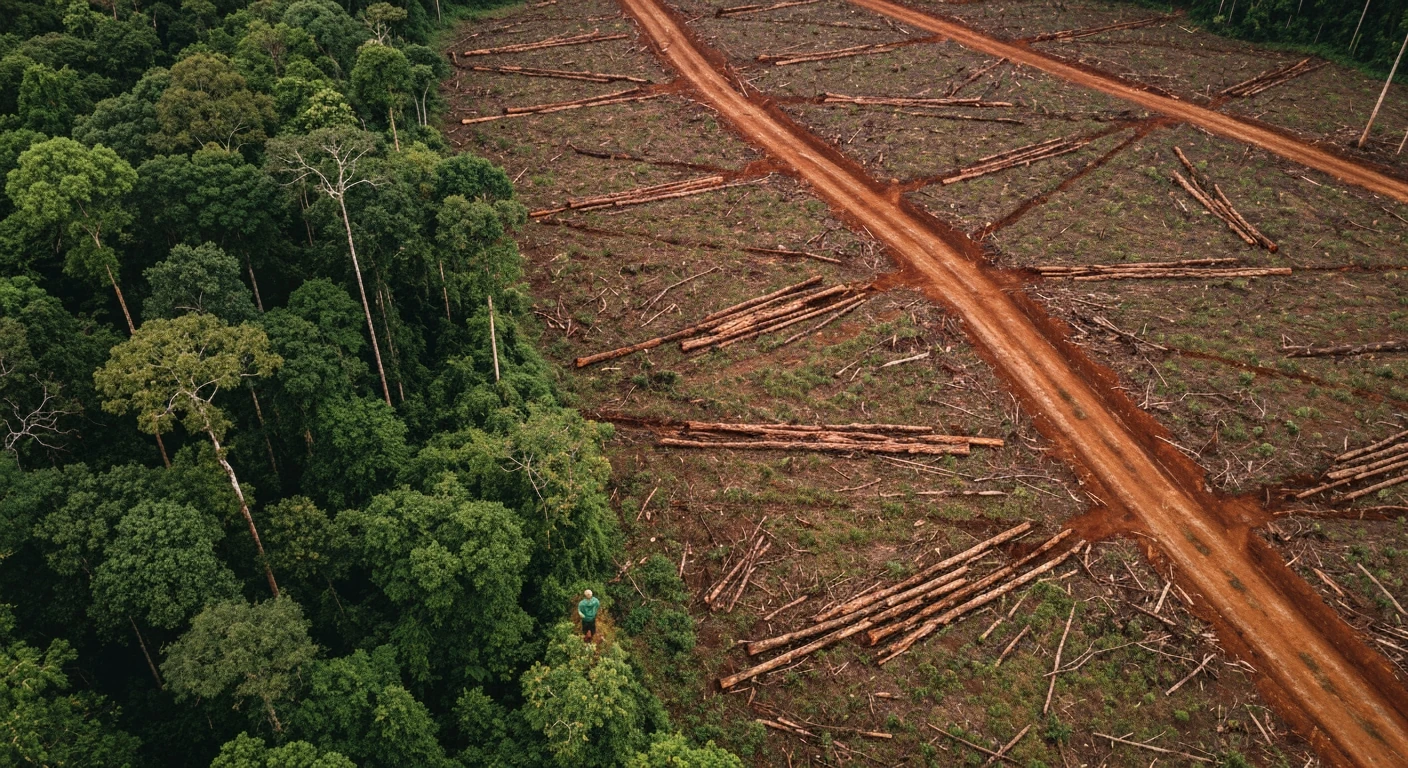
While the Amazon dominates daily headlines, Brazil’s other vital biomes are facing their own silent crises. The Cerrado — a biome that’s essentially a vast tropical savanna — is being relentlessly converted for agriculture, particularly soy and cattle farming. Ignoring this is like a doctor checking a patient’s lungs while a critical heart condition goes unnoticed. It’s a massive blind spot in environmental coverage.
Further south, the Pantanal, the world’s largest tropical wetland, suffers from increasingly severe fire seasons, exacerbated by climate change and agricultural practices. The Atlantic Forest, or Mata Atlântica, faces a different pressure: relentless urban expansion along Brazil’s coast. According to data from the SOS Mata Atlântica Foundation, a staggering 88% of its original forest has been lost. What most people miss, and what expert opinions on the matter confirm, is how this fragmentation devastates species like the iconic golden lion tamarin.
Even the semi-arid Caatinga in the northeast, a unique dry forest biome, is not safe. It contends with desertification driven by unsustainable land use. These diverse regions are home to countless species found nowhere else on Earth, such as the maned wolf in the Cerrado and the Spix’s macaw, which is being reintroduced to the Caatinga.
The sheer variety of life is breathtaking.
Conservation efforts exist for all these areas, but they are often underfunded and struggle against powerful economic interests. Understanding the full picture is a challenge tied to how news outlets prioritize stories. The real question is whether awareness can expand beyond the Amazon before these other irreplaceable ecosystems reach a point of no return.
Indigenous Rights and Environmental Justice in Brazil
When discussing Brazil’s environment, you can’t separate the conversation from the rights of its Indigenous peoples. The two are deeply intertwined. Indigenous territories are not just homes; they are some of the most effective barriers against deforestation and biodiversity loss. The data suggests—though not conclusively—that these lands act as a natural brake on environmental destruction. Think of them as the last green walls standing against unchecked expansion.
A United Nations report highlighted that between 2000 and 2012, deforestation rates inside demarcated Indigenous lands in the Amazon were 2.5 times lower than in similar areas outside their boundaries. These communities possess generations of knowledge about sustainable land management. But what happens when legal and economic pressures threaten this delicate balance? Their very existence is often a form of environmental activism, which is why understanding expert opinions on these current events is so vital.
Recent years have seen significant challenges, particularly surrounding the legal concept of land demarcation. Conflicts over territory with miners, loggers, and agricultural operations are constant—and often violent. Legal battles, such as the ongoing debate around the “Marco Temporal” thesis which could limit the recognition of new Indigenous lands, create immense uncertainty. The way news portals prioritize these complex stories directly influences public awareness and political action.
The fight for environmental justice in Brazil is inseparable from the struggle for Indigenous survival. Their future, and the future of the biomes they protect, hinges on securing legal rights and physical safety against constant encroachment.
Future Outlook: Navigating Brazil’s Environmental Challenges
Brazil stands at a critical environmental crossroads. With the Amazon rainforest, the Pantanal wetlands, and the Cerrado savanna all facing immense pressure from deforestation, illegal mining, and agricultural expansion, the path forward is complex. The country’s future prosperity is intrinsically linked to its ability to protect these vital ecosystems. This isn’t just about preserving nature; it’s about securing economic stability.
Successfully charting a course requires a unified effort, blending solid policy with corporate responsibility and international support. The underrated factor here is that small, isolated actions will not be enough to turn the tide. It requires a cohesive national strategy that treats the economy and the environment as two sides of the same coin.
Policy Priorities for a Green Future
A sustainable future for Brazil hinges on smart, enforceable government policies. The primary task is not necessarily creating new laws but effectively enforcing existing ones, such as the Forest Code. Strengthening environmental agencies like IBAMA and ICMBio with adequate funding and political backing is the first logical step. But what does a green future actually look like on the ground? It means creating economic incentives that make conservation more profitable than destruction.
The potential is enormous. A report from the Brazilian Institute of Economics (FGV IBRE) suggests a full transition to sustainable agriculture could add over R$16.3 billion to the national GDP annually within a decade. To achieve this, a clear set of actions is needed across society, which requires citizens to stay informed through sources like your daily briefing on these topics.
- Government: Must fully fund and empower environmental protection agencies, eliminate subsidies for industries linked to deforestation, and invest in a bioeconomy based on the forest’s resources.
- Industry: Needs to commit to zero-deforestation supply chains, invest in reforestation technologies, and adopt circular economy models to reduce waste and pollution.
- Civil Society: Plays a vital role in monitoring corporate and government actions, promoting environmental education, and advocating for stronger protections.
The Role of International Cooperation
Brazil’s environmental challenges are a global concern, and international cooperation is a key piece of the puzzle. Financial mechanisms like the Amazon Fund, supported by countries such as Norway and Germany, provide necessary resources for conservation and monitoring projects. Global consumer demand for sustainably sourced products — from coffee to beef — also creates powerful market pressure for Brazilian companies to clean up their supply chains.
This international dynamic, is delicate. It’s like trying to balance on a tightrope; foreign assistance is welcome, but it must not be perceived as an infringement on national sovereignty. Dr. Ana Oliveira, a climate policy analyst at the University of São Paulo, explains, “International partnerships are necessary, but they must be built on mutual respect and genuine commitment to Brazil’s autonomous development goals, not just foreign conservation targets.” Understanding how these global stories are shaped is important, and it’s worth exploring how news portals present these narratives to the public.
Ultimately, the choices made in the coming years will define Brazil’s environmental legacy and its position on the world stage for decades to come.
Beyond the Crossroads: Brazil’s Next Environmental Chapter
To frame Brazil’s situation as simply being at an environmental ‘crossroad’ is to understate the complexity. In reality, the nation is already traveling down multiple paths at once, and the core challenge lies in managing the inherent conflicts between them. Can the economic engine of agribusiness be redesigned to preserve, rather than consume, the vital Cerrado biome? Will the accelerated push for renewable energy learn from the ecological missteps of past mega-projects? The future of Brazil’s environment hinges less on grand declarations and more on the daily, unglamorous work of enforcing laws, empowering local communities, and making difficult economic trade-offs.
Ultimately, the most pressing question may not be one of conservation, but of governance. How Brazil reconciles the competing demands for its natural resources will define its environmental legacy far more than any single policy or international agreement. The real test is whether the country can build a model of development where ecological health is no longer an obstacle to progress, but its very foundation.
Frequently Asked Questions
What are the main causes of deforestation in the Brazilian Amazon?
The primary drivers of deforestation in the Amazon are cattle ranching and large-scale agriculture, particularly soy cultivation. These are followed by illegal logging, mining operations, and the development of infrastructure projects like roads and hydroelectric dams, which open up previously remote forest areas to exploitation.
How is climate change affecting agriculture in Brazil?
Climate change is creating more frequent and intense weather events, such as severe droughts and destructive floods. This volatility disrupts planting and harvesting seasons, significantly reduces yields for key crops like coffee and soybeans, and places enormous strain on the water resources required for irrigation across the country.
What is Brazil doing to promote renewable energy?
Brazil is actively expanding its renewable energy capacity beyond its traditional reliance on hydropower. The government is promoting massive investment in wind and solar power, especially in the country’s Northeast, through energy auctions and incentives for private development. This strategy aims to diversify the national grid and make it more resilient to droughts.
Which Brazilian biomes are most at risk after the Amazon?
Beyond the Amazon, the Cerrado, a vast tropical savanna, is critically threatened by the relentless expansion of soy farming and cattle ranching. the Pantanal, the world’s largest wetland, suffers from increasingly severe fire seasons, while the coastal Atlantic Forest has lost nearly 90% of its original cover to urbanization.
How do indigenous communities contribute to environmental conservation in Brazil?
Indigenous communities are required guardians of Brazil’s ecosystems. Their legally demarcated territories serve as highly effective buffers against deforestation, preserving vast tracts of primary forest. their deep, generational knowledge of the land promotes sustainable practices that maintain biodiversity and ecological balance.