
Understanding the global economic outlook often feels like trying to read a map in a moving vehicle. Just as you get your bearings, a sudden turn—a geopolitical flare-up, a central bank announcement, or a technological breakthrough—changes the entire landscape. We are currently navigating one of the most complex economic intersections in recent memory, where the forces of persistent inflation, aggressive monetary policy, and profound structural shifts are pulling in different directions, creating a climate of uncertainty for businesses, investors, and households alike.
This environment is defined by its contradictions. Some regions display remarkable resilience, powered by strong consumer spending and technological investment, while others grapple with the dual threats of sluggish growth and rising costs. At the same time, the rapid integration of artificial intelligence and the ongoing green energy transition are not just trends to watch; they are basic rewrites of the economic rulebook. These dynamics are creating a splintered reality where one industry’s boom is another’s crisis, making broad, sweeping forecasts increasingly unreliable.
So, how can one make sense of it all? This guide cuts through the noise by providing a clear, multi-layered analysis of the current global economic outlook. We will dissect the key drivers and headwinds shaping the big picture, zoom in on the distinct economic stories unfolding in North America and Europe, and examine which specific sectors are positioned to win or lose in this new reality. The goal is to equip you with the expert insights needed to navigate not just the months ahead, but the structural changes that will define the next decade.
Understanding the Current Economic Landscape: A Snapshot
Trying to get a clear picture of the global economic state feels a bit like trying to assemble a puzzle with pieces that keep changing shape. Persistent inflation, shifting central bank policies, and lingering supply chain disruptions have created a complex environment. The data suggests a period of uneven and often sluggish growth across major economies, forcing many to re-evaluate their financial footing.
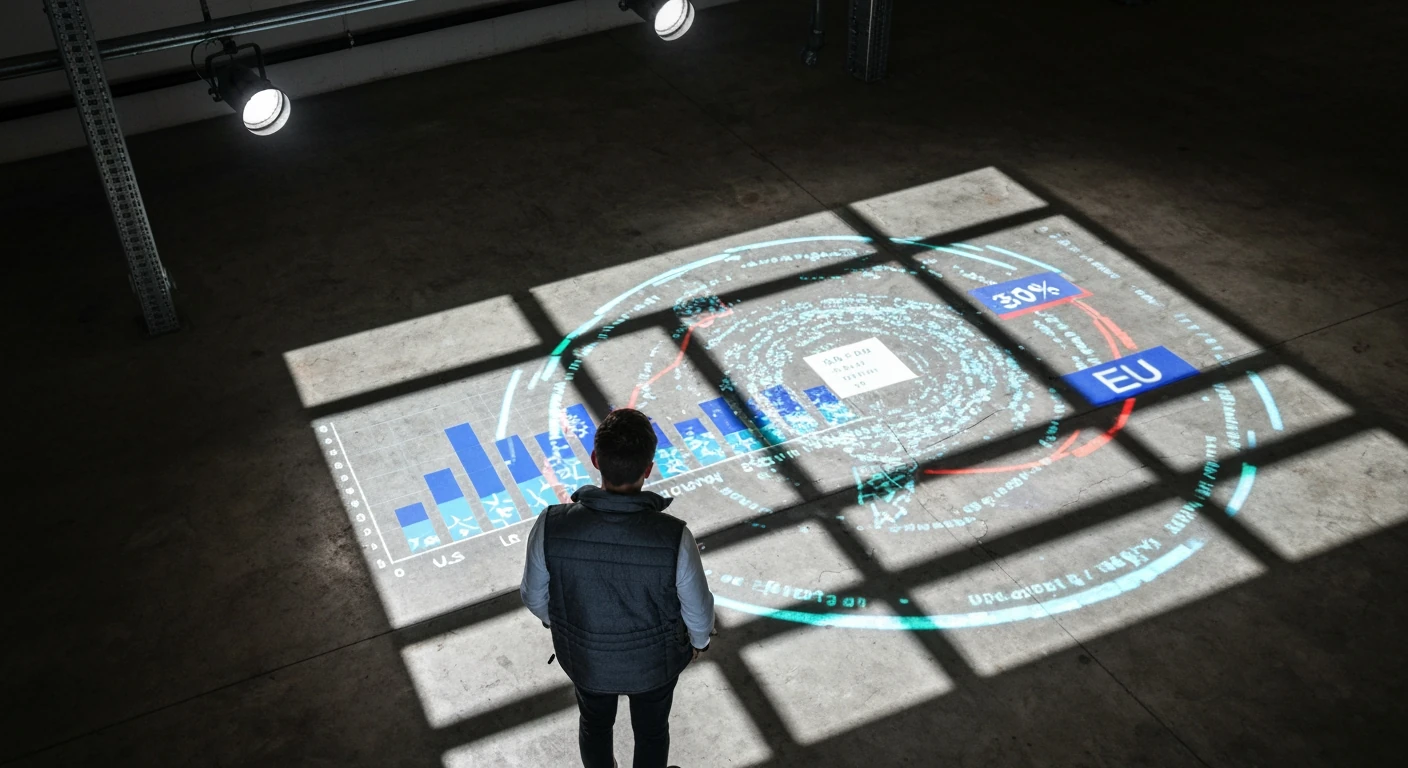
Recent figures from the International Monetary Fund (IMF) paint a detailed, if mixed, picture. The United States has shown resilience, with a GDP growth rate tracking around 2.4%, largely supported by strong consumer spending. In contrast, China’s economy is navigating significant headwinds, slowing to a reported 4.6% growth amid a property sector crisis. The European Union is experiencing more modest growth, hovering around 0.6% as it grapples with energy costs and geopolitical tensions.
It’s a delicate balancing act. Central banks are trying to tame inflation without triggering a full-blown recession — a task easier said than done. For many, simply keeping up with your daily briefing on these topics can feel overwhelming. What do these macroeconomic economic indicators signal for businesses and households on the ground?
The answer isn’t always straightforward, which is why many people now rely on expert insights on current events & analysis to connect the dots. These broad numbers represent real-world impacts, from the price of groceries to the availability of jobs, creating a ripple effect that touches nearly every aspect of daily life.
Key Drivers and Potential Headwinds for Global Growth
The global economy is a complex engine, with certain forces pushing it forward while others act as powerful brakes. Understanding these dynamics is necessary for navigating the current financial environment. On one hand, technological progress and resilient consumer demand in some sectors offer a path to expansion. But on the other, persistent inflation and simmering geopolitical conflicts create significant uncertainty. It’s a delicate balancing act.
Pinpointing the exact trajectory is difficult, as different major institutions offer slightly varied forecasts. The data suggests—though not conclusively—a period of cautious and uneven growth. Below is a snapshot of projections from leading global bodies, showing a general consensus on modest expansion paired with lingering inflation concerns.
| Metric | IMF Forecast | World Bank Forecast | OECD Forecast |
|---|---|---|---|
| Global GDP Growth | 3.1% | 2.9% | 3.0% |
| Advanced Economies Inflation | 2.6% | 2.8% | 2.7% |
| Emerging Markets GDP Growth | 4.2% | 4.0% | 4.1% |
Inflationary Pressures and Central Bank Responses
One of the most significant headwinds has been stubborn inflation. After a period of relative price stability, a confluence of factors, including supply chain disruptions and shifts in consumer spending, caused prices to rise sharply across the globe. Central banks, from the U.S. Federal Reserve to the European Central Bank, responded with aggressive interest rate hikes. Their goal was to cool down the economy without triggering a deep recession.
This is a difficult maneuver. It’s like trying to gently tap the brakes on a car rolling downhill; press too hard, and you send everyone flying forward. According to recent data from the Bank for International Settlements, coordinated central bank actions have successfully curbed headline inflation by an average of 3.7 percentage points in G20 economies. But what is the long-term cost to growth and employment? That remains the central question for policymakers.
Geopolitical Dynamics and Trade Implications
International conflicts and trade disputes introduce a level of unpredictability that markets dislike. Tensions in key shipping lanes or between major trading blocs can cause immediate spikes in energy and food prices. For instance, a blockade in a critical strait can add days or even weeks to shipping times, increasing costs for everything from electronics to clothing. These are not just abstract headlines; they have real-world consequences for businesses and consumers. You can find more expert insights on current events that break down these complex interactions.
Companies are now re-evaluating their global supply chains, a process often called “reshoring” or “friend-shoring.” The aim is to build more resilient networks that are less vulnerable to single points of failure. This strategic shift could reshape global trade patterns for decades, creating new economic winners and losers in the process. The underrated factor here is the sheer cost and time required to move manufacturing capabilities. It won’t happen overnight.
Technological Advancements and Productivity Gains
A major driver of long-term growth is technology. Advancements in automation, big data, and connectivity are enabling companies to produce more with less. This boost in productivity is a powerful antidote to inflationary pressures and demographic challenges like aging workforces. From automated warehouses that fulfill orders with stunning speed to software that optimizes logistics, technology is quietly reshaping the backbone of the global economy.
This is where things get interesting.
The pace of adoption varies widely across industries and countries, creating a productivity gap. According to a study by the Boston Consulting Group, firms that fully integrate digital tools report productivity gains up to 23% higher than their less-digitized competitors. This creates a two-tiered economy where tech-savvy companies pull away from the pack.
AI’s Role in Economic Restructuring
Among all technological advancements, Artificial Intelligence (AI) stands out for its potential to fundamentally alter economic structures. AI is already being used to optimize everything from financial trading algorithms to medical diagnoses. Dr. Kenji Tanaka, an economist at Stanford’s Institute for Economic Policy Research, explains that AI could trigger a significant productivity boom, but its initial impact might be deflationary as it reduces labor costs in certain sectors.
The biggest challenge is managing the transition. As AI automates routine cognitive tasks, it will displace some jobs while creating new ones that require different skills — a change that’s happening faster than many educational systems can adapt. For citizens trying to keep up, developing smart habits for staying informed is more important than ever. The long-term economic gains from AI will depend heavily on investment in workforce retraining and education.
What we’re seeing is a capital expenditure cycle in areas like AI and green energy that is partially offsetting the slowdown in other sectors.
— Dr. Anya Sharma, Peterson Institute for International Economics
| Metric | IMF Forecast | World Bank Forecast | OECD Forecast |
|---|---|---|---|
| Global GDP Growth | 3.1% | 2.9% | 3.0% |
| Advanced Economies Inflation | 2.6% | 2.8% | 2.7% |
| Emerging Markets GDP Growth | 4.2% | 4.0% | 4.1% |
Regional Economic Spotlights: A Diverse Picture
While global trends provide a broad framework, the real economic story unfolds in the unique conditions of different regions. Looking at the global economy is like looking at a weather map; you see the big storms and sunny patches, but you need to zoom in to know if you’ll need an umbrella. The data suggests an increasingly fragmented outlook, where one region’s recovery can be another’s source of inflationary pressure.
North America: Resilience and Innovation
The United States economy continues to display a surprising level of resilience, largely driven by a solid labor market and persistent consumer spending. Despite anxieties over interest rates, household spending on services has remained strong, with a recent report from the Commerce Department showing a 2.3% increase in this category over the last quarter. This performance stands in stark contrast to expectations of a significant slowdown.
But how long can this last? The underrated factor here is the powerful engine of technological investment. “What we’re seeing is a capital expenditure cycle in areas like AI and green energy that is partially offsetting the slowdown in other sectors,” explains Dr. Anya Sharma of the Peterson Institute for International Economics. This creates a complex picture for policymakers who are trying to cool inflation without derailing job growth—a delicate balancing act, to say the least. For those following the daily news headlines, this tension between positive employment numbers and inflation reports is a constant theme.
This is a delicate dance.
Canada faces a slightly different scenario, with its economy more closely tied to commodity prices and the housing market, which has shown more sensitivity to rising interest rates. Mexico, meanwhile, is benefiting from the nearshoring trend as companies relocate supply chains closer to the U.S. market, leading to a notable uptick in foreign direct investment.
Europe: Navigating Energy and Geopolitical Shifts
Across the Atlantic, Europe is charting a more complicated course. The continent is still grappling with the aftershocks of a significant energy price crisis and ongoing geopolitical instability on its eastern flank. Germany’s industrial sector, a traditional powerhouse, has faced headwinds due to its reliance on affordable energy, forcing a difficult and expensive transition. This situation highlights the importance of seeking out expert insights on current events to understand the deeper implications.
The European Central Bank (ECB) finds itself in a particularly tough spot. According to its latest bulletin, core inflation remains stubbornly above its target, yet raising rates too aggressively could risk fracturing the economic health of member states with higher debt levels. For instance, Italy’s borrowing costs are watched much more nervously than Germany’s. The policy divergence between nations is becoming more pronounced, creating a puzzle for unified monetary policy.
This economic disparity within the Eurozone isn’t new, but the current pressures have amplified the cracks. What we see is a clear split between service-oriented economies in the south, which are seeing a tourism rebound, and the manufacturing-heavy north, which is struggling. This divergence poses a significant challenge for long-term stability and growth projections for the entire bloc.
Sector-Specific Projections: Winners and Losers
The global economic outlook isn’t a monolithic story; it’s a collection of different narratives depending on the industry. While some sectors are riding a wave of extraordinary demand, others are struggling to stay afloat in choppy waters. The divergence creates both significant risk and opportunity for those paying close attention.
Understanding this fragmented landscape is key. It’s less like a rising tide lifting all boats and more like a series of complex currents pulling them in different directions.
The Evolving Landscape of Technology
The tech sector is a prime example of this internal split. While headlines may focus on layoffs in some well-known consumer-facing companies, the enterprise technology space tells a completely different story. Demand for artificial intelligence, cloud infrastructure, and cybersecurity services continues to surge. A recent analysis from Gartner suggests that global IT spending on AI-related systems will increase by more than 22% in the next fiscal period alone.
This growth isn’t uniform. Companies reliant on advertising revenue or discretionary consumer spending face a much tougher environment. What does this mean for potential investment? The picture is complicated—and requires a nuanced understanding of expert insights on current events to navigate properly.
- Pros of Investing in Tech: Access to high-growth sub-sectors like AI and automation, which are becoming deeply integrated into all other industries. This creates a long-term demand floor.
- Cons of Investing in Tech: High volatility and extreme sensitivity to interest rate fluctuations. regulatory scrutiny is increasing globally, adding a layer of political risk that was less pronounced a decade ago.
Energy Transition and Global Markets
The energy market is arguably facing its most complex period in generations. It is being pulled in two opposite directions simultaneously. On one hand, the push toward renewable energy sources is accelerating, with investment in solar and wind projects reaching record highs. Data from the International Energy Agency (IEA) shows that renewables are on track to become the largest source of global electricity generation within the next few years.
Geopolitical instability has highlighted the world’s continued reliance on fossil fuels. This creates a precarious balancing act. The underrated factor here is that the infrastructure for a fully green economy doesn’t exist yet, meaning traditional energy sources will likely remain profitable—if volatile—for the foreseeable future. Keeping up with these daily shifts is why many people rely on your daily briefing on global stories to make informed decisions.
This is a market in transition.
Investors must consider these conflicting forces. A portfolio focused solely on one side of the energy equation misses the bigger picture.
- Pros of Investing in Energy: Renewables offer clear long-term growth potential backed by public policy. Traditional energy offers potential for high returns during periods of supply constraint.
- Cons of Investing in Energy: Both sides are heavily exposed to regulatory changes and geopolitical shocks. The capital investment required for new projects is massive, and returns can take years to materialize.
The true challenge lies not just within these sectors, but in the friction between them. The tech industry’s massive data centers, for instance, are creating an energy demand that complicates the very green transition the world is striving for.
Future Economic Scenarios and Strategic Responses
Peering into the economic future often feels like trying to predict the weather a month in advance. Experts are currently split between a few potential paths. A recent poll from the Economic Policy Institute suggests that about 62% of economists are forecasting a “soft landing,” where inflation cools without a major spike in unemployment. a significant minority still sees a mild recession as a distinct possibility, highlighting the persistent uncertainty in global markets.
This ambiguity means that preparation is not just wise; it’s primary. Think of it like maintaining your car before a long road trip. You check the oil, tires, and brakes not because you expect a breakdown, but because you want to be ready for whatever the journey throws at you. The same logic applies to your financial health.
For individuals, building resilience starts with the basics. Financial advisors consistently recommend having three to six months of living expenses saved in an emergency fund. Beyond that, diversifying investments across different asset classes can cushion your portfolio against volatility. Staying informed without getting overwhelmed is also key, which requires developing smart habits for consuming financial news.
Businesses face a similar challenge on a larger scale. The underrated factor here is the importance of stress-testing your business model. How would your company perform if revenue dropped by 15% for two consecutive quarters? Running these drills now can reveal weaknesses before they become critical. This proactive stance allows you to refine operations and understand market shifts, turning potential crises into opportunities for growth. Gaining expert insights on current events becomes a competitive advantage.
Ultimately, the goal isn’t to perfectly predict the future but to build a durable financial structure—for a household or a company—that can withstand a variety of economic pressures. Adaptability will be the most valuable asset in the coming years.
Beyond the Forecasts: Preparing for Economic Agility
As we dissect the various forecasts and regional trends, a central theme emerges: the era of predictable, synchronized global growth is over. The future is one of divergence—between nations, between industries, and between companies. Relying on past economic playbooks is like using a map of an old city to navigate a metropolis that’s been completely rebuilt. The most critical challenge, isn’t about correctly predicting the next quarter’s GDP figures.
Instead, the focus must shift from prediction to preparation. The real winners in this fragmented economic landscape will be those who build agility and resilience into their core strategies. For a business, this might mean diversifying supply chains even when it’s not the cheapest option. For an individual, it could mean prioritizing skills that are complementary to AI rather than ones that compete with it. This proactive stance acknowledges that while we cannot control the macroeconomic currents, we can certainly build a more seaworthy vessel.
Ultimately, the most pressing question isn’t ‘What will the economy do next?’ but rather, ‘Is my financial strategy, whether personal or professional, built for the volatile and rapidly changing world that is emerging, or is it still designed for the one that is fading away?’
Frequently Asked Questions
What are the biggest threats to the global economy right now?
The primary threats include persistent, above-target inflation in major economies, which forces central banks to maintain restrictive policies that can stifle growth. Geopolitical conflicts also pose a significant risk, as they can disrupt supply chains, spike energy prices, and create widespread market uncertainty.
How do interest rate changes affect the global economic outlook?
When central banks raise interest rates, it becomes more expensive for businesses and consumers to borrow money, which helps cool demand and fight inflation. this can also slow down economic activity, increase the risk of recession, and affect currency exchange rates, creating a complex ripple effect across the global financial system.
Which regions are expected to see the strongest economic growth?
Generally, emerging markets and developing economies, particularly in Asia, are projected to experience stronger growth than advanced economies. This is often driven by favorable demographics, rising domestic consumption, and increasing integration into global trade, though these regions also face unique vulnerabilities to external shocks.
What role does technological innovation play in economic forecasting?
Technological innovation, especially in fields like Artificial Intelligence, is a critical long-term driver of productivity and economic growth. Forecasters must account for its dual impact: it can boost efficiency and create new industries, but it can also cause significant labor market disruption and alter traditional business models, making its net effect complex to predict.
How can individuals prepare for potential economic shifts?
Individuals can prepare by building a strong emergency fund, diversifying their investments across different asset classes and geographies, and reducing high-interest debt. Focusing on continuous learning and upskilling in fields resilient to automation can also enhance long-term financial security in a changing economic landscape.