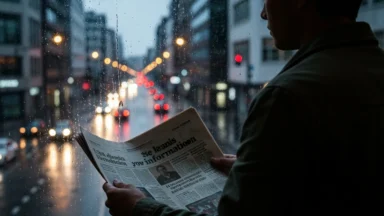
That familiar feeling of exhaustion after just a few minutes of scrolling through headlines has a name: information overload. In an era where every phone is a portal to an endless torrent of breaking news, opinion pieces, and viral updates, our brains are struggling to keep up. The digital landscape, powered by algorithms designed for maximum engagement, has turned staying informed into a mentally taxing chore, often leaving us more anxious than enlightened. This constant barrage isn’t just noise; it’s a cognitive burden that impacts our focus, mood, and ability to make clear decisions.
The scale of this challenge is immense. Research indicates that the average person now consumes more information in a single day than someone in the 15th century would have encountered in their entire lifetime. This isn’t a failure of personal discipline but a consequence of a media ecosystem that profits from our attention. The 24/7 news cycle and the platforms that distribute it are engineered to create a sense of urgency and a fear of missing out, compelling us to check, refresh, and scroll long after we’ve absorbed anything useful. The result is a widespread sense of fatigue and powerlessness in the face of an overwhelming data stream.
But what if you could regain control? This guide is not about advocating for a complete digital detox or ignoring important world events. Instead, it’s a practical playbook for navigating the modern news deluge with intention and skill. We will explore concrete strategies to transform your relationship with information, moving from a passive consumer to an active curator. You’ll learn which tools can help you build a personalized news diet, how to develop the critical thinking skills to identify bias and misinformation, and how to set healthy boundaries that protect your time and mental well-being. It’s time to filter the chaos and find the clarity you’ve been missing.
The Modern Information Epidemic: Understanding News Overload
Opening your phone or browser often feels like standing in front of a firehose of information. Alerts, breaking headlines, and endless social media feeds all compete for your attention, creating a constant barrage of content. This phenomenon is known as news overload, a state where the sheer volume of information surpasses an individual’s capacity to process it effectively. It’s a distinctly modern challenge, fueled by the 24/7 news cycle and digital platforms designed to keep us scrolling.
The scale of this issue is staggering. A recent report from the Digital Futures Institute suggests that the average adult consumes over 85 gigabytes of information daily — a massive increase from just a decade ago. This constant stream is influenced by complex algorithms that determine how news portals prioritize and present stories. But what is the psychological cost of this endless consumption?
This constant exposure often leads to information fatigue, a feeling of being worn out by the need to stay informed. It can manifest as heightened anxiety, a sense of powerlessness, and even decision paralysis, where making choices becomes difficult because you’re overwhelmed with data. The pressure to have an opinion on every topic can be immense.
What most people miss is that this isn’t a personal failing but a systemic issue. The digital environment is engineered for maximum engagement, not necessarily for our well-being (a tough pill to swallow, I know). The goal is not to completely disconnect, but to develop smarter habits. Learning to streamline your news intake is less about avoidance and more about intentional control. The rest of this guide will focus on the practical strategies needed to regain that control.
Crafting Your Personalized News Diet: Tools and Techniques
Instead of passively letting a tidal wave of information wash over you, the most effective approach is to actively build your own information pipeline. Think of it less like trying to drink from a firehose and more like designing a custom irrigation system for your brain. You decide which channels to open and when. The goal is to move from being a consumer to a curator.
This shift requires a deliberate choice of tools. The underrated factor here is that the default settings on most platforms are designed for maximum engagement, not maximum understanding. A recent report from the Reuters Institute for the Study of Journalism found that individuals who actively curate their sources report 27% lower levels of news-related anxiety. Taking control is the first step.
Leveraging RSS Feeds and News Aggregators
One of the most powerful, yet surprisingly overlooked, tools for this is the RSS (Really Simple Syndication) feed. RSS aggregators like Feedly or Inoreader allow you to subscribe directly to websites, blogs, and specific journalists you trust. They pull updates directly from sources you choose, presenting them in a clean, chronological list free from algorithmic manipulation.
You become the editor-in-chief of your own news service. There are no “recommended for you” posts based on what you clicked yesterday, and no outrage-bait headlines pushed to the top for engagement. What most people miss is that this method restores sanity to consumption; you read what’s published, not what’s popular. For those looking to refine this approach, learning some pro’s tips for efficient daily consumption can dramatically cut down on wasted time.
Mindful Social Media Engagement for News
For many, abandoning social media for news is unrealistic. Platforms like X (formerly Twitter) and Facebook are where conversations happen in real-time. The key isn’t to leave, but to engage mindfully. Instead of doomscrolling your main feed, create curated lists of trusted experts, reporters, and agencies. This creates a focused stream of information separate from the general chaos.
Aggressively use the mute and block functions. Mute keywords related to a story you feel informed enough about, or one that is causing undue stress. But how do you know which accounts are just chasing clicks? It helps to understand the mechanics of how digital news portals prioritize stories, as the same principles often apply to individual accounts seeking visibility. This intentional pruning—noticing what content adds value versus what just adds noise—is a critical skill.
| Feature | News Aggregators (RSS) | Social Media Feeds |
|---|---|---|
| Control | Total user control; you select every source. Chronological feed. | Algorithmic control; platform prioritizes engaging or paid content. |
| Discovery | Limited to sources you already know. Less serendipity. | High potential for discovering new sources and breaking stories. |
| Context | Often provides direct links to full articles, encouraging deep reading. | Promotes headlines and short snippets, often lacking full context. |
| Noise Level | low. No ads (in most readers), no comments, no viral fluff. | high. Filled with opinions, ads, and irrelevant content. |
Ultimately, a hybrid approach often works best.
Use an RSS reader for your foundational knowledge—the core topics and writers you need to follow—and use carefully curated social media lists for real-time updates and discovery. This combination gives you both depth and breadth without sacrificing your mental peace. The ongoing practice of refining these sources is one of the most important strategies to filter digital clutter from your life.
It’s not information overload. It’s filter failure.
— Clay Shirky, Writer and Professor
| Strategy | Key Action |
|---|---|
| Curate Your Sources | Actively select trusted outlets using tools like RSS readers (Feedly) and curated social media lists to bypass chaotic algorithms. |
| Consume Critically | Go beyond headlines to identify bias, verify claims with fact-checking sites, and question the sourcing within articles. |
| Set Firm Boundaries | Disable news alerts and schedule specific ‘news windows’ (e.g., 15 minutes in the morning) to prevent constant, distracting updates. |
| Verify Visual Media | Use a reverse image search (like Google Lens or TinEye) on striking photos or videos to check their original context before believing or sharing. |
Strategies for Critical Consumption: Beyond the Headlines
Having the right tools to filter your news is a great start, but it’s only half the battle. The other half is fought in your own mind. Developing strong media literacy skills is the ultimate defense against misinformation and overload, turning you from a passive recipient into an active, critical consumer. This means going beyond simply reading headlines and learning to question, analyze, and verify what you see. It’s about knowing how the sausage gets made.
The core idea is to build a mental framework that automatically assesses information. Just like a chef tastes ingredients before adding them to a dish, you need to “taste” the news for quality. This requires a conscious effort at first, but over time it becomes second nature. The underrated factor here is that this skill extends far beyond news consumption, improving your decision-making in all areas of life.
Identifying Reliable Sources and Journalistic Standards
In a digital world where anyone can launch a website, not all sources are created equal. Reputable news organizations adhere to a specific set of journalistic standards that separate them from blogs, content farms, and propaganda outlets. A key sign of a trustworthy source is transparency. Look for a public-facing ethics policy, a clear corrections policy for fixing mistakes, and bylines that attribute articles to real journalists.
Major newsrooms invest heavily in their reputation. For instance, a study by the American Press Institute found that 85% of readers value accuracy above all else, and established outlets know this. They typically have multiple layers of editing and fact-checking before a story is published. But how can you really understand how news portals prioritize and present stories? Pay attention to whether they clearly distinguish between straight news reporting and opinion pieces, which is a hallmark of integrity.
Another strong indicator is the sourcing within articles. Does the reporter cite multiple, diverse sources? Are experts named along with their credentials? Vague attributions like “sources say” or “experts believe” without further detail can be a red flag. A credible report will provide the context needed for you to judge the source’s authority for yourself.
Decoding Bias: From Overt to Subtle
Bias isn’t always a four-letter word; everyone has a point of view. The problem arises when that bias is presented as objective fact, or when it’s so subtle that it manipulates your perception without you realizing it. Overt bias is easy to spot—it’s the angry talk show host or the opinion column filled with inflammatory language. The real challenge is identifying the more hidden forms.
This subtle bias often appears in several ways:
- Bias by Omission: Leaving out facts or perspectives that would weaken the desired narrative.
- Bias by Placement: Placing a story on the front page versus burying it on page 20 (or at the bottom of a homepage) signals its perceived importance.
- Bias by Tone: Using positive or negative language to describe a subject. For example, calling a group “protesters” versus “rioters” creates a completely different impression.
What most people miss is how these subtle cues work together. A 2022 Gallup poll revealed that trust in mass media is at a near-record low, with only 34% of Americans having a “great deal” or “fair amount” of trust. I suspect a major reason for this is the public’s growing awareness of this subtle manipulation. Developing a deeper understanding of current events involves recognizing these patterns and actively seeking out different sources to get a more complete picture.
Practical Fact-Checking Tools and Methods
When you encounter a claim that seems shocking, too good to be true, or perfectly confirms your own beliefs, it’s time to put on your detective hat. Fortunately, you don’t have to do it alone. A number of non-partisan organizations dedicate themselves to untangling fact from fiction. It’s a key part of your toolkit for filtering out digital noise.
Before you share, take a few minutes to cross-reference the information with one of these trusted fact-checkers:
- Snopes: One of the oldest and most well-known fact-checking sites, covering everything from political claims to urban legends.
- PolitiFact: A Pulitzer Prize-winning project that rates the accuracy of claims by public officials on its “Truth-O-Meter.”
- FactCheck.org: A project of the Annenberg Public Policy Center that focuses on reducing deception and confusion in U.S. politics.
- Associated Press (AP) Fact Check & Reuters Fact Check: Both major news wires run dedicated fact-checking operations to debunk misinformation circulating online.
Reverse Image Search for Visual Verification
Misinformation isn’t just text-based. Manipulated images and out-of-context videos are incredibly potent tools for spreading falsehoods. A dramatic photo can evoke a powerful emotional response before your rational brain even has a chance to engage—which is exactly what creators of disinformation count on. A simple reverse image search is your best defense.
The process is straightforward. On a desktop, you can right-click an image and select “Search image with Google.” On mobile, you can use apps like Google Lens or upload a screenshot directly to sites like TinEye. These tools scan the web to find where else the image has appeared. You can quickly discover if a photo of a supposed protest is actually from a different event years ago or if an image has been digitally altered. This simple habit is basic to any smart strategy for daily information consumption.
This skill moves you from being a passive viewer to an active investigator of the visual information flooding your feeds.

Time Management for News: Setting Boundaries and Habits
Just because you can access information 24/7 doesn’t mean you should. Treating news like an all-day buffet instead of scheduled meals is a recipe for mental indigestion. The constant stream of alerts and breaking headlines creates a state of perpetual urgency, which, according to a report from the American Psychological Association, contributes to heightened stress levels for 56% of adults who follow the news. It’s a cycle that’s hard to break.
But regaining control is entirely possible. It starts with shifting your mindset from reactive consumption to intentional engagement. Think about it: does reacting to every single push notification actually make you more informed, or just more anxious? The underrated factor here is that building mindful news consumption habits is less about what you read and more about when and how you read it.
Scheduled News Windows vs. Constant Updates
The biggest change you can make is to stop sipping from the firehose of constant updates. Instead, create specific, scheduled “news windows” in your day. This approach prevents the cognitive drain caused by continuous task-switching and allows your brain to fully process information without the background noise of perpetual alerts. It’s the difference between focused learning and panicked scanning.
This is a deliberate practice. Here’s a simple routine to get started:
- Designate Your Time Blocks: Choose two or three specific times each day for news. For example, commit to 15 minutes over your morning coffee and another 20 minutes after work. Put these blocks on your calendar as if they were appointments.
- Silence the Noise: This is the most key step. Go into your phone’s settings and turn off all news app notifications—breaking news, daily digests, everything. This simple action puts you back in the driver’s seat. You decide when to check in, not the algorithm.
- Curate Your Sources Beforehand: During your news window, don’t just open a social media feed. Go directly to 2-3 trusted sources you’ve pre-selected. This prevents you from falling down rabbit holes and gives you a more complete picture, as portals often have different methods for how they prioritize and present stories.
- Set a Timer: When your news window begins, set a physical timer. Once it goes off, close the tabs and apps. No exceptions. This discipline is like a muscle; it gets stronger with use and is central to any pro’s guide to efficient daily consumption.
The Benefits of Digital Minimalism for News
Adopting scheduled news checks is a core tenet of digital minimalism. This philosophy isn’t about complete abstinence but about using technology with intention. By limiting your exposure, you give important stories the space they need to be properly understood, rather than letting them blur into an endless scroll of outrage and trivia. What most people miss is that being well-informed isn’t about knowing everything the moment it happens.
It’s about understanding what matters. Surprisingly, you might find you feel more connected to the world, not less. With the mental clutter cleared, you have more capacity to think critically about major events. Adopting these habits is one of the most effective strategies to filter digital clutter from your life entirely.
This isn’t just theory; it’s a defense mechanism against burnout. The goal is to transform your relationship with information from one of anxiety-driven obligation to one of purposeful, calm curiosity.
Maintaining Mental Well-being in a 24/7 News Cycle
The constant stream of alerts, breaking stories, and urgent updates can take a significant toll on our psychological health. This phenomenon is so common that experts have started using terms like “headline stress disorder” to describe the anxiety it produces. In fact, a report from the American Psychological Association revealed that for 68% of Americans, the news is a considerable source of stress. The human brain isn’t wired to process global tragedies in real time, every single day.
Dr. Alisha Gupta, a clinical psychologist at NYU, suggests that creating intentional distance is a primary coping mechanism. “You wouldn’t leave a fire alarm blaring in your house all day; you’d find the source and address it,” she explains. “Treating your news feed with the same logic—by controlling when and how you engage—protects your emotional reserves.” What most people miss is that this isn’t about promoting ignorance, but about practicing necessary digital wellness.
Your peace of mind is not negotiable.
Beyond just limiting your time, actively seek out better context instead of just raw headlines. Reading expert insights on current events can provide a more complete and less alarming picture of a situation. Discussing a complex story with a friend often proves more constructive than scrolling through furious comment sections—a surprisingly low bar, I know. These habits are part of a larger effort to master your information tide rather than letting it sweep you away.
Building a healthier relationship with the news is an ongoing practice, much like physical fitness. It requires regularly checking in with yourself and adjusting your consumption habits. Learning how to effectively filter digital clutter is less about building a wall and more about installing a functional window you can choose to open and close.
Beyond Filtering: Information as a Civic Skill
Mastering your information diet is more than just a technique for personal wellness; it’s rapidly becoming an primary civic skill for the 21st century. The ability to distinguish signal from noise, to seek out nuanced perspectives, and to resist algorithmic manipulation directly impacts the quality of our public discourse and our collective decision-making. As automated content and advanced disinformation campaigns become more prevalent, our capacity for critical consumption is no longer a soft skill but a core competency for a functioning society.
Ultimately, the goal isn’t to consume less information, but to consume it with greater wisdom. The strategies outlined here are the building blocks of that wisdom. So, as you implement these changes, consider the broader implication: How might our communities and democracies transform if we all moved from a state of reactive anxiety to one of intentional, critical engagement with the news? The future of being ‘well-informed’ may depend less on how much we know, and more on how we know it.
Frequently Asked Questions
How does news overload affect my brain?
Constant exposure to a high volume of news can trigger cognitive overload, leading to decision fatigue and reduced analytical thinking. It often elevates stress and anxiety by keeping your nervous system in a state of high alert, and can even shorten your attention span over time as your brain adapts to rapid, low-depth information scanning.
What are the best free tools to filter news?
Some of the most effective free tools include RSS readers like Feedly and Inoreader, which let you subscribe directly to trusted sources. On social media, creating curated Lists (a feature on X/Twitter) is invaluable. For verification, non-partisan fact-checking sites like Snopes, PolitiFact, and FactCheck.org are required resources.
How can I tell if a news source is biased?
Look for signs of transparency, such as a clear corrections policy and named authors. A key indicator is whether a source clearly separates straight news reporting from opinion pieces. Also, pay attention to loaded or emotional language and compare how different outlets cover the same story to reveal potential bias by omission or placement.
Is it okay to completely avoid certain types of news?
Yes, this is a healthy and strategic practice sometimes called ‘selective ignorance.’ It is perfectly acceptable to mute keywords or intentionally avoid topics that cause significant personal distress or that you feel sufficiently informed about. Protecting your mental health is a key part of a sustainable news consumption strategy.
What’s the difference between news aggregation and curation?
Aggregation is typically automated; a service like Google News uses algorithms to pull stories from thousands of sources based on keywords and popularity. Curation is a human-driven process where an individual or editor intentionally selects specific stories or sources based on quality, relevance, and trustworthiness. Curation gives you more control.