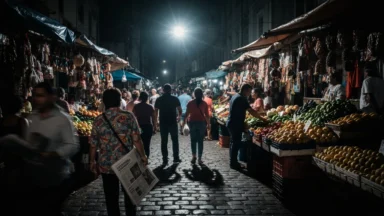
When you picture Brazil, what comes to mind? For many, it’s a vibrant montage of Carnival parades, legendary soccer matches, and sprawling beaches under a tropical sun. These images, while iconic, are just a single frame in a film of immense complexity and scale. They form a comfortable and easily digestible narrative, one often reinforced by international news cycles that favor the familiar over the factual.
This simplified portrayal isn’t just an oversimplification; it actively obscures the nuanced realities of a nation that is continental in both size and diversity. The danger lies in accepting these snapshots as the whole picture. Behind the stereotypes lies a country grappling with intricate economic forces, pioneering environmental solutions, and fostering hundreds of distinct regional cultures that rarely make it into the headlines. The story of Brazil is far more compelling than the myths suggest.
So, what is the truth? Is Brazil’s economy a powerhouse or a perpetual problem? Is daily life defined by the constant threat of crime? This article moves beyond the postcards to unmask the real Brazil. We will dismantle four of the most persistent myths surrounding its culture, economy, public safety, and environment, replacing sensationalism with surprising facts and a more accurate, insightful perspective.
Beyond the Stereotypes: Brazil’s Diverse Cultural Fabric
When many people think of Brazil, a narrow set of images often comes to mind: samba, soccer, and the spectacular parades of Carnival in Rio de Janeiro. While these are certainly parts of the national identity, they represent only a tiny fraction of a vast and deeply varied cultural landscape. The truth is far more intricate. Attempting to define all of Brazil by these symbols is like trying to understand an entire continent through a single city’s postcard.
This oversimplification often gets amplified by how news portals prioritize and present stories, focusing on what is most recognizable rather than what is most representative. The country is a complex blend of influences. Data from Brazil’s own IBGE (Brazilian Institute of Geography and Statistics) census shows that over 45% of the population identifies as pardo, or mixed-race, a testament to the deep intermingling of Indigenous, African, and European heritages over centuries. This fusion didn’t create a single, uniform culture; it created hundreds of them.
More Than Just Samba: Regional Rhythms and Traditions
The idea that samba is the national soundtrack is one of the most persistent myths. While samba is king in Rio, head to the Northeast and you’ll find the entire region moving to the rhythm of Forró, a lively and intimate partner dance. During the June Festivals, or Festas Juninas, entire cities in states like Pernambuco and Bahia are dedicated to this music, alongside traditional foods and square dancing that has surprisingly little in common with Carnival.
Travel further south, and the cultural flavor changes completely. States like Santa Catarina and Rio Grande do Sul show heavy German and Italian influences, a result of immigration waves in the 19th century. Here, you’re more likely to find beer festivals, polka music, and a strong “gaucho” (cowboy) culture than a samba circle.
It feels like a different country altogether.
What most people miss is the profound impact of Indigenous traditions, especially in the North. The city of Parintins in Amazonas hosts the Boi-Bumbá festival, an enormous folk-theatrical event that tells a local legend through music, dance, and colossal puppets — and yes, the costumes are just as elaborate as anything you’ll see in Rio. The festival is a direct reflection of the region’s unique Amazonian identity.
Dr. Liana Costa, a cultural anthropologist at the University of São Paulo, offers a useful analogy. “Treating Brazilian culture as a single entity is like calling all American food ‘hamburgers.’ It ignores the gumbo of Louisiana, the clam chowder of New England, and the Tex-Mex of the Southwest.” For more expert insights on current events, it’s clear that understanding this regionalism is key. Each part of Brazil has its own distinct recipe for culture.
This diversity isn’t just a quaint footnote; it’s central to understanding the country’s social and political dynamics, topics often simplified in your daily briefing. The cultural tensions and celebrations that exist between regions shape the national conversation in ways that stereotypes could never explain.
Economic Realities: Unpacking Brazil’s Growth and Challenges
Conversations about Brazil’s economy often swing between two extremes: a burgeoning global superpower or a nation trapped in perpetual crisis. The truth, as is often the case, is far more complex and interesting. The country’s economic narrative isn’t a straight line but a tangled chart of incredible highs and frustrating lows, driven by immense natural wealth and equally immense structural hurdles.
Understanding this duality is key. Simply labeling the economy as “unstable” misses the deep resilience and massive scale of its key sectors. The data suggests a picture not of simple failure, but of a constant, grinding battle between potential and red tape. How news outlets frame this struggle often determines whether you see a powerhouse or a problem, which is why it’s vital to look at how stories are prioritized and presented to global audiences.
The Agricultural Powerhouse: Beyond the Headlines
When international news covers Brazilian agriculture, the focus is frequently on environmental concerns. While these are valid issues, this narrow lens often obscures the sheer scale of Brazil’s role as a global breadbasket. According to data from Embrapa (Brazilian Agricultural Research Corporation), the country is a leading producer of everything from coffee and soybeans to sugar and orange juice. In fact, Brazil provides over 50% of the world’s soybean trade volume.
This isn’t just about raw production. The sector is a hub of ag-tech development, with advanced techniques in genetics and sustainable farming practices that rarely make headlines. What most people miss is that this agricultural engine provides a powerful economic buffer. Even during periods of industrial recession, the agribusiness sector has often posted growth, acting as the economy’s shock absorber — a detail that requires a deeper look, similar to the kind found in expert analyses of current events.
Think of it like a car with an incredibly powerful, world-class engine but a chassis that needs constant repairs. The engine keeps it moving forward, even when other parts are failing.
Navigating the ‘Custo Brasil’: Business Environment Realities
So, if Brazil has such a powerful engine, what holds it back? The answer is often summarized in two words: Custo Brasil, or the “Brazil Cost.” This isn’t a formal tax but a catch-all term for the web of factors that make doing business in the country expensive and slow. It includes a notoriously complex tax system, logistical bottlenecks in transportation, and a significant amount of bureaucratic procedure for even simple tasks.
For example, a past World Bank report indicated it could take over 1,500 hours per year for a medium-sized company just to prepare and pay taxes, compared to an average of around 160 hours in high-income OECD countries. That’s a staggering difference. This environment creates a barrier for both foreign investment and local entrepreneurs, who must dedicate enormous resources just to stay compliant.
It’s a system crying out for reform. And while progress has been made in fits and starts, the “Custo Brasil” remains a primary drag on the nation’s economic potential. This is a critical piece of context often missing from surface-level reports, highlighting the need for a critical approach to news portal reliability.
Comparison: Key Economic Indicators (Past Decade)
To visualize the volatility and resilience, let’s compare some key metrics from a decade ago to more recent figures. This table shows a snapshot and does not represent the peaks and troughs in between, but it illustrates the broader trends.
| Indicator | A Decade Ago (Approx.) | Recent Year (Approx.) |
|---|---|---|
| GDP Growth (Annual %) | 2.7% | 2.9% |
| Inflation Rate (Annual %) | 6.2% | 4.6% |
| Unemployment Rate | 7.1% | 7.8% |
| Primary Exports (Value) | Soybeans, Iron Ore, Crude Oil | Soybeans, Crude Oil, Iron Ore |
These numbers reveal an economy that has struggled with consistent growth but has also managed to keep key indicators from spiraling out of control, largely thanks to its commodity strengths. The real question remains whether Brazil can finally address its internal structural challenges to fully translate its immense resources into sustainable prosperity for its population.
Treating Brazilian culture as a single entity is like calling all American food ‘hamburgers.’ It ignores the gumbo of Louisiana, the clam chowder of New England, and the Tex-Mex of the Southwest.
— Dr. Liana Costa, Cultural Anthropologist, University of São Paulo
| Common Myth | Surprising Reality |
|---|---|
| Brazil’s culture is all samba and Carnival. | It’s a mosaic of regional cultures, including Forró in the Northeast, the Boi-Bumbá festival in the Amazon, and strong European influences in the South. |
| The economy is perpetually unstable and in crisis. | It’s an agricultural superpower and a leader in ag-tech, providing an economic buffer against structural issues like the ‘Custo Brasil’. |
| The entire country is dangerously unsafe for everyone. | Safety is highly localized. While challenges exist, many areas have seen crime reductions and benefit from strong community-led safety initiatives. |
| The Amazon is Brazil’s only major environmental story. | The Cerrado savanna and Atlantic Forest are disappearing even faster, yet Brazil is also a world leader, generating over 80% of its electricity from renewables. |
Security Perceptions vs. Daily Life: What’s the Truth?
International headlines often paint Brazil with a broad, menacing brush, focusing almost exclusively on crime. What most people miss is the vast difference between sensationalized news and the day-to-day reality for millions. Life here isn’t a constant action movie scene. For most Brazilians, daily life is governed by routine, community, and a practical awareness of their surroundings—much like living in any other large, diverse country.
Thinking about safety in Brazil is a bit like checking the weather before you leave the house; you prepare for the conditions of a specific time and place, you don’t just assume a permanent hurricane. This nuanced understanding is often lost in international coverage, which can create a distorted perception. The truth is much more localized and complex.
Distinguishing Fact from Fear: Data on Public Safety
While challenges with public security are real, the narrative of a uniformly dangerous nation crumbles when examined with data. Statistics from the Brazilian Public Security Forum, for example, have shown significant drops in certain crime categories in major hubs. São Paulo state, home to over 44 million people, recorded a 12.7% reduction in intentional homicides in a recent period. That’s a substantial decrease.
Of course, national averages can be misleading. Safety levels can vary dramatically from one city block to the next. What does this mean for the average person? It means that situational awareness is major. Crime rates in affluent neighborhoods like Leblon in Rio de Janeiro are starkly different from those in peripheral communities. Similarly, the tranquility of a small town in Santa Catarina bears little resemblance to the security concerns in a bustling metropolitan center. Understanding these statistics requires looking beyond the bold print, a skill often necessary to decipher expert opinions on current events.
Local Initiatives and Community Efforts
Another overlooked aspect is the proactive effort within communities to improve safety. Beyond government-led programs, many neighborhoods have organized their own security networks, using messaging apps for real-time alerts about suspicious activity. In cities like Belo Horizonte, community-led revitalization projects have transformed neglected public squares into well-lit, family-friendly spaces, directly impacting local safety perceptions.
These initiatives demonstrate a powerful local agency. They show a population actively working to shape its environment rather than passively accepting conditions. These ground-level stories often provide a more complete picture than national reports — a massive improvement you wouldn’t always know about from some headlines. This highlights why developing smart habits for informed citizens is so important for gaining a full perspective.
Pros and Cons of Urban Living in Brazil (Safety Perspective)
Deciding where to live involves weighing factors often hidden within the daily news headlines. When it comes to safety in major Brazilian cities, the experience is a balance of trade-offs.
- Pros: Greater police presence in commercial and tourist zones, extensive private security in residential buildings and shopping centers, and the simple “safety in numbers” effect found on busy streets and public transport during peak hours.
- Cons: Higher risk of petty crime like pickpocketing and phone snatching, significant disparity in security between different neighborhoods, and the mental burden of maintaining constant vigilance in certain areas.
Ultimately, navigating urban Brazil safely is less about avoiding danger entirely and more about understanding the local rhythm. It’s about knowing which streets to avoid after dark, keeping valuables out of sight, and listening to the advice of locals—the unwritten rules that govern daily life far more than statistics ever could.
Beyond the Amazon: Brazil’s Environmental Story
The Amazon rightfully dominates global headlines, but focusing solely on it is like watching a soccer match and only paying attention to the star striker. You miss the rest of the game. What most people don’t see is the critical situation in Brazil’s other major biomes, particularly the Cerrado, a vast tropical savanna that has seen more than 50% of its native vegetation cleared, largely for agriculture.
This biome is disappearing at a faster rate than the Amazon itself.
Then there’s the Atlantic Forest (Mata Atlântica), a coastal rainforest now existing in fragments, with only about 12% of its original area remaining. Conservation projects like the Golden Lion Tamarin Association are working to create wildlife corridors to reconnect these isolated pockets — a complex puzzle of ecological restoration that requires deep analysis by environmental experts to succeed.
But the story isn’t all negative. Brazil is a world leader in clean energy. Surprisingly, the country generates over 80% of its electricity from renewable sources, primarily hydropower, according to data from Brazil’s Energy Research Office (EPE). This commitment to renewables often gets lost in the broader deforestation narrative, a classic example of how news portals prioritize certain stories over others. The challenge moving forward is balancing agricultural demands with the urgent need to protect these diverse and irreplaceable ecosystems.
A Political Landscape in Motion: Understanding Brazilian Governance
International headlines often paint Brazilian politics with a broad brush, reducing a complex system to a simple tug-of-war between two opposing sides. This view misses the intricate reality of its governance. Brazil is a multiparty presidential democracy, and its Congress currently features representatives from more than two dozen political parties, a fact that shapes every single legislative debate. This isn’t a simple team sport. Building a governing coalition is more like assembling a project team from different companies, where each member has their own agenda.
This fragmentation forces presidents to constantly negotiate for support, creating alliances that can be surprisingly fluid. What does this multiparty system actually mean for day-to-day governance? It means that passing significant legislation requires extensive bargaining, compromise, and consensus-building across a wide ideological spectrum. The process is often messy and slow, a stark contrast to the decisive actions sometimes portrayed in foreign media. Adopting smarter news consumption habits can help distinguish political maneuvering from genuine policy shifts.
Federalism and Regional Power Dynamics
Another layer of complexity is Brazil’s federal structure, which grants considerable autonomy to its 26 states and the Federal District. Much like in the United States, state governors wield significant power, controlling local budgets, security forces, and infrastructure projects. The underrated factor here is how regional identities and economies often influence politics more than national party affiliations. A politician from an agricultural state in the Center-West will have different priorities than one from an industrial hub in the Southeast.
Major political reforms, such as those concerning pensions or taxes, become a battleground of these competing interests. The pension reform passed a few years ago, for example, required months of negotiations and concessions to state governors to secure their support. These discussions are often difficult to follow without expert insights on current events to clarify the stakes for each region. This constant negotiation—sometimes cooperative, often contentious—is a defining feature of Brazilian governance that rarely makes the headlines but is necessary for understanding the country’s direction.
Beyond Debunking: A New Lens for a Complex World
Moving past these common myths does more than just correct the record on Brazil; it serves as a critical reminder of how easily complex national identities can be flattened into simple, marketable stereotypes. The real Brazil, with its internal contradictions and regional diversity, offers a more challenging but ultimately more rewarding picture. It forces us to question the narratives we consume not just about this South American giant, but about any nation viewed from a distance.
The next time you encounter a sweeping headline about a country’s ‘crisis’ or ‘miracle,’ consider what local realities, what diverse cultures, and what untold stories might be hidden behind that simple frame. Perhaps the most valuable takeaway isn’t just knowing the truth about Brazil, but developing the habit of looking for it everywhere else. What other national myths have we unknowingly accepted as fact?
Frequently Asked Questions
Is Brazil a safe country for tourists?
Brazil’s safety for tourists varies significantly by location. While major cities face challenges with crime, tourist-heavy areas often have a strong police presence. Practicing situational awareness, like avoiding certain areas at night and not displaying valuables, is key to a safe experience in what is not a uniformly dangerous country.
What are the biggest economic challenges Brazil faces today?
The primary economic challenge is the ‘Custo Brasil’ (Brazil Cost). This refers to a combination of a complex tax system, bureaucratic hurdles, and logistical inefficiencies that make doing business expensive and slow, hindering the country’s immense potential despite its status as an agricultural powerhouse.
Is the Amazon rainforest the only environmental concern in Brazil?
No, it is not. While the Amazon is critical, other biomes like the Cerrado savanna and the Atlantic Forest are disappearing at an even faster rate due to agricultural expansion. These ecosystems are vital for biodiversity and water resources but receive far less international attention.
How diverse is Brazilian culture beyond its popular images?
Brazilian culture is incredibly diverse, shaped by a mix of Indigenous, African, and European influences. Beyond samba, you’ll find Forró music in the Northeast, German and Italian traditions in the South, and unique Amazonian festivals like Boi-Bumbá, each with its own distinct identity.
What is the current political climate like in Brazil?
Brazil’s political climate is often characterized by a high degree of polarization and a dynamic multi-party system. Public discourse is frequently intense, revolving around complex social inequalities, economic policies, and environmental governance, making for a vibrant but often contentious political landscape.