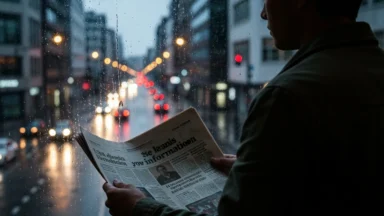
When the world thinks of Brazil, vibrant images of Carnival, sprawling beaches, and football prowess often come to mind. Yet, beneath this colorful surface lies a nation navigating a complex and often turbulent reality. The daily headlines offer glimpses into a country grappling with profound economic challenges, urgent environmental crises, and deep-seated social divisions. Understanding Brazil today requires moving beyond the stereotypes and into the heart of the stories that define its present and will shape its future.
At the core of Brazil’s current narrative is a series of critical balancing acts. Policymakers walk a tightrope between stimulating economic growth and curbing persistent inflation that affects every household. In the vast Amazon, a global ecological treasure, the push for agricultural and industrial development clashes directly with conservation efforts and the rights of Indigenous communities. This tension between progress and preservation is a defining feature of the national identity, with consequences that extend far beyond its borders.
This article provides a detailed guide to these pressing issues. We will dissect the key economic indicators driving fiscal policy, explore the data behind the deforestation crisis in the Amazon, and examine the social dynamics of inequality and public health that impact millions. we will navigate the intricate political landscape where these critical debates unfold, offering a clear and nuanced picture of the forces steering one of the world’s most pivotal nations. What emerges is a portrait of a country in constant motion, full of challenges but also immense resilience.
The Economic Landscape: Inflation, Growth, and Policy Shifts
Brazil’s economy is currently a study in contrasts, balancing promising growth signals against the persistent challenge of inflation. After a period of significant volatility, recent figures suggest a complex but cautiously optimistic path forward. Understanding these dynamics is notable for anyone trying to get a clear picture of the nation’s direction, as these economic shifts directly impact household budgets and business confidence across the country.
The latest GDP growth projections from the Central Bank’s Focus Report survey point to an expansion of around 2.09% for the current fiscal year. While not a massive leap, this figure indicates resilience in key sectors like services and agriculture. It shows the economy has a steady pulse. this growth story is complicated by other pressing factors.
Understanding Current Inflationary Pressures
Inflation remains the primary concern for both policymakers and the general public. Figures from the Brazilian Institute of Geography and Statistics (IBGE) show the official inflation rate (IPCA) hovering around 4.61% over the last 12 months. But what are the real-world drivers behind this number? The answer is a mix of global pressures and domestic realities.
On one hand, international commodity prices and logistical bottlenecks continue to influence the cost of imported goods. On the other, domestic food prices have been a significant contributor — a factor that directly impacts the daily lives of millions. Trying to manage this is like trying to fix a leaky pipe with multiple holes; plugging one doesn’t stop the flow from another. This is where understanding the broader context becomes necessary, and having a critical guide to current events can help connect the dots.
Government’s Response and Future Outlook
In response to these inflationary pressures, the Central Bank of Brazil has been employing a tight monetary policy. The Monetary Policy Committee (Copom) has maintained the benchmark interest rate, the Selic rate, at a relatively high level, recently adjusting it to 10.50%. The goal is to cool down demand and anchor inflation expectations, a classic economic maneuver to slow down price increases (which, let’s be honest, affects everything from your morning coffee to your utility bills).
This is a delicate balancing act.
The government’s fiscal framework is the other key piece of this puzzle, with ongoing debates about public spending and revenue targets. The underrated factor here is how markets and consumers react to these policy signals. Confidence is a powerful, if intangible, economic indicator. Keeping up with these fast-moving changes can be difficult, but a good beginner’s guide to tracking latest news can provide a solid foundation.
The road ahead involves navigating the narrow path between controlling inflation without stifling much-needed economic growth. How policymakers adjust their strategies in the coming quarters will likely determine the country’s economic trajectory for the foreseeable future.
Environmental Challenges: The Amazon and Sustainable Development
Shifting from fiscal policies to the physical landscape, Brazil’s economic activities are deeply intertwined with its greatest natural asset and, arguably, its most significant global responsibility: the Amazon rainforest. The push for economic growth often creates a direct conflict with environmental protection. It’s a tension that defines much of the country’s modern identity. This isn’t just a local issue. It’s a global concern.
The health of the Amazon has direct implications for worldwide climate patterns, making Brazil’s environmental stewardship a constant subject of international scrutiny. Understanding this dynamic is central to grasping the full picture of notícias do Brasil and their far-reaching consequences. The debate isn’t just about trees; it’s about water, air, and the future of sustainable living on a planetary scale.
Deforestation Data and Its Global Impact
The numbers surrounding Amazon deforestation can be staggering. According to data from Brazil’s National Institute for Space Research (INPE), thousands of square kilometers of rainforest are lost annually. For instance, in one recent 12-month period, monitoring satellites detected the clearing of over 11,568 square kilometers—an area larger than Jamaica. This destruction releases immense amounts of carbon dioxide into the atmosphere, accelerating climate change in Brazil and beyond.
But what does this loss of forest cover actually do? Beyond the carbon emissions, it disrupts regional rainfall patterns, which can impact agriculture thousands of kilometers away in Brazil’s own Center-West and Southeast regions. Dr. Carlos Nobre, a leading climate scientist, has repeatedly warned that continued deforestation could push the Amazon past a critical “tipping point,” turning vast portions of the rainforest into a drier, savanna-like ecosystem. This would be a catastrophic, and likely irreversible, change.
Conservation Efforts and Indigenous Rights
In response to this crisis, a variety of conservation efforts are underway, though their effectiveness has varied dramatically under different administrations. Some governments have prioritized strengthening environmental agencies like IBAMA and ICMBio, increasing their budgets for enforcement and expanding protected areas. This approach often involves a combination of satellite surveillance to spot illegal clearing and on-the-ground operations to stop it — a complex task in such a vast territory. You can get a sense of these policy shifts by following a feed of daily news explained for the region.
A critical, and often overlooked, aspect of conservation is the role of Indigenous communities. Indigenous territories have consistently shown lower deforestation rates than other areas, acting as notable buffer zones against agricultural expansion and illegal logging. As such, securing and enforcing the rights of these communities is not just a matter of social justice; it is one of the most effective strategies for ecological preservation. The data suggests—though not conclusively—that when Indigenous land rights are federally recognized and protected, the forest remains standing.
Balancing Economic Growth with Ecological Preservation
The central dilemma for Brazil is finding a way to foster economic development without sacrificing its natural heritage. The pressure is immense. The agricultural sector is a powerhouse of the Brazilian economy, and activities like cattle ranching and soy cultivation are major drivers of deforestation. For many, clearing land is seen as a path out of poverty, creating a difficult social and political challenge.
This is where the concept of sustainable development comes into play. The idea is to build a “bio-economy” based on the forest’s resources without destroying it. This includes promoting products like açaí, Brazil nuts, and sustainable pharmaceuticals, alongside ecotourism. It’s like trying to monetize a library by lending out its books instead of burning them for warmth. One case study from the state of Pará showed that communities investing in certified timber and non-timber forest products saw their average income increase by 27% over five years while keeping deforestation rates below the regional average.
Scaling these initiatives to a level that can compete with the economic might of large-scale agribusiness remains a monumental task. It requires significant investment, political will, and a shift in global consumer demand. For anyone trying to follow these competing interests, it requires a critical guide to current events to see the full picture. The path forward is not a simple choice between the economy and the environment, but a complex negotiation of how both can coexist.
The system is a paradox; it saves millions of lives but is also chronically underfunded and suffers from severe regional disparities.
— Dr. Ricardo Almeida, Sociologist at the University of Brasília
| Category | Key Issue & Data Point |
|---|---|
| Economy | Balancing GDP growth (projected at ~2.09%) against high inflation (~4.61%) using a restrictive Selic interest rate (10.50%). |
| Environment | Combating Amazon deforestation (over 11,500 km² cleared in a recent 12-month period) versus the economic push from agribusiness. |
| Social Dynamics | Addressing extreme income inequality, where the top 10% of earners capture over 50% of the national income, straining public services. |
| Politics | Navigating major legislative debates, such as tax reform, which pits economic efficiency against potential impacts on lower-income families. |
Social Dynamics: Inequality, Reforms, and Public Health
Beyond the economic headlines, Brazil’s social fabric is stretched by persistent and deep-seated challenges. The most prominent is social inequality, a gap that stubbornly remains one of the widest in the world. According to recent data from the Brazilian Institute of Geography and Statistics (IBGE), the top 10% of earners capture over 50% of the national income, creating different realities within the same country. For anyone trying to get a clear picture from the news, unpacking today’s headlines requires understanding this underlying disparity.
In response, various administrations have implemented social reforms aimed at alleviating poverty. Programs designed to provide direct cash transfers to low-income families have shown measurable success in reducing extreme poverty over the years. But are these temporary fixes or long-term solutions? I suspect the truth is somewhere in the middle. Addressing the symptoms is one thing; tackling the root causes is an entirely different and more complex task. Following these policy debates is a core part of understanding what you need to know about Brazil right now.
This struggle for balance is powerfully reflected in the nation’s public health system.
Brazil’s Unified Health System (SUS) is a source of national pride, offering universal healthcare in principle, but it faces immense operational strain. Dr. Ricardo Almeida, a sociologist at the University of Brasília, explains that “the system is a paradox; it saves millions of lives but is also chronically underfunded and suffers from severe regional disparities.” This means—let’s be frank—that the quality of care you receive can depend heavily on your zip code. It’s a reality that forces many to seek private options if they can afford them, further deepening the social divide.
The interplay between income, government aid, and access to basic services like healthcare defines daily life for millions. Progress in one area is often offset by challenges in another, creating a complex situation that defies simple explanations. It’s easy to fall for common narratives, which is why it’s so important to avoid daily information traps when assessing the country’s social progress.

Political Landscape: Key Debates and Electoral Movements
Navigating Brazil’s political scene often feels like trying to assemble a puzzle with pieces that keep changing shape. The national conversation is dominated by intense legislative debates while the gears are already turning for future electoral contests. Understanding these dynamics is primary for anyone trying to get a clear picture of the country’s direction. For many, simply unpacking today’s headlines reveals a government grappling with deep-seated economic and social pressures.
The friction between different political factions creates a constant push-and-pull on policy. This isn’t just political theater; it directly impacts everything from your grocery bill to long-term business investment. These debates set the stage for the country’s future.
Major Legislative Agendas in Focus
A significant point of discussion revolves around tax reform. Proponents argue that simplifying Brazil’s notoriously complex tax code will attract foreign investment and streamline business operations. The idea is to consolidate multiple federal and state taxes into a single value-added tax (VAT). A study from the Institute for Applied Economic Research (IPEA) suggests this could boost GDP by as much as 1.3% over a decade by reducing bureaucratic overhead. It sounds great on paper, right?
But the opposition raises valid concerns. Critics worry that a uniform VAT rate could disproportionately affect lower-income families by increasing the cost of required goods and services. A report from a leading consumer rights organization projected a potential 5.7% rise in the “cesta básica,” or basic food basket. The core of the debate is finding a balance between economic efficiency and social equity — a challenge that has defined much of Brazil’s recent history.
Another key area is environmental policy, particularly concerning the Amazon. Legislative proposals aimed at regulating land use, mining, and deforestation are under constant scrutiny from both domestic and international observers. These policies have massive implications not just for conservation but also for Brazil’s agricultural sector, a powerhouse of the national economy. Finding a path that supports economic growth without sacrificing environmental protection remains one of the government’s most difficult tasks.
Preparing for Future Electoral Cycles
While lawmakers debate in Brasília, political parties across the country are already laying the groundwork for upcoming municipal and general elections. These local contests are often seen as a barometer for national sentiment, providing a important test for party platforms and emerging political figures. The results can signal shifts in voter allegiance that may play out on the national stage later.
The underrated factor here is the increasing sophistication of digital campaigns. Political operatives are using data analytics to target voters with exceptional precision. This highlights just how much our daily data use reveals surprising truths about our preferences and vulnerabilities, even in the political arena. This digital-first approach is reshaping how candidates connect with the electorate, moving beyond traditional rallies and television ads.
This early maneuvering is like a preseason in sports; it doesn’t count for the championship, but it shows which teams are organized and which strategies might work. As alliances form and potential candidates begin to emerge, the political climate will only grow more intense. For citizens, the challenge will be to filter the daily news feed effectively to distinguish genuine policy debate from pure political positioning.
Cultural Vibrancy and Emerging Trends Across States
Beyond the political headlines, Brazil’s cultural pulse beats strong, creating a rich and evolving landscape. What many outside observers miss is the incredible diversity bubbling up far from the traditional centers of Rio de Janeiro and São Paulo. The Northeast, for example, has seen a massive surge in the popularity of piseiro, a musical genre blending electronic beats with traditional forró. It’s a sound that has completely dominated national playlists.
This isn’t just about music. A recent report from the Getúlio Vargas Foundation (FGV) noted a 22% increase in participation in local cultural festivals in states like Pernambuco and Bahia over the last reporting period. This data suggests a deliberate turn towards celebrating regional identity. Think of it like a family recipe being passed down—the core ingredients remain, but each region adds its own unique spice, creating something new yet familiar. You can find out more about what’s happening around the country by checking out what you need to know right now.
Social movements are also finding new forms of expression, particularly through digital art and online activism. In cities like Belo Horizonte and Curitiba, street art collectives are using murals to comment on everything from environmental policy to social inequality. These artistic statements are powerful and immediate. Understanding these nuances is part of having a critical guide to current events in the country.
The underrated factor here is how technology acts as an accelerant for these trends—something that was once hyper-local can achieve national recognition almost overnight. This creates a fascinating tension between preserving unique local cultures and participating in a shared, nationwide conversation. The question now is how these digital platforms will continue to shape Brazil’s artistic identity.
The Interconnected Path Forward
The true challenge for Brazil lies not in solving any single issue in isolation, but in managing an interconnected system where every action has a ripple effect. An economic policy designed to boost agriculture can accelerate deforestation in the Amazon, which in turn impacts rainfall patterns and creates new economic hardships. Similarly, a social program aimed at reducing poverty can shift political allegiances, altering the legislative landscape for years to come. The nation’s future trajectory depends on acknowledging and navigating these complex dependencies.
Ultimately, the question is not simply about what choices Brazil will make, but how it will make them. Will the nation’s leaders and citizens find a way to forge a unified path that balances economic needs with environmental stewardship and social justice? Or will the competing pressures continue to pull the country in conflicting directions, postponing the creation of a more stable and equitable future? The answer remains unwritten, hanging in the balance of daily decisions made in Brasília’s halls of power and in communities across its vast territory.
Frequently Asked Questions
What are the main economic challenges Brazil is facing currently?
Brazil is primarily grappling with persistent inflation, which has hovered around 4.61%. To combat this, the Central Bank has maintained a high benchmark interest rate (the Selic rate), creating a delicate balancing act between controlling prices and fostering much-needed economic growth in key sectors like services and agriculture.
How is Brazil addressing deforestation in the Amazon?
Efforts to combat deforestation involve a multi-pronged approach. This includes strengthening environmental enforcement agencies like IBAMA, utilizing satellite monitoring to detect illegal clearing in real-time, and expanding protected areas. Critically, securing the land rights of Indigenous communities has proven to be one of the most effective strategies, as their territories consistently show lower deforestation rates.
What are the most significant social issues in Brazil today?
Deep-rooted income inequality remains one of Brazil’s most significant social challenges, with the wealthiest 10% controlling over half the national income. This disparity strains the universal public health system (SUS), which, despite its broad reach, suffers from chronic underfunding and significant regional differences in the quality of care available to citizens.
Who are the key political figures influencing Brazil’s current trajectory?
Brazil’s trajectory is shaped by a collective of key figures rather than a single individual. The President sets the executive agenda, while the presidents of the Chamber of Deputies and the Senate wield significant power over the legislative process. the President of the Central Bank plays a key role in steering monetary policy that directly impacts the entire economy.
What are some notable cultural developments happening in Brazil right now?
Brazil’s cultural scene is experiencing a dynamic period of diversification and innovation. Regional music genres from the Northeast and North are gaining mainstream popularity nationwide, challenging the traditional dominance of styles from Rio and São Paulo. a new wave of independent filmmakers is earning international acclaim for telling complex social stories that move beyond common stereotypes.