
Brazil stands at a critical juncture, a nation of continental scale where immense potential collides with profound challenges. Often viewed through a narrow lens of commodities or political turmoil, the country’s true trajectory is being forged by deeper, more complex currents of change. These shifts are not happening in isolation; they are interconnected forces reshaping everything from the digital marketplace in São Paulo to land use policies in the Amazon basin. Are these changes leading toward a more resilient and equitable future, or are they pulling the nation in conflicting directions?
For decades, Brazil’s economic narrative was tied to the cyclical booms and busts of raw material exports. This dependency created a fragile prosperity, vulnerable to the whims of global markets. Now, a new chapter is being written, driven by necessity and innovation. The rapid digitalization of its economy, coupled with a deliberate push toward diversification, signals a underlying rewiring of its financial engine. Simultaneously, the country faces intensifying international pressure to balance economic development with its immense environmental responsibilities.
This analysis moves beyond the daily headlines to examine the structural transformations defining the future of Brazil. We will explore the opportunities and obstacles within its booming digital sector, the strategic pivot away from commodity reliance, and the ongoing efforts to address deep-seated social inequalities. we will assess Brazil’s critical role in global environmental stewardship and its delicate diplomatic dance on the world stage. Together, these trends paint a broad picture of a nation in the midst of a complex and consequential evolution.
The Digital Transformation: Brazil’s Leap into the Future
Brazil is undergoing a profound digital shift, reshaping its economy and society at an accelerated pace. With over 165 million internet users, representing roughly 81% of the population according to Cetic.br, the country has a massive and engaged online audience. This isn’t just about social media scrolling; it’s a underlying change in commerce and communication. The growth is undeniable.
The e-commerce sector alone tells a compelling story. A recent report from NielsenIQ Ebit revealed a 22% surge in online sales over the past year, as millions of Brazilians made their first digital purchases. This rapid adoption signals a readiness for new technologies, but what most people miss is that the underlying infrastructure is straining to keep up. It’s like building a skyscraper on a foundation that’s still setting.
Connectivity and Infrastructure Challenges
Despite impressive national figures, digital access remains unevenly distributed across the vast country. The primary hurdle is the “custo Brasil” — the high cost of doing business, which affects everything from laying fiber optic cables to navigating complex tax regulations. In many northern and rural regions, reliable, high-speed internet is still more of a luxury than a utility. For a deeper dive into these complex issues, many turn to expert insights on current events and analysis.
This digital divide creates significant barriers to entry for both consumers and businesses. Imagine running an online shop where a third of your potential customers have inconsistent connections. This is the reality for many entrepreneurs. Solving this last-mile connectivity problem is a critical piece of the puzzle for sustained digital growth.
Emerging Tech Hubs and Startups
While challenges persist, pockets of intense innovation are thriving. Cities like São Paulo, Florianópolis, and Recife have become bustling centers for tech startups, particularly in the fintech and agritech sectors. These companies are attracting serious attention from global investors, with the Association for Private Capital Investment in Latin America (LAVCA) reporting that over $5.2 billion in venture capital flowed into Brazilian startups last year.
These new companies are becoming masters of online visibility, learning how to dominate the digital newsstand to attract customers and talent. The success of digital banks and logistics platforms — often created to solve uniquely Brazilian problems — showcases a remarkable capacity for homegrown innovation. The key question now is whether this momentum can be expanded to lift the entire digital economy, not just a few select hubs.
Economic Shifts: Navigating New Global Realities
Brazil’s economy is in a state of flux, moving away from familiar dependencies and toward a more complex, diversified model. The country’s historical reliance on commodity exports has long been both a strength and a vulnerability, creating a cycle of boom and bust tied to global demand. Now, a combination of internal reforms and external pressures is forcing a significant recalculation of its economic strategy.
This shift isn’t just about what Brazil sells, but how it operates. It’s a basic rewiring of the country’s financial engine.
Diversification Beyond Commodities
For decades, the Brazilian economic narrative was written in soy, iron ore, and oil. The data suggests this is changing, albeit slowly. According to the Brazilian Foreign Trade Association (AEB), commodities still represent over 60% of total exports, a figure that highlights the challenge ahead. Relying so heavily on raw materials is like a chef banking their entire restaurant’s reputation on a single dish; it’s great while the ingredients are in season, but disastrous when they’re not.
The push for diversification is now focused on sectors like technology, renewable energy, and value-added agribusiness. Instead of just exporting raw soybeans, companies are increasingly investing in processing facilities to produce soy-based products domestically. This strategy not only creates more resilient revenue streams but also generates higher-quality jobs. Understanding these deep-seated trends is key for anyone trying to develop more advanced news consumption habits for a clearer global picture.
Here is a comparative look at Brazil’s key economic indicators against its BRICS counterparts, based on recent IMF projections:
| Country | GDP Growth (%) | Inflation (%) | Unemployment (%) |
|---|---|---|---|
| Brazil | 2.2 | 4.5 | 7.8 |
| Russia | 1.8 | 5.7 | 3.1 |
| India | 6.3 | 5.4 | 7.1 |
| China | 4.8 | 1.0 | 5.2 |
| South Africa | 0.9 | 5.9 | 32.7 |
Reforming the Tax System
One of the most significant brakes on Brazil’s economic potential has been its notoriously complex tax system. For decades, businesses have struggled with a web of federal, state, and municipal taxes that are often overlapping and contradictory. But how can a country expect to attract top-tier investment when its tax code requires a small army of accountants to decipher?
A sweeping tax reform is underway, aiming to unify multiple consumption taxes into a single value-added tax (VAT). The goal is to create transparency and reduce the bureaucratic burden that has stifled growth. Economists like Marcos Cintra, former Special Secretary of Federal Revenue, have argued that a simplified system could boost GDP by making Brazilian products more competitive. The underrated factor here is the potential reduction in legal disputes, which currently tie up billions in corporate funds.
The Role of Foreign Investment
Simplifying taxes and diversifying the economy are both critical signals to the global investment community. Foreign Direct Investment (FDI) is necessary for funding the infrastructure, technology, and energy projects that Brazil needs to sustain long-term growth. Investors are looking for stability and clear rules of engagement, something the recent reforms are designed to provide. Making sense of these capital flows requires expert insights on current events and analysis.
Attracting Sustainable Capital
Beyond just attracting capital, the focus has shifted to attracting the right kind of capital. There is a growing emphasis on Environmental, Social, and Governance (ESG) criteria. Investors are increasingly scrutinizing projects for their environmental impact and social responsibility—and let’s be honest, it’s also a powerful public relations tool. Brazil, with its vast natural resources, is uniquely positioned to become a leader in the green economy.
Recent data from the Brazilian Development Bank (BNDES) shows a 34% year-over-year increase in funding requests for green energy projects, particularly in solar and wind power. This trend signals a move away from purely extractive industries and toward a more sustainable, and potentially more profitable, future. The challenge now is to ensure these projects deliver on their promises, balancing economic returns with genuine environmental stewardship.
Access to quality primary education is still incredibly uneven across regions, which directly impacts long-term earning potential.
— Dr. Sofia Mendes, Sociologist at the University of Brasília
| Key Trend | Current State | Future Outlook & Challenges |
|---|---|---|
| Digital Transformation | Rapid growth in e-commerce and fintech, with over 165 million internet users. Significant innovation in tech hubs like São Paulo and Recife. | Overcoming the digital divide in rural areas and upgrading infrastructure to support sustained growth are the primary hurdles. |
| Economic Shifts | Transitioning away from heavy reliance on commodity exports. A major tax reform is underway to simplify the business environment. | Successfully diversifying into value-added industries and attracting sustainable foreign investment (ESG) are critical for long-term stability. |
| Social Dynamics | Deep-rooted income inequality persists, with the top 10% controlling a majority of national income. An aging population presents new demographic challenges. | Expanding access to quality education and healthcare is crucial. Creating a sustainable social safety net is a key policy challenge. |
| Environmental Stewardship | Home to 60% of the Amazon, facing pressure to balance conservation with economic needs. A leader in hydropower with growing potential in solar and wind. | Effectively reducing deforestation while developing a green economy. Managing the environmental impact of energy projects is a delicate balance. |
| Geopolitical Stance | Pursues a multi-alignment strategy, acting as a diplomatic bridge between the Global South and Western powers. A key player in regional blocs like Mercosur. | Maintaining diplomatic autonomy in an increasingly polarized world while expanding global trade partnerships remains a complex challenge. |
Social Dynamics: Addressing Inequality and Promoting Inclusion
Brazil’s economic potential often stands in stark contrast to its deep-rooted social challenges. The most significant of these is income inequality, a persistent issue that shapes access to opportunities. According to recent data from the Brazilian Institute of Geography and Statistics (IBGE), the top 10% of earners capture over 58% of the national income. This gap is immense.
Closing this divide requires a multi-faceted approach, starting with education and healthcare. Dr. Sofia Mendes, a sociologist at the University of Brasília, explains, “Access to quality primary education is still incredibly uneven across regions, which directly impacts long-term earning potential.” This is one of the many expert insights on current events that highlights the scale of the problem. Tackling this is like trying to fix a foundation while the house is still being built — difficult, but necessary for stability.
Government and non-profit initiatives are pushing for solutions. Programs aimed at expanding digital literacy and improving public health infrastructure in underserved communities are gaining traction. But how does a nation effectively implement such widespread change? A critical piece of the puzzle is understanding the data behind these disparities, which often requires more advanced news consumption skills to fully grasp.
The country’s demographic shift—specifically its aging population—adds another layer of complexity. Creating a sustainable social safety net that supports both an expanding elderly population and provides opportunities for the youth is the central challenge for policymakers moving forward.
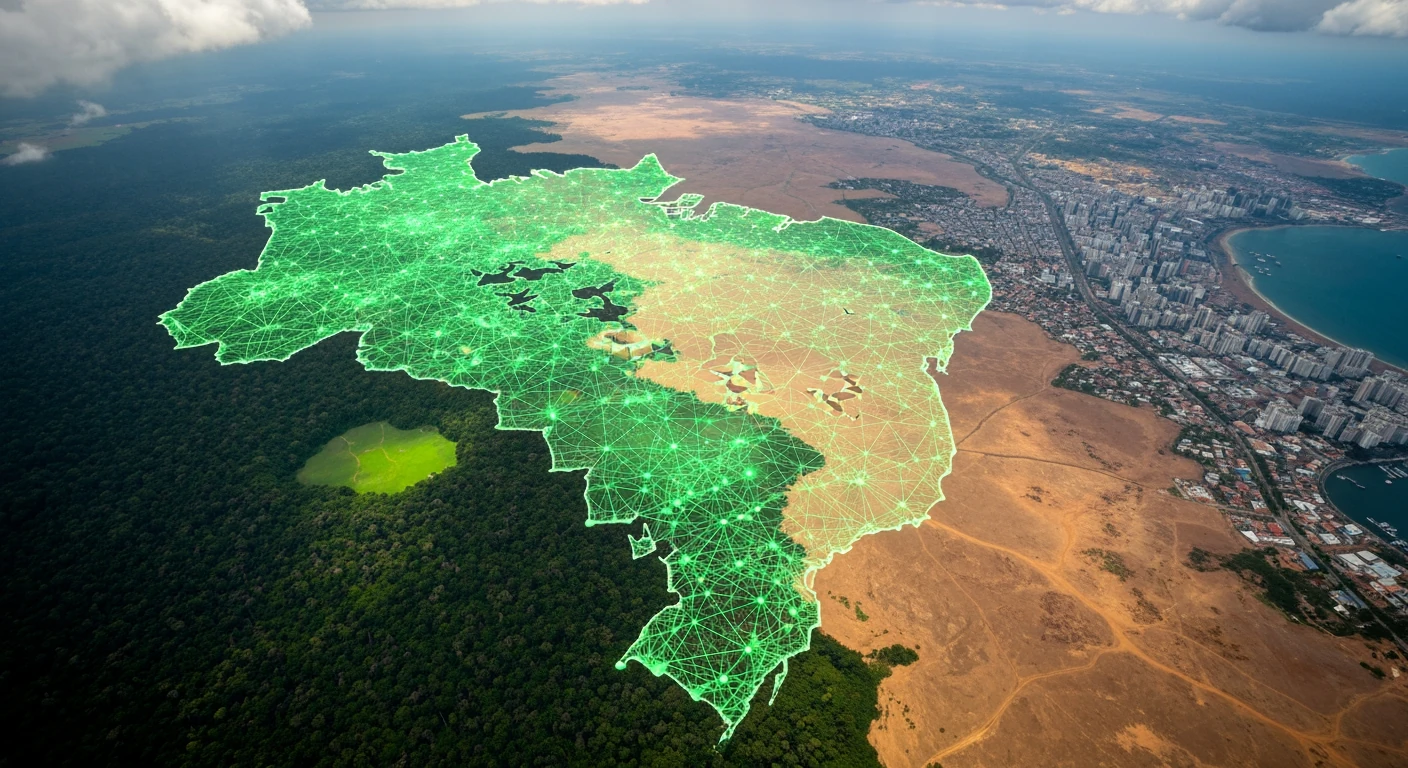
Environmental Stewardship: Brazil’s Path to Sustainability
As discussions about social policy evolve, Brazil’s role on the global environmental stage remains central. The country is home to approximately 60% of the Amazon rainforest, often called the “lungs of the planet,” giving its domestic policies profound international consequences. This places Brazil at the intersection of intense debate and immense responsibility. The core issue is a persistent tension between economic needs and ecological preservation.
Balancing Development and Conservation
The primary challenge is managing the vast resources of the Amazon. For decades, industries like agriculture, logging, and mining have driven economic growth but at a significant environmental cost. According to Brazil’s National Institute for Space Research (INPE), deforestation rates have fluctuated, with recent data showing a drop, yet thousands of square kilometers are still lost annually. It’s a classic case of trying to have your cake and eat it too—how do you support rural economies without sacrificing a globally vital ecosystem?
International collaborations offer one path forward. The Amazon Fund, historically supported by countries like Norway and Germany, provides performance-based payments for verified reductions in deforestation. the effectiveness of these programs often depends on the political will of the current administration. The debate over land use is complex, with powerful agricultural lobbies pushing for expansion while environmental groups and indigenous communities advocate for stronger protections. Getting a clear picture requires a commitment to advanced news consumption strategies to see beyond the headlines.
Renewable Energy Potential
Beyond the Amazon, Brazil is a surprising leader in renewable energy. Hydropower has long been the main source of its electricity, accounting for over 60% of the total generation, as reported by the International Energy Agency. This reliance on dams provides a clean energy source but also comes with its own environmental and social issues, including displacing communities and disrupting river ecosystems.
The underrated factor here is Brazil’s massive untapped potential in solar and wind power. With its extensive coastline and sun-drenched northern regions, the country is perfectly positioned to diversify its energy matrix. The government has been holding auctions for new wind and solar projects, signaling a shift. Still, building out this infrastructure requires substantial investment and navigating regulatory hurdles—it’s less like flipping a switch and more like slowly turning the dial on a massive industrial machine. Understanding these policy shifts often requires diving into expert opinions on current events and analysis.
This dual focus on protecting forests while expanding green energy defines Brazil’s complex environmental journey for the foreseeable future.
Geopolitical Stance: Brazil’s Evolving Role on the World Stage
Brazil’s foreign policy is often a delicate balancing act. The country seeks to maintain its traditional autonomy while navigating a world of increasingly rigid alliances. Instead of firmly picking a side, Brazil acts more like a bridge, connecting the Global South with established Western powers. This approach, known as non-alignment or multi-alignment, requires significant diplomatic dexterity to pull off successfully.
This strategy presents both immense opportunities and significant risks. It allows for flexible economic partnerships and a broader sphere of influence. The tightrope is real.
Strengthening Regional Ties
Within its own hemisphere, Brazil’s influence is undeniable. As the largest economy in Latin America, its leadership within Mercosur — the Southern Common Market — is foundational to its foreign policy. While the bloc has faced internal disputes and economic stagnation at times, Brazil’s commitment remains a stabilizing force. The data suggests that intra-bloc trade, while fluctuating, still represents a significant economic anchor, with a reported $41.8 billion in exchanges in a recent fiscal year, according to figures from Brazil’s Ministry of Economy.
Beyond trade, Brasilia often takes the lead on regional diplomatic and security issues. This involves mediating political crises and coordinating on cross-border challenges. The underrated factor here is the sheer gravitational pull of Brazil’s economy; when Brazil prospers, its neighbors often feel a positive ripple effect, reinforcing its leadership position without requiring overt coercion.
Multilateral Engagements and Challenges
On the global stage, Brazil’s participation in the BRICS group (alongside Russia, India, China, and South Africa) is perhaps its most visible and debated foreign policy choice. The bloc represents a powerful coalition of emerging economies aiming to create an alternative to Western-dominated financial and political institutions. For Brazil, it’s a platform to amplify its voice on issues like global governance reform and development finance.
But this participation comes with complications. How does a country champion democratic values while closely aligning with non-democratic states? This is the central tension observers grapple with. It’s a strategic choice that requires a deep understanding of current events and their analysis to fully appreciate the trade-offs involved. This careful positioning — maintaining strong ties with both the United States and China — is a diplomatic feat that requires constant attention and recalibration.
Economic Diplomacy and Trade
At its core, much of Brazil’s foreign policy is driven by economic necessity. The country is an agricultural superpower, and securing new markets for its soybeans, beef, and coffee is a top priority. This focus on “economic diplomacy” means that trade delegations are just as important as traditional diplomats in shaping Brazil’s international relationships. The goal is simple: open doors for Brazilian products and attract foreign investment.
This approach has proven effective, especially in building relationships outside of traditional spheres of influence. The logic is less about political ideology and more about pragmatism. It’s about finding commercial partners wherever they may be.
Partnerships in Emerging Markets
While China remains Brazil’s largest single trading partner, with bilateral trade exceeding $150 billion, Brazilian diplomats and trade agencies like ApexBrasil are actively diversifying. There is a concerted effort to expand trade with other parts of the world, including Southeast Asia and Africa. For example, Brazil’s exports to the Arab world have seen consistent growth, turning the region into a key market for its poultry and sugar.
These partnerships are often built on a foundation of shared developmental goals. For those trying to follow these intricate policy shifts, it requires a certain level of advanced news consumption skills to see the full picture beyond the major headlines. These aren’t just simple trade deals; they are long-term strategic alignments.
Looking ahead, Brazil’s diplomatic priorities seem clear. Key objectives likely include:
- Mercosur Modernization: Pushing for reforms to make the bloc more agile and finalize the long-stalled trade agreement with the European Union.
- Climate Leadership: Using its position as a steward of the Amazon to lead global conversations on environmental sustainability and green finance.
- BRICS+ Expansion: Managing the integration of new member states into the BRICS alliance while protecting Brazil’s own influence within the group.
- Technological Sovereignty: Engaging in global debates around artificial intelligence, data privacy, and cybersecurity to ensure its interests are represented.
Successfully navigating these priorities will determine whether Brazil can solidify its status not just as a regional leader, but as an highly useful global player in the decades to come.
Cultural Evolution: Shaping a Modern Brazilian Identity
Brazil’s cultural identity is undergoing a significant rewrite, fueled by digital connectivity and global social currents. The traditional pillars of samba, carnival, and football remain, but they now share the stage with a host of new influences that reflect a more complex and diverse nation. This isn’t an erasure of the past; it’s more like a remix, where global trends are given a uniquely Brazilian flavor.
Music provides a clear example of this shift. Artists from genres like funk and trap are leveraging platforms like Spotify and YouTube to build massive audiences without traditional media backing. According to a recent study by the Getúlio Vargas Foundation (FGV), over 71% of music consumers under 25 discover new artists primarily through social media algorithms. This direct-to-fan connection is changing not just who becomes famous, but also the very sound of popular music. It’s raw and immediate.
In cinema and the visual arts, social and political themes are increasingly taking center stage. Filmmakers and artists are exploring issues of racial identity, environmental justice, and urban inequality with extraordinary honesty. What many observers miss is how this artistic wave provides expert insights on contemporary events, moving beyond headlines to capture the lived experiences behind them. Is this just a phase or a permanent change in the nation’s creative focus?
This evolving landscape suggests that Brazil’s identity is becoming less of a single narrative and more of a collage of many stories — a shift that sometimes makes it harder to separate fact from fiction. Developing skills in advanced news consumption for deeper understanding is necessary for anyone trying to grasp these nuances. The idea of a single “Brazilian identity” is being replaced by multiple, coexisting identities that are regional, digital, and constantly in flux.
The tension between preserving cherished traditions and embracing new, sometimes foreign, influences will likely define Brazil’s cultural conversation for years to come.
The Interconnected Path Forward
The myriad trends shaping Brazil—from its burgeoning tech scene to its environmental policies—are not independent variables. They are deeply intertwined threads in a single national fabric. The success of agritech startups, for example, is directly linked to sustainable farming practices, which in turn influences foreign investment and geopolitical standing. The ultimate question, then, is not whether Brazil can succeed in any one area, but whether it can forge a coherent national strategy that integrates these disparate forces. Will the push for economic diversification come at the expense of environmental protection, or can they be leveraged for mutual gain? The answer will determine whether Brazil’s next chapter is one of fragmented progress or integrated, sustainable growth.
Frequently Asked Questions About Brazil’s Future
What are the biggest economic challenges Brazil faces in the coming decade?
Brazil’s primary economic challenges involve moving away from its historical dependence on commodity exports. This requires diversifying into technology and value-added industries, simplifying its notoriously complex tax system to attract investment, and upgrading national infrastructure to support growth.
How is technology impacting daily life and the economy in Brazil?
Technology is rapidly changing Brazil, with a massive surge in e-commerce and the rise of fintech solutions like digital banks. While this creates economic opportunity and convenience, the benefits are unevenly distributed, as many rural and northern regions still lack reliable high-speed internet access.
What efforts is Brazil making towards environmental sustainability?
Brazil is a global leader in renewable energy, primarily through hydropower, and is expanding its solar and wind capacity. It also faces intense international pressure to curb Amazon deforestation, utilizing programs like the Amazon Fund and other collaborations to balance conservation with economic development.
How is Brazil’s role in global politics expected to change?
Brazil is expected to continue its strategy of multi-alignment, avoiding rigid alliances and acting as a key voice for the Global South. Its role will likely grow in importance in global climate discussions and as a leader within regional blocs like Mercosur, navigating a complex geopolitical landscape.
What are the key social issues being addressed in modern Brazil?
The most significant social issue is persistent income inequality, which impacts access to quality education, healthcare, and economic opportunities. Policymakers are also focused on creating a sustainable social safety net to support an aging population while providing pathways for its youth.